

Table of Contents
- The Raw Materials: Premium Ingredients vs. Mass-Produced Fillers
- Benefits of Cold Process Soap and Its Production Impact
- Commercial Soap vs. Handmade Soap: The Manufacturing Difference
- Labor Costs and Artisan Craftsmanship
- Curing Time, Shelf Life, and Longevity
- FDA Soap Regulations for Small Businesses and Compliance Costs
- Cost-Per-Use: Why Handmade Soap Delivers Real Value
- Conclusion
Last Updated: August 26, 2026
The Raw Materials: Premium Ingredients vs. Mass-Produced Fillers
Handmade soap costs more than drugstore because it starts with fundamentally different raw materials. Mass-produced soaps rely on cheap fillers and synthetic surfactants like sodium lauryl sulfate that strip your skin's natural oils, prioritizing profit margins over skin health (peer-reviewed research). Manufacturers buy lower-grade oils that have been refined, bleached, and deodorized.
Handmade soap makers source premium raw materials. Cold process soap uses high-quality oils like olive oil, coconut oil, and shea butter, often organic or ethically sourced. A small-batch producer might spend three times what a factory pays for the same oil simply because they're buying smaller quantities from suppliers who prioritize quality. Superfatting, adding extra oils beyond what saponification requires, means more moisturizing properties remain in the finished bar, something commercial production skips entirely.
Essential oils versus fragrance oils represent another cost difference. Handmade soaps like Minerva Rae's Bulgarian Lavender use pure Bulgarian lavender essential oil extracted through careful distillation, costing twenty to forty dollars per pound. Drugstore soaps use synthetic fragrance oils at two to five dollars per pound, delivering none of the therapeutic properties.
Natural colorants add expense too. Handmade soaps use Brazilian purple clay, plant-based dyes, or mica, while commercial manufacturers use synthetic colorants costing pennies per batch.
Benefits of Cold Process Soap and Its Production Impact
Cold process saponification is the chemical reaction where lye combines with oils to create soap at room temperature over several weeks, preserving the glycerin naturally produced during saponification. Commercial manufacturers use hot process methods or synthetic soap bases, completing production in hours. The speed saves money but sacrifices quality.
Cold process soap produces superior results because glycerin stays in the bar. Drugstore manufacturers often extract glycerin to sell separately, leaving behind a harsher bar that dries your skin. Handmade soaps retain all the glycerin, creating moisturizing properties that mass-produced bars cannot match. People with sensitive or dry skin see real improvement when they switch to cold process soap.
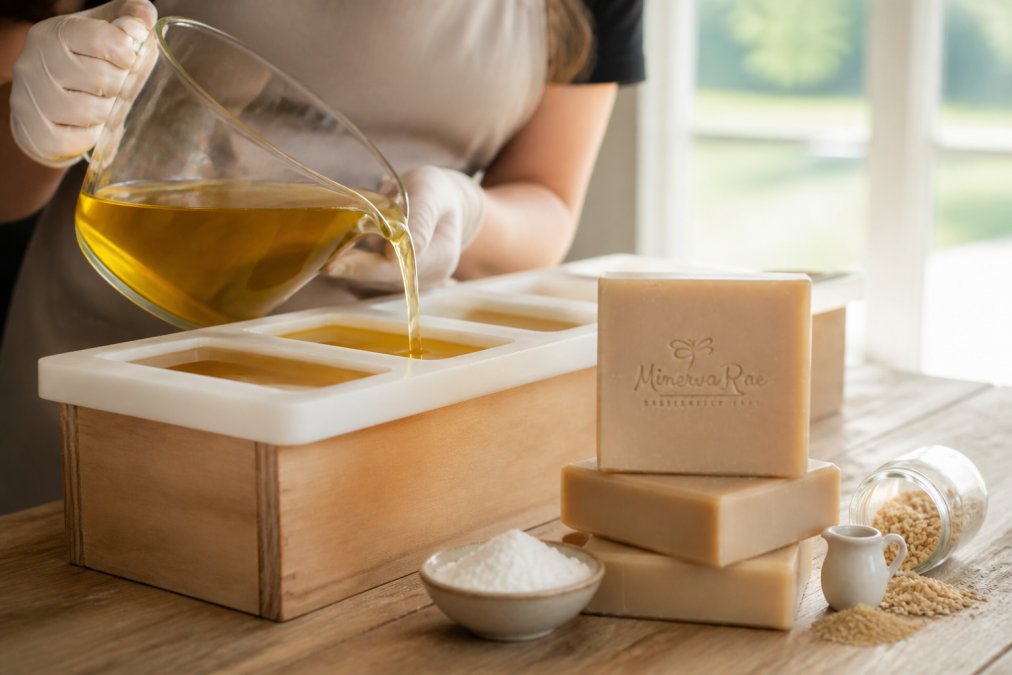
The production timeline adds cost. A cold process batch takes three to six weeks from mixing to curing. During this time, raw materials, labor, and storage space are tied up before generating revenue. Small-batch production yields thirty to fifty bars per batch versus thousands for commercial operations. Overhead costs spread across fewer units, raising per-unit cost significantly.
Cold process soap typically lasts three to four weeks with regular daily use because the denser bar resists dissolving (peer-reviewed research). Drugstore soap often dissolves in two weeks or less. Cost-per-use actually favors handmade soap when you account for longevity.
Commercial Soap vs. Handmade Soap: The Manufacturing Difference
Commercial manufacturers use shortcuts that fundamentally differ from handmade soap. Some buy pre-made soap bases and simply melt, color, and pour them into molds. Others use synthetic detergent bases that skip saponification entirely. Neither method preserves glycerin or requires skill.
Handmade soap requires knowledge of chemistry, oils, lye ratios, and curing science. A soap maker calculates saponification values, determines lye amounts, monitors temperatures, and manages curing conditions. One mistake ruins an entire batch. This expertise commands higher labor costs.
Equipment investment differs drastically. A cold process maker needs modest equipment costing a few thousand dollars. A commercial facility requires industrial-scale equipment with capital costs amortized across millions of units. A small-batch maker amortizes costs across thousands.
Batch flexibility matters too. A handmade maker can test new scents with small batches and adjust. Commercial operations run the same formula thousands of times because changing production runs costs money. Quality control in handmade soap is personal; the maker tests every batch and adjusts for seasonal changes. Commercial manufacturers test samples from large batches.
Cold process soap made from natural oils is fully biodegradable (the EPA). Commercial soap made from synthetic detergents breaks down more slowly and leaves residue in waterways, a real environmental cost that handmade soap avoids.
Labor Costs and Artisan Craftsmanship
Labor represents the largest cost difference between handmade and commercial soap. A cold process soap maker spends hours on a single batch measuring oils and lye precisely, monitoring temperatures, checking trace, and waiting weeks for curing. A factory worker operates a machine.
Handmade soap makers are skilled workers who've studied soap chemistry and developed intuitive understanding of how oils behave. This expertise isn't cheap. When you account for skill required, handmade soap makers often earn less per hour than factory workers while their labor costs more per unit because they produce fewer bars.
Customization adds labor cost. Creating custom colors, scents, and packaging for weddings or corporate events requires design work, small-batch production, and quality assurance. Quality assurance in small-batch production is labor-intensive; each bar gets inspected. Packaging adds labor too, handmade soap makers design packaging, source materials, and hand-package each bar with custom labels or branded boxes.
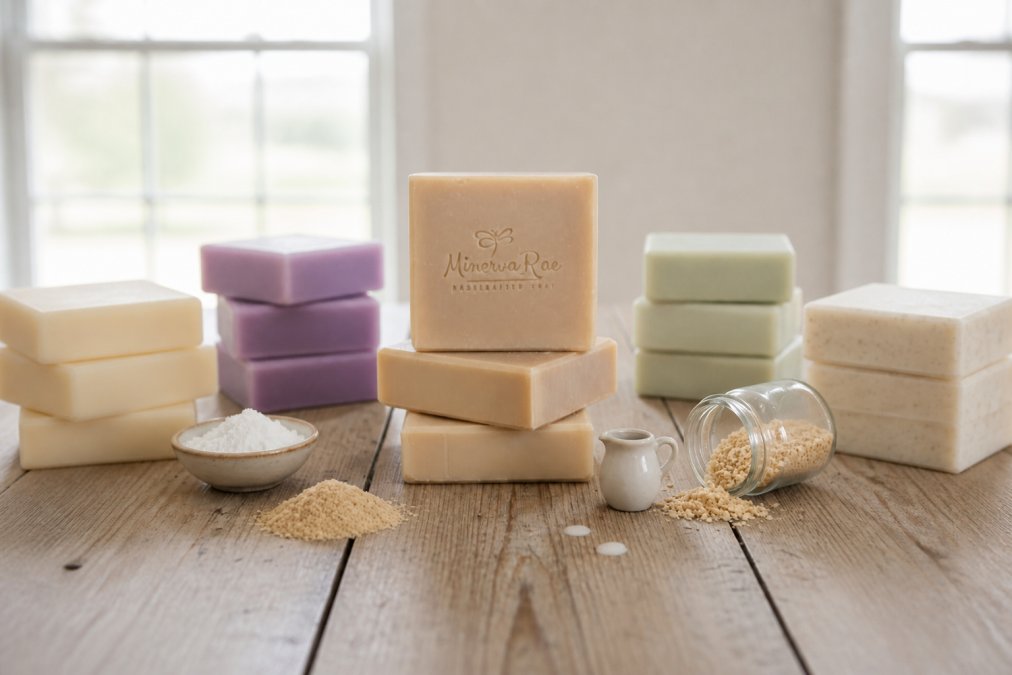
The economics of scale work against small producers. A factory pays the same hourly wage to a worker producing five thousand units as to one producing five hundred. A handmade soap maker cannot achieve this efficiency without sacrificing the qualities that make the soap valuable.
Curing Time, Shelf Life, and Longevity
Cold process soap must cure for three to six weeks minimum. During this time, water evaporates, bars harden, and the chemical reaction completes. A soap maker cannot skip this step without compromising quality. Raw materials, storage space, and facility costs are tied up for weeks before generating revenue.
Curing time is essential for lather quality and bar longevity. A freshly made cold process bar lathers weakly and dissolves quickly. After curing, the same bar produces rich lather and lasts significantly longer. This is why cold process soap typically outlasts drugstore soap by weeks or months.
Handmade soap made from natural oils remains stable for years. Drugstore soap requires synthetic preservatives to prevent rancidity, yet still degrades despite them. A handmade bar maintains its properties indefinitely if stored properly.
The longevity advantage justifies the higher price when calculated as cost-per-use. A twelve-dollar handmade bar lasting four weeks costs three dollars per week. Storage costs factor into pricing; a soap maker must maintain curing space that ties up square footage. Waste during curing adds cost, some bars crack or don't cure evenly. A handmade producer might lose five to ten percent of production to quality issues.
FDA Soap Regulations for Small Businesses and Compliance Costs
FDA regulations create compliance costs that small soap makers must absorb, while large manufacturers spread these costs across millions of units. The FDA defines soap as a product made through saponification of fats and oils with an alkali. True cold process soap qualifies as soap.
Small soap makers must comply with FDA regulations regarding facility cleanliness, ingredient documentation, and product safety. Most states require commercial kitchen space or a dedicated soap-making facility. Renting commercial space costs money. A factory already operates at scale, so facility cost per unit is negligible.
Ingredient documentation is required. A soap maker must maintain records of every ingredient, its supplier, and safety profile. Labeling requirements specify what information must appear on the bar or packaging. A handmade maker must design compliant labels for thousands of units; a factory prints labels by the millions, spreading design cost across millions of units.
Liability insurance is essential for soap makers. The cost varies by production volume, but small makers pay more per unit than factories. Testing requirements vary by state; some require small soap makers to test products for pH balance and stability. A small maker must contract with a lab or purchase testing equipment, a per-batch cost that doesn't exist for mass production.
Compliance with regulations costs more per unit when production volume is low. A factory spreads compliance costs across millions of units. A handmade maker spreads them across thousands.
Cost-Per-Use: Why Handmade Soap Delivers Real Value
A premium handmade soap bar from Minerva Rae costs twelve dollars and lasts approximately four weeks with daily use, three dollars per week or about forty-three cents per day. A drugstore bar costs three to five dollars and lasts approximately two weeks, two to two-fifty dollars per week.
The math looks similar until you account for what you're actually getting. The handmade bar contains pure essential oils and premium oils that moisturize rather than strip, with no harsh surfactants. Your skin improves over time. The drugstore bar contains synthetic fragrance, sulfates, and preservatives that may dry or irritate your skin.
For someone with sensitive or dry skin, the cost-per-use calculation shifts dramatically. Switching to handmade soap often eliminates the need for additional moisturizers. A person spending twenty dollars monthly on lotion suddenly doesn't need it. The handmade soap at twelve dollars per bar becomes cheaper than the combination of cheap soap plus expensive moisturizer.
A bar lasting four weeks instead of two weeks is thirty percent cheaper per week even if the upfront price is higher. Environmental cost-per-use favors handmade soap; a bar lasting twice as long means half as much packaging waste. Biodegradable soap means no chemical residue in waterways.
| Metric | Handmade Bar | Drugstore Bar |
|---|---|---|
| Price per bar | $12.00 | $4.00 |
| Expected lifespan | 4 weeks | 2 weeks |
| Cost per week | $3.00 | $2.00 |
| Cost per day | $0.43 | $0.29 |
| Contains harsh surfactants | No | Yes |
| Retains glycerin | Yes | No |
| Lasts longer with use | Yes | No |
| True essential oils | Yes | No |
When you understand the actual differences between handmade soap and drugstore alternatives, the price premium makes sense. Handmade soap costs more because it uses better ingredients, requires more labor, involves a longer production process, and delivers measurable results that justify the investment.
At Minerva Rae, every bar represents this commitment to quality. The Tallow & Goat Milk bar offers unscented simplicity for sensitive skin. The Bulgarian Lavender combines pure essential oil with premium ingredients like colloidal oats and Tussah silk. The Old Fashioned Tallow & Oatmeal delivers traditional soap-making at its finest. The Black Gold and Cocoa Shea bars showcase how thoughtful ingredient selection and artisan craftsmanship create products that feel luxurious and perform exceptionally.


The real question isn't why handmade soap costs more. It's why anyone would accept less when the difference in price translates to a difference in skin health, environmental impact, and daily experience. Explore the Collection and discover what premium handmade soap actually delivers.
Frequently Asked Questions
Q: Is handmade soap really better than store-bought?
A: Handmade soap offers measurable differences. Cold process soap retains glycerin naturally produced during saponification, while mass-produced bars strip it out and sell it separately. This means handmade bars moisturize better and last longer. For sensitive skin, handmade options avoid synthetic detergents and parabens found in drugstore bars. The trade-off is cost, but the cost-per-use often favors handmade because bars last significantly longer due to their density and glycerin content.
Q: What makes handmade soap more expensive?
A: Three primary factors drive the price difference. First, raw materials: handmade makers use essential oils, shea butter, and botanicals instead of synthetic fragrances and fillers. Second, labor: cold process soap requires hands-on mixing, pouring, curing for several weeks, and hand-cutting. Third, compliance: small businesses must follow FDA regulations for cosmetics, requiring testing and documentation. Drugstore bars use heat processing (hot process or melt-and-pour), which cuts production time from weeks to days and eliminates labor-intensive curing.
Q: How long does handmade soap last compared to drugstore soap?
A: Handmade cold process soap typically lasts longer than drugstore bars. A 4.5 oz handmade bar can last approximately 4 weeks with daily use, while a standard drugstore bar dissolves in 2-3 weeks. This longevity comes from the glycerin retained in the soap and the denser formulation. When you divide the cost by actual weeks of use, handmade soap often costs less per week than cheaper drugstore alternatives that dissolve quickly.
Q: Can I legally make and sell handmade soap?
A: Yes, but with FDA requirements. Under current regulations, soap is classified as a cosmetic if it makes health claims (moisturizing, anti-aging) or contains non-soap ingredients like exfoliants or botanicals. You must comply with FDA labeling requirements, ingredient disclosure, and facility standards. Small businesses must maintain records of ingredients and suppliers, conduct stability testing, and avoid banned substances like certain preservatives. This compliance infrastructure adds cost that drugstore manufacturers spread across millions of units, while small-batch makers absorb it per bar.
This article was written using GrandRanker