

Table of Contents
- What Cold Process Soap Actually Is (And Why It Matters)
- The Skin Health Benefits of Cold Process Soap
- Cold Process vs Hot Process Soap: Key Differences
- Customization, Design, and What Goes Into Each Bar
- Environmental Impact and Sustainability of Cold Process Soap
- Curing Time, pH Balance, and Troubleshooting Common Issues
- How to Store Cold Process Soap to Maximize Shelf Life
- Conclusion
Last Updated: August 11, 2026
What Cold Process Soap Actually Is (And Why It Matters)
Cold process soap is a handcrafted bar made by combining oils or butters with sodium hydroxide (lye) at room temperature, allowing the ingredients to transform through a natural chemical reaction rather than external heat. The result retains far more ingredient integrity than mass-produced alternatives. At Minerva Rae, this method forms the foundation of our handcrafted collection because it delivers something commercial soap simply cannot: a genuinely nourishing bar where every ingredient choice matters.
Most drugstore soap is technically a detergent. The glycerin produced during manufacturing is extracted and sold separately, leaving a bar that strips the skin. Cold process soap keeps everything intact. That distinction is not marketing language. It is chemistry.
The Saponification Process Explained Simply
Saponification is the chemical reaction that turns fats and sodium hydroxide into soap and glycerin. When oils rich in fatty acids meet lye, they bond and transform at the molecular level. What remains is a surfactant that cleanses, plus glycerin that moisturizes.
The "cold" in cold process refers to the absence of applied heat. Soapmakers rely on the heat generated naturally by the saponification reaction itself, which is why the mixture heats up in the mold during the first 24 hours. This is also when gel phase occurs: the soap turns translucent as it heats from within, which can affect the final appearance and texture of the bar. Understanding saponification matters because it explains why ingredient quality is non-negotiable in cold process work. The oils you put in directly determine the fatty acid profile of the finished bar.
The Skin Health Benefits of Cold Process Soap
Cold process soap delivers measurable skin health advantages over commercial bars, primarily because the saponification process produces natural glycerin as a byproduct that remains in the finished bar. This glycerin acts as a humectant, drawing moisture from the air to the skin surface and supporting the skin barrier throughout the day.
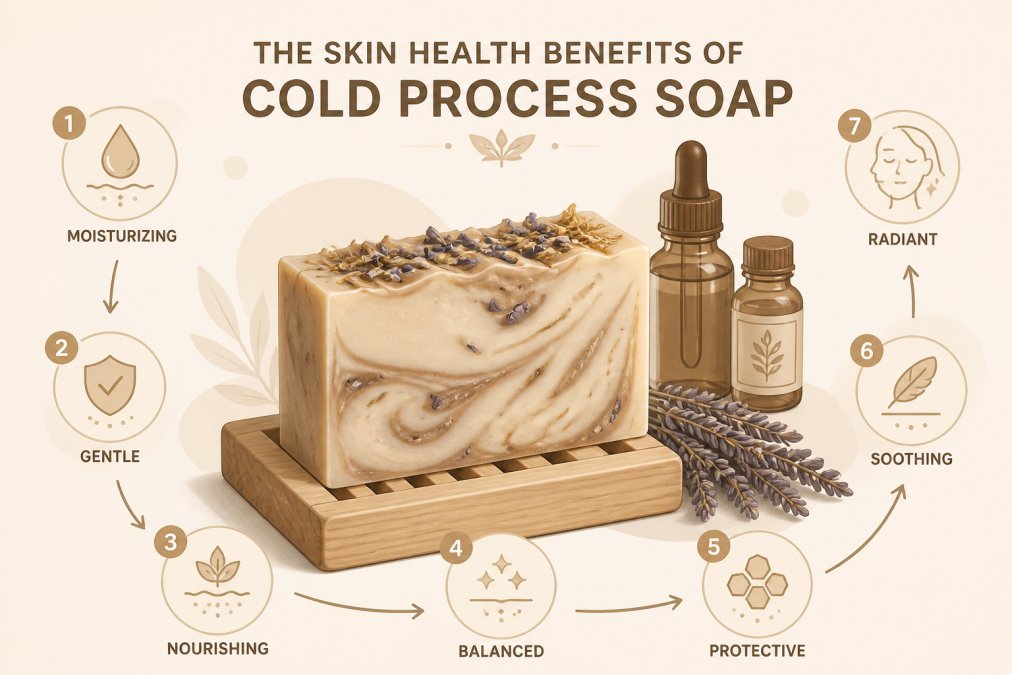
According to the National Eczema Association's guidance on skincare ingredients, preservative-free and fragrance-free formulations are consistently recommended for people with reactive skin. Many cold process soaps can be formulated to meet exactly this profile.
Retained Glycerin and the Skin Barrier
The skin barrier is the outermost layer of skin that prevents moisture loss and blocks environmental irritants. Cold process soap supports this barrier directly because retained glycerin keeps the skin hydrated rather than stripping it dry after each wash. Commercial soap manufacturers routinely remove glycerin because it is valuable in lotions and cosmetics. Cold process soap does the opposite: the glycerin stays in the bar and transfers to the skin during use. Over time, consistent use supports skin hydration and reduces the tight, dry sensation many people associate with washing.
Superfatting, Emollients, and Dry Skin Relief
Superfatting means using slightly more oil than the sodium hydroxide can fully saponify, leaving a percentage of free, unsaponified oils in the finished bar. These free oils act as emollients, coating and softening the skin on contact. For dry skin, superfatted cold process soap can make a noticeable difference. Shea butter is particularly rich in oleic and stearic acids, which research links to improved skin nourishment. Cocoa butter creates a protective layer that helps lock in moisture. Emollient-rich cold process bars tend to show their full benefit after two to three weeks of consistent use, as the skin barrier adjusts and rehydrates.
Allergy and Sensitivity Guide: Who Benefits Most
Here is a practical breakdown for common sensitivities:
- Fragrance sensitivities: Look for bars scented only with essential oils or labeled fragrance-free. Synthetic fragrance is one of the most common skin irritants in personal care products.
- Nut allergies: Oils like sweet almond, macadamia, and shea are common in cold process soap. Verify the oil base before purchasing.
- Latex sensitivity: Some individuals with latex allergies react to avocado or kiwi seed oil. Check the ingredient list.
- Histamine sensitivity: Certain botanicals, including chamomile, can trigger reactions in histamine-sensitive individuals.
- Dry or eczema-prone skin: A high-superfatted, fragrance-free bar with simple oils like olive and coconut tends to be the safest starting point.
Cold Process vs Hot Process Soap: Key Differences
The cold process vs hot process soap debate comes down to one core trade-off: patience versus speed.
| Feature | Cold Process | Hot Process |
|---|---|---|
| Heat source | Natural (saponification) | External (slow cooker or oven) |
| Texture | Smooth, refined | Rustic, sometimes uneven |
| Design control | High (detailed swirls, layers) | Limited (batter thickens fast) |
| Cure time needed | 4-6 weeks minimum | Can be used sooner |
| Fragrance retention | Excellent | Can be volatile |
| Glycerin content | High | High |
| Botanicals | Viable with care | Some may discolor or degrade |
| Lather quality | Creamy, long-lasting | Similar but can vary |
Hot process soap is fully saponified before it goes into the mold, which means it can technically be used sooner. Cold process soap finishes saponifying in the mold over the first 48 hours, then requires a curing period for water to evaporate and the bar to harden. The curing period is not optional. For design-focused soapmakers, cold process is the clear choice because the fluid batter stays workable long enough to create intricate swirls, layers, and embedded botanicals.
Customization, Design, and What Goes Into Each Bar
The most underappreciated aspect of cold process soapmaking is the degree of control it gives the maker over every sensory and functional variable in the bar.
Oil selection determines the fatty acid profile, which affects lather, hardness, and skin feel. Coconut oil produces a hard bar with a fluffy, cleansing lather. Olive oil creates a softer, more conditioning bar with a creamier lather. Castor oil boosts lather bubbles. Most handcrafted bars use a blend, calibrated to balance these properties.
Essential oils and botanicals add both scent and function. Lavender essential oil is calming and widely tolerated. Tea tree brings natural antimicrobial properties. Clays add color and can help draw impurities from the skin. Color in cold process soap comes from natural minerals like iron oxides and micas, as well as botanical pigments. These are chosen for both appearance and skin safety.
Environmental Impact and Sustainability of Cold Process Soap
Cold process soap has a genuinely strong environmental case when examined with specifics rather than vague gestures toward "natural" or "eco-friendly."
Sustainability Lifecycle: From Ingredients to Drain
Ingredients: Oil-based cold process soap is biodegradable. The fatty acids and glycerin that make up the bar break down in wastewater without the persistent chemical residues associated with synthetic detergents. According to EPA guidance on safer chemical ingredients, plant-derived surfactants and glycerin-based cleansers are among the preferred alternatives to petroleum-based compounds in personal care.
Packaging: Handcrafted cold process soap typically requires minimal packaging. A paper wrap or no packaging at all is standard, compared to the plastic bottles and pumps associated with liquid body wash.
Concentration: A solid bar lasts significantly longer per use than an equivalent volume of liquid soap, meaning less manufacturing energy, less transport weight, and less packaging waste.
Preservative-free: Because cold process soap has low water activity in its cured form, it does not require the synthetic preservatives found in liquid cleansers. This matters for consumers concerned about chemical load and for wastewater quality.
The honest caveat: sustainability depends heavily on ingredient sourcing. Palm oil carries significant deforestation concerns unless certified sustainable. Responsible cold process soapmakers either avoid palm oil entirely or source certified sustainable alternatives.
Curing Time, pH Balance, and Troubleshooting Common Issues
Why the Curing Period Cannot Be Skipped
The curing period for cold process soap is typically four to six weeks, and skipping it is the single most common mistake new soap buyers make. During curing, excess water evaporates from the bar, hardening it so it lasts longer in the shower and allowing the pH to stabilize as saponification completes.
Freshly made cold process soap has a high pH, often between 10 and 12. As the bar cures, the pH drops toward a range that is gentler on skin. A fully cured bar typically reads between 8 and 10 on a pH scale. Skin sits around 4.5 to 5.5, so even cured soap is more alkaline than skin. This is normal and does not cause harm in healthy skin. According to American Chemical Society resources on soap chemistry, the alkalinity of soap is what enables it to lift oils and dirt from the skin surface.
Troubleshooting: Rash, Separation, and Soft Bars
Rash or irritation after use: The most likely causes are fragrance, a specific botanical, or using an uncured bar. Rule out fragrance first by switching to an unscented bar. If irritation continues, check the oil base for known allergens.
Separation (oils pooling on top of the batter): This happens when oils and lye water do not fully emulsify before pouring. A bar that shows oily separation on the surface may have unsaponified lye pockets, which is a safety issue. Do not use a bar that shows this defect.
Soft or mushy bars: This is almost always a curing issue. The bar needs more time and better airflow. A properly cured bar should feel firm and dry to the touch.
How to Store Cold Process Soap to Maximize Shelf Life
Proper storage is what separates a cold process bar that lasts three months from one that lasts eight. Cold process soap's main enemies are standing water, humidity, and heat.
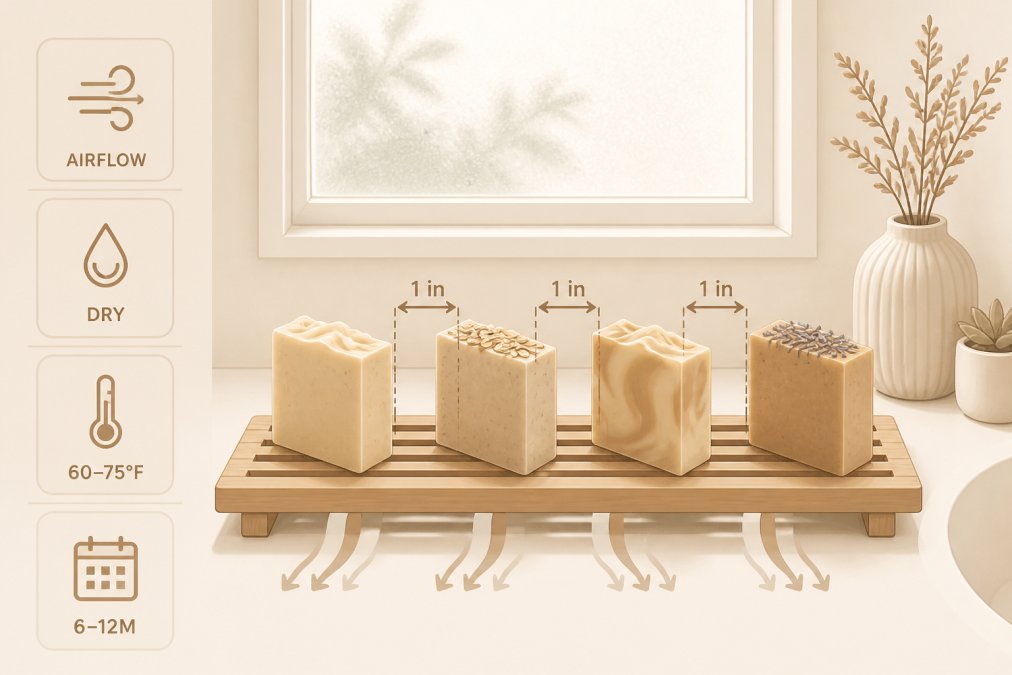
Storage checklist:
- Use a soap dish with drainage holes or a slatted wooden rack that allows airflow beneath the bar
- Keep unused bars in a cool, dry location away from direct sunlight
- Store spare bars unwrapped or loosely wrapped in breathable paper, not sealed plastic
- Rotate bars: use the oldest bar first, as oils can go rancid over time
- Allow the bar to dry fully between uses by keeping it away from direct shower spray
The shelf life of a properly stored cold process bar depends heavily on the oils used. Bars high in olive oil tend to last longest. Bars with high percentages of soft oils like sunflower or hemp seed oil have a shorter shelf life because these oils are more prone to oxidation. A rancid bar develops orange spots and a waxy, unpleasant smell. It is still safe to use but unpleasant. For bars with botanicals embedded in the surface, avoid prolonged exposure to steam.
According to FDA guidance on cosmetic product shelf life, personal care products without added preservatives have variable shelf lives depending on formulation and storage conditions. For cold process soap, proper drainage and dry storage between uses are the most effective ways to extend bar life.
| Common Issue | Likely Cause | Fix |
|---|---|---|
| Bar dissolves quickly | Standing water, no drainage | Use a draining soap dish or rack |
| Skin irritation | Fragrance or botanical reaction | Switch to unscented, simple oil base |
| Orange spots on bar | Oil oxidation (rancidity) | Store in cool, dry place; use older bars first |
| Mushy bar texture | Insufficient curing time | Allow 4-6 weeks minimum before use |
| Lather is thin or weak | Bar not fully cured | Extend curing time; check oil balance |
| Scent fades quickly | Volatile essential oils | Look for bars with anchoring base notes |
Dry skin, sensitivity flare-ups, and bars that dissolve in two weeks are frustrating problems that better soap can genuinely solve. Minerva Rae's handcrafted cold process collection is formulated specifically to address these issues, using premium ingredients, intentional superfatting, and a full curing process to deliver bars that nourish rather than strip. Every bar is crafted with the same attention to ingredient integrity and design precision. Explore the Collection and find a bar built for your skin, your routine, and your standards.
Frequently Asked Questions
Does cold process soap still contain lye after it's made?
No. Lye (sodium hydroxide) is essential to make cold process soap, but by the time the bar is fully cured, the saponification reaction has converted it entirely into soap and glycerin. No active lye remains in a properly made, fully cured bar. This is why the curing period matters: it gives saponification time to complete and excess water to evaporate, leaving a mild, safe bar.
Is cold process soap good for sensitive skin?
Cold process soap is generally well-suited for sensitive skin because it retains natural glycerin, skips synthetic detergents, and allows makers to control every ingredient. Superfatting, leaving a small percentage of oils unsaponified, adds extra emollient protection. If you react to fragrances, look for bars made with essential oils only or unscented options. Patch-testing a new bar on your inner arm for 24 hours before full use is always a smart first step.
How long does a bar of cold process soap actually last?
A well-made, fully cured cold process soap bar typically lasts four to six weeks of daily use when stored correctly between uses. Letting the bar dry completely on a draining soap dish between showers prevents it from sitting in water, which is the main reason bars dissolve quickly. Bars with a higher hard-oil content (coconut, palm, or lard) tend to last longer than softer oil formulations.
What is the shelf life of an unused cold process soap bar?
Stored in a cool, dry place away from direct sunlight, an unused cold process soap bar typically stays at its best for one to two years. The main risk over time is rancidity in the oils, which shows up as orange spots (called 'dreaded orange spots' or DOS) and an off smell. Bars made with more stable oils like coconut or castor oil tend to have a longer shelf life than those heavy in soft oils like sunflower or hemp.
Why is cold process soap more expensive than drugstore bars?
Commercial soap bars are mass-produced using industrial processes that strip out the naturally occurring glycerin and replace it with synthetic detergents and fillers. Cold process soap is made in small batches using quality oils, botanicals, and essential oils, with a curing period of four to six weeks before the bar is ready to sell. The ingredient cost, labor, and time involved all contribute to a higher price, but so does the fact that you're getting a complete, preservative-free bar rather than a detergent cake.
What are the disadvantages of cold process soap?
Cold process soap requires a long curing period, typically four to six weeks, before it's safe and mild enough to use. It is also more sensitive to water exposure, softening faster than commercial bars if left sitting in a puddle. Formulation errors during saponification can result in a lye-heavy bar that irritates skin. Finally, achieving consistent color and fragrance across large batches takes skill, which is why quality varies significantly between makers.
How is cold process soap different from commercial soap?
The biggest difference is glycerin. Cold process soap retains all the glycerin produced during saponification, a natural humectant that draws moisture to the skin. Commercial manufacturers extract that glycerin to sell separately and replace it with synthetic surfactants, lathering agents, and preservatives. Cold process soap is also oil-based with no petroleum derivatives, and makers can choose every ingredient, making it possible to create genuinely preservative-free, fragrance-free, or allergen-specific formulations.
This article was written using GrandRanker