

Last Updated: October 31, 2026
Quick Summary
To find fair trade skincare you can trust, name the certifying body, confirm which specific ingredient is certified, and check the certifier's public directory rather than the brand's own site. A logo alone is not proof, since most certifications cover one raw ingredient, not the finished product.
- Fair trade is not a single government-run seal in the United States but a set of standards from independent certifying bodies.
- Fair trade addresses producer pay and working conditions, while organic, vegan, and cruelty-free cover separate concerns.
- Shea butter is one of the easiest fair trade ingredients to trace because it comes from women's cooperatives in West Africa.
- Ask brands which certifying body verifies their claim and for a certificate or license number you can look up.
- A fair trade logo with no certifier named anywhere is the biggest red flag to watch for.
Table of Contents
- Start With the Label: What Fair Trade Actually Means for Skincare
- How to Verify Fair Trade Certification on Skincare Products
- Ethical Ingredient Sourcing in Skincare: Reading Between the Lines
- Cruelty-Free vs Fair Trade Skincare: What's the Difference?
- Fair Trade Shea Butter Skincare: Why It's a Good Place to Start
- Questions to Ask Brands About Their Supply Chain and Transparency
- Red Flags and Misleading Claims to Watch For
- Explore Minerva Rae's Ethically Sourced Collection
- Frequently Asked Questions
Start With the Label: What Fair Trade Actually Means for Skincare
Fair trade skincare is body care made with ingredients sourced under terms that aim to guarantee fair prices, safe working conditions, and no forced or child labor for the farmers and producers who grow them.
Here is what most guides skip: "fair trade" is not a single, government-run seal in the United States. It is a set of standards offered by independent certifying bodies, each with its own rules.
So the real question is not "is it fair trade?" It is "which ingredient, verified by whom, and can I see the record?"
Fair Trade vs. Organic, Vegan, and Cruelty-Free
These four terms sound similar and mean very different things. Treat them as separate checkboxes, not synonyms.
- Fair trade focuses on people: producer pay, working conditions, and community investment.
- Organic focuses on how an ingredient is grown: no banned synthetic pesticides, no genetic engineering.
- Vegan means no animal-derived ingredients at all.
A bar of soap can be vegan, cruelty-free, and full of ingredients grown under unfair labor. It can also be certified organic and still carry no fair trade claim. One label never covers the others.
How to Verify Fair Trade Certification on Skincare Products
Verification comes down to three steps: identify the certifier, confirm the specific ingredient covered, and check the certifier's public database. A logo alone is not proof.
Start with the certifier's name, not the logo. Major bodies publish searchable directories where you can look up a brand or a supplier by name.
Then ask what is actually certified. A soap might contain certified shea butter and uncertified palm oil in the same bar.
Finally, cross-check. Search the certifier's own directory, not the brand's website. The brand controls its site. The certifier controls its records.
What a Certification Covers, and What It Doesn't
A fair-trade certification is a scope document, not a blanket endorsement. Before you trust a seal, establish three things:
- Ingredient vs. finished product. Most skincare certifications cover a specific raw ingredient, such as shea butter or cocoa butter. Finished-product certification is rarer and costlier. If the seal is on the front of the box, check whether it applies to the whole formula or one input.
- Producer-level vs. brand-level. Some certifications attach to the producer group or cooperative that grows the ingredient, not the brand that buys it. The certification then does not audit the brand's own labor practices.
- Chain-of-custody. Certification is only as strong as its traceability. A certifier may require physical segregation of certified material, or allow a mass-balance approach mixing certified and uncertified material. Ask which model applies.
When There Is No Third-Party Certification
Many small skincare brands make genuine sourcing claims without a formal seal. That does not automatically make the claim false, but it shifts the burden of proof onto the brand's disclosures. Look for:
- A named producer group, cooperative, or region for each major ingredient
- A stated relationship length (for example, how many years the brand has bought from that supplier)
- Supplier codes of conduct or audit summaries the brand is willing to share
A brand that can provide these is offering transparency even without a seal. A brand that offers only values language is asking you to take its word.
Price, Availability, and the Trade-Offs of Shopping Ethically
Availability matters too. Certified ingredients are easier to find in some categories (shea, cocoa) than others (specialty botanicals), and small brands may carry certification on one product line but not another.
A practical verification checklist:
- Certifier named on the label or product page
- Specific ingredient listed as certified
- Brand appears in the certifier's public directory
If a brand clears these, you have something real to trust. If it clears only the first two, you have a logo and a promise.
Verification comes down to a short checklist you can run before paying a premium.
| Check | What to confirm |
|---|---|
| Certifier named | Certifier named on the label or product page |
| Ingredient scope | Specific ingredient listed as certified |
| Public directory | Brand appears in the certifier's public directory |
| Certificate number | Certificate or license number available on request |
| Producer region | Sourcing page names the producer region |
| Coverage type | Brand explains ingredient vs. finished-product certification |
Ethical Ingredient Sourcing in Skincare: Reading Between the Lines
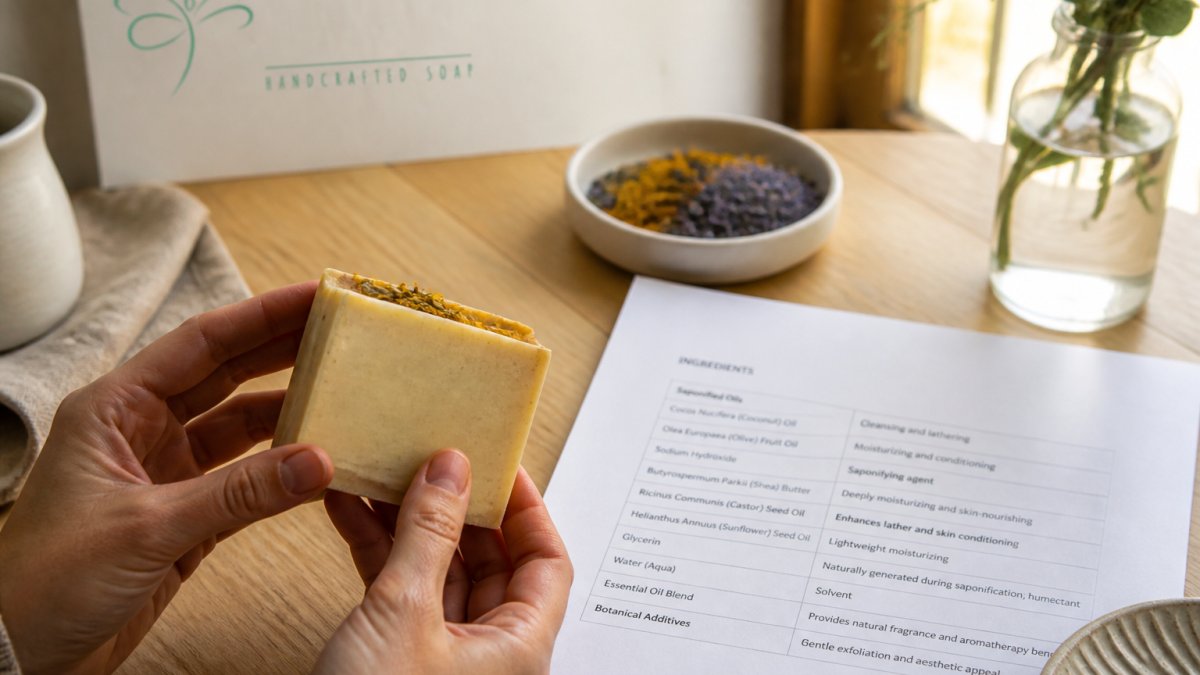
Ethical ingredient sourcing in skincare means knowing where each raw material comes from, who produced it, and under what conditions, then being able to show that trail. For a broader framework on choosing ethical body care products, see our related article.
How Fair-Trade Standards Apply to Common Skincare Ingredients
Fair-trade certification was built around agricultural commodities, and skincare relies on several. The standards generally address minimum prices, safe working conditions, no forced or child labor, freedom of association, and a community development premium.
- Shea butter. Harvested largely by women's cooperatives in West Africa. The supply chain is relatively short and cooperative-based, making shea one of the easier ingredients to trace to a producer group. A fair-trade claim on shea usually refers to the butter, not the finished bar.
- Cocoa butter. A major fair-trade commodity with established certifier directories. Cocoa supply chains are longer and more intermediated than shea, so a claim is more meaningful when the brand names the cooperative or region.
- Palm oil and palm kernel oil. Widely used for lather and hardness. Palm supply chains are complex and often blended across mills, making ingredient-level traceability harder. Scrutinize claims closely; a brand that names the mill or producer group is doing more than most.
The practical takeaway: a fair-trade logo on a bar of soap tells you almost nothing until you know which ingredient it covers. A bar can contain certified shea butter and uncertified palm oil in the same formula.
Reading a Sourcing Page Like a Contract
Read the sourcing page the way you would read a contract. Vague phrases like "responsibly sourced" or "ethically harvested" carry no defined meaning.
Watch the difference between a claim about a company and a claim about an ingredient. "We care about farmers" is a value statement.
A useful pattern to look for is the ingredient-to-producer chain: ingredient name, country or region, producer group or cooperative, certifier, and the year the relationship or certification began.
Cruelty-Free vs Fair Trade Skincare: What's the Difference?
Cruelty-free skincare concerns animals. Fair trade skincare concerns people. A product can be one, both, or neither, and the two claims are verified by completely different systems.
Cruelty-free usually means no animal testing on the finished product or its ingredients. Fair trade means the people who grew or harvested an ingredient were paid and treated according to a standard.
This matters when you shop. Our guide to vegan and cruelty-free soap brands shows the distinction in practice.
Fair Trade Shea Butter Skincare: Why It's a Good Place to Start
Shea butter is one of the easiest fair trade ingredients to trace, making it a smart entry point. It is harvested largely by women's cooperatives in West Africa, and several certifying bodies maintain records for it.
Start with a shea-based bar or balm and run the verification steps above to learn the process on a single ingredient. To understand what you're buying, read the benefits of organic soap for skin.
Questions to Ask Brands About Their Supply Chain and Transparency
The fastest way to separate real sourcing from marketing is to ask direct questions and watch how a brand answers. Vague, warm replies are a signal. Specific, documented replies are the goal.
Ask these five:
- Which certifying body verifies your fair trade claim, and for which ingredients?
- Can you share a certificate or license number I can look up?
- Which region or cooperative supplies your shea, cocoa, or palm?
- How often do you audit or review supplier records?
- Who can I contact if I want more detail?
A brand that answers with names, regions, and records is doing the work. A brand that answers with feelings is not.
Red Flags and Misleading Claims to Watch For
The biggest red flag is a fair trade logo with no certifier named anywhere. Close behind: a "fair trade" claim on a product whose main ingredients are not certified at all. Our article on natural vs synthetic ingredients in bar soap helps you spot vague claims.
Watch for these too:
- "Fair trade inspired" or "in the spirit of fair trade" with no certification
- Certification claims that vanish when you search the certifier's directory
- Sourcing pages that describe values but never name a region or supplier
None of these prove a brand is dishonest. Together, though, they mean you cannot verify the claim, and an unverifiable claim is not worth paying more for.
Explore Minerva Rae's Ethically Sourced Collection
Here is the honest limit of any guide: verification takes time, and most of us just want a bar of soap we feel good about.
Minerva Rae handcrafts soaps using both cold process and melt and pour methods, with intentionally curated ingredients and intriguing designs.
We also create customized soaps for special events, so you can build something personal.
Ready to explore? Browse the full Minerva Rae collection. If you're thinking about packaging, see our alternatives to plastic soap bottles.
Frequently Asked Questions
What does fair trade mean for skincare products?
Fair trade in skincare means the ingredients, such as shea butter, cocoa butter, or essential oils, are sourced from producers who receive fair wages, work in safe conditions, and use environmentally sustainable practices. It often involves long-term trading partnerships and community development premiums. Look for third-party certifications on the label, and check the brand's website for details on their sourcing policies.
How can I verify that a skincare brand is fair trade?
Start by checking for a recognized fair trade certification seal on the packaging or the brand's website. Then, look for a published sourcing policy that names the ingredients and countries of origin. Contact the brand directly and ask specific questions about their supplier relationships and audit processes. Cross-reference their claims with certification databases when possible. Transparency is key: a trustworthy brand will readily share information about its supply chain and third-party verifications.
Is fair trade the same as cruelty-free or organic?
No, these are distinct claims. Fair trade focuses on how ingredients are sourced and the treatment of producers. Cruelty-free means no animal testing was conducted. Organic refers to farming practices without synthetic pesticides. A product can be cruelty-free but not fair trade, or organic but not cruelty-free. Look for multiple certifications if you want to ensure a product meets several ethical standards, and read the brand's policies to understand exactly what each claim covers.
What questions should I ask a skincare brand about ingredient sourcing?
Ask where their key ingredients come from, whether they have direct relationships with producers, and if they hold any fair trade certifications. Inquire about audit frequency and how they verify worker protections. Ask for the names of their suppliers and whether they publish a supply chain map. Also ask how they handle transparency around pricing and premiums paid to producers. A brand committed to ethical sourcing will answer these questions openly and may provide documentation or links to certification records.
Finding skincare that matches your values should not require a research degree. If you want handcrafted bars made with curated ingredients and a sourcing story you can actually ask about, Minerva Rae is here to help. Explore our cold process and melt and pour soaps, request custom orders for your next event, and build a routine that feels as good as it looks. Get started with Minerva Rae and make every wash an intentional one.
