

Table of Contents
- Why Plastic Soap Bottles Create Hidden Environmental Problems
- Bar Soap vs. Liquid Soap: Benefits of Bar Soap vs Liquid Soap
- Glass and Stainless Steel Dispensers as Plastic Alternatives
- Refillable Soap Systems and Plastic-Free Hand Soap Refills
- How to Choose Ethical Body Care Products
- The Hidden Plastic in Pump Mechanisms
- Frequently Asked Questions
Last Updated: September 2, 2026
Why Plastic Soap Bottles Create Hidden Environmental Problems
Plastic soap bottles represent a significant environmental challenge most people overlook. The average plastic soap dispenser ends up in a landfill within 2-3 years, along with hidden plastic inside: pump mechanisms, valve components, and internal tubing that consumers rarely consider when discarding the bottle.
At Minerva Rae, we elevate daily self-care with a luxurious collection of handcrafted soaps and body care. Most plastic dispensers contain multiple material types fused together, making them virtually impossible to recycle. They persist in landfills for centuries, leaching microplastics into soil and water systems.
Manufacturing plastic dispensers requires fossil fuel extraction, processing, and transportation. A single plastic soap bottle generates roughly 50 grams of carbon emissions before reaching your bathroom. Over a lifetime of replacements, the accumulated impact becomes substantial.
The real opportunity isn't just switching bottles, it's reconsidering what goes inside them and how you store it. Bar soap, refillable systems, and alternative dispensers create genuine change. Below, we'll walk through each best alternative to plastic soap bottles, from bar soap to glass and stainless steel options.
Bar Soap vs. Liquid Soap: Benefits of Bar Soap vs Liquid Soap
Bar soap has been the standard for centuries, yet modern marketing created the false impression that bars are outdated. The reality is more nuanced.
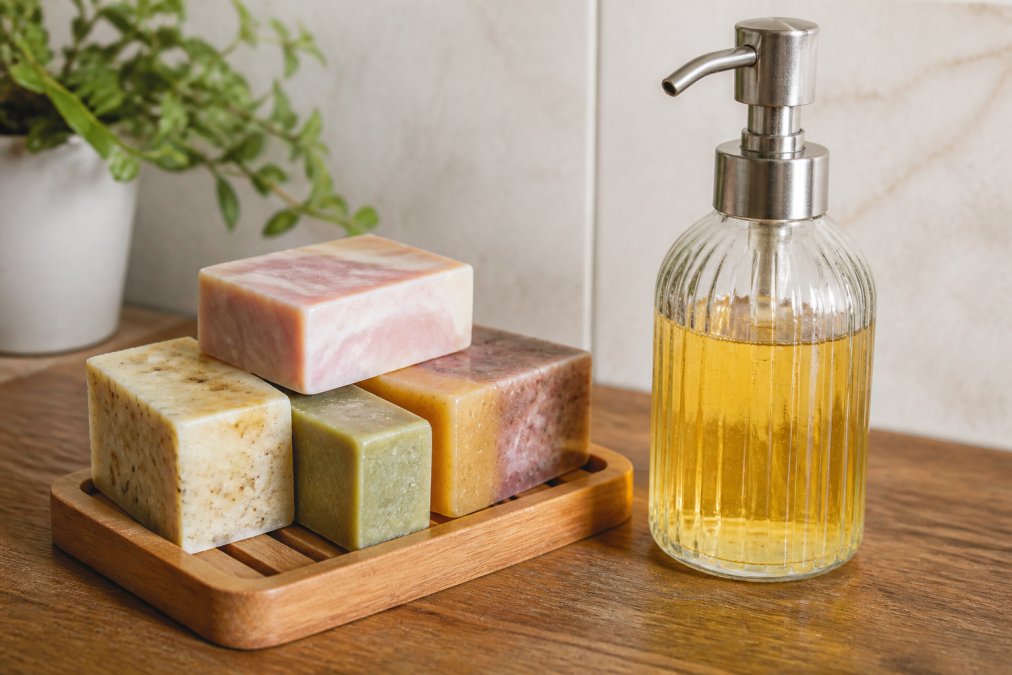
Bar soap concentrates cleaning agents into a compact form. You need less product per wash compared to liquid soap, which is often 80-90% water. A single bar typically outlasts 2-3 bottles of liquid soap in terms of wash count. For a family of four, switching to bars represents meaningful reduction in both waste and spending.
Longevity and Cost-Per-Wash Analysis
A standard bar delivers approximately 50-80 hand washes. A 5-ounce bar costs between $4 and $12 for artisanal options, yielding $0.05-0.24 per wash. Liquid soap runs $0.06-0.20 per wash but generates significant packaging waste.
A bar of soap produces zero packaging waste if purchased package-free or in minimal paper wrapping. Liquid soap requires a plastic bottle, pump mechanism, and often a cardboard box. The pump mechanism alone contains multiple plastic components that cannot be recycled together.
Handcrafted bars, like those at Minerva Rae, often last longer than commercial bars because they contain higher percentages of conditioning oils and butters.
Water Conservation and Packaging Impact
Liquid soap is roughly 75-85% water by volume. Transporting water across the country adds unnecessary weight to shipments and increases carbon footprint. Manufacturing bar soap uses less water overall and requires no plastic bottles.
Plastic soap bottles degrade into microplastics that contaminate waterways and accumulate in marine ecosystems. A paper-wrapped bar composts or biodegrades within months.
Glass and Stainless Steel Dispensers as Plastic Alternatives
If you prefer liquid soap or want refillable systems, glass and stainless steel dispensers offer direct replacements for plastic bottles. These materials are durable, non-toxic, and genuinely sustainable because they can be used for decades without degradation.
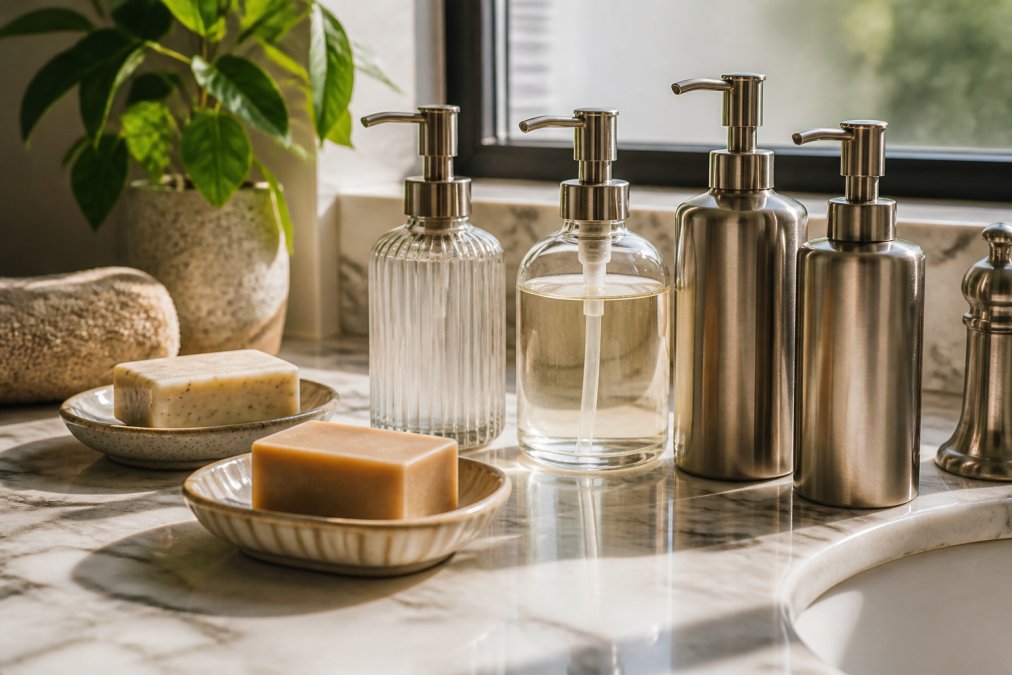
Glass dispensers are aesthetically superior to plastic and create a visual reminder of your commitment to reducing waste. Glass is chemically inert and infinitely recyclable, it can be melted down and reformed thousands of times without losing quality.
Stainless steel dispensers offer similar benefits with added durability. Steel won't shatter if dropped and resists corrosion, meaning a quality dispenser can last a lifetime. Both materials eliminate the hidden plastic problem by using metal or ceramic pump mechanisms instead of plastic tubing.
Minerva Rae's Natural Alderwood Soap Dish ($8.00) pairs beautifully with bar soaps and features slat drainage that extends bar life. The Chic Ceramic Mini Tub Soap Dish ($10.00) combines vintage charm with functional drainage design. Both eliminate plastic entirely.

Refillable Soap Systems and Plastic-Free Hand Soap Refills
Refillable soap systems represent a middle ground between bar soap and traditional liquid dispensers. These systems use a durable container that you refill with concentrated soap or solid tablets. Only the refill gets replaced, dramatically reducing waste.
Refillable systems work by concentrating soap into tablets or powder form that you mix with water at home. A single tablet replaces multiple plastic bottles. Refill packaging is typically made from recyclable paper or compostable materials, not plastic.
Concentrated Soap Tablets and Bulk Refills
Concentrated soap tablets dissolve in water to create usable liquid soap. A single tablet typically produces enough soap for 2-4 weeks of hand washing. The tablets ship in minimal packaging, often paper envelopes or cardboard boxes that are fully recyclable.
Bulk refill options work similarly but in larger quantities. Some companies offer concentrated liquid soap in glass bottles or aluminum containers. You purchase concentrate once every 3-6 months rather than buying a new plastic bottle monthly.
The plastic-free hand soap refill model eliminates repeated replacement of plastic bottles and pump mechanisms. A single refillable dispenser can serve a household for years while you cycle through dozens of refills in sustainable packaging.
Minerva Rae's Solid Dish Soap Set ($25.00) exemplifies this approach. The handcrafted solid soap comes with a sturdy wooden brush and lasts significantly longer than liquid alternatives, eliminating the need for plastic dish soap bottles.

How to Choose Ethical Body Care Products
Choosing ethical body care products requires looking beyond marketing claims to understand ingredient sourcing, manufacturing practices, and end-of-life impact. Many products marketed as "natural" still rely on plastic packaging or contain synthetic ingredients.
Start by examining the ingredient list. Genuine ethical products use recognizable plant-based ingredients without synthetic fragrances, parabens, or sulfates. Ethical brands can trace their oils and butters to specific farms or suppliers.
Manufacturing method affects both product quality and environmental impact. Cold process soap production, used by Minerva Rae, preserves beneficial properties of oils and butters while minimizing energy use.
Ingredient Transparency and Sourcing
Ethical brands provide detailed ingredient lists with full names and explain why each ingredient is included. Transparency demonstrates the brand understands its own formulations.
Sourcing transparency means knowing where oils come from and how they're produced. Brands committed to ethics can explain whether their coconut oil comes from sustainable farms and whether production methods avoid deforestation.
Natural doesn't automatically mean ethical. True ethical products combine natural ingredients with transparent sourcing and fair trade practices.
Disposal and Recycling of Old Dispensers
Plastic dispensers cannot be meaningfully recycled because pump mechanisms contain multiple fused material types. Glass and stainless steel dispensers can be fully recycled. Glass is melted down and reformed into new containers indefinitely. Stainless steel retains its properties through multiple recycling cycles.
Ceramic soap dishes can be recycled through ceramic-specific programs or repurposed. The Natural Alderwood Soap Dish ($8.00) is made from sustainable wood with no chemical finish and can be composted at end of life.
The Hidden Plastic in Pump Mechanisms
The plastic pump mechanism inside your soap dispenser is an environmental disaster rarely discussed. A typical plastic pump contains 5-8 plastic components, often made from different types fused together using adhesives that make disassembly impossible.
When the dispenser reaches end of life, the entire pump assembly goes to a landfill as contaminated plastic waste. Many recycling facilities won't accept pumps because they cannot process mixed-material assemblies.
Glass and stainless steel dispensers eliminate this problem by using metal or ceramic pump mechanisms. The pump can be replaced separately if it fails, and every component can be recycled appropriately when the dispenser reaches end of life.
The Sisal Soap Saver Bag ($4.00) from Minerva Rae offers an alternative approach. Made from 100% natural, biodegradable sisal fiber, the bag lets you use every fragment of your soap bar while providing gentle exfoliation. When the bag wears out, it composts completely without leaving microplastics behind.

Choosing the best alternatives to plastic soap bottles starts with recognizing that no single solution fits every situation. For most households, bar soap combined with a glass or ceramic soap dish eliminates plastic entirely while reducing waste and cost. For those who prefer liquid soap, refillable systems with glass or stainless steel dispensers deliver the same environmental benefits.
The shift away from plastic soap bottles represents a commitment to understanding the full lifecycle of products you bring into your home. Every small choice compounds over years of use. Minerva Rae's handcrafted soaps and sustainable accessories make this transition elegant and intentional, transforming daily routines into meaningful acts of environmental responsibility. Explore the Collection to discover how artisan-crafted soaps and thoughtfully designed dispensers can elevate your self-care while honoring your values.
| Alternative | Best For | Waste Profile | Longevity |
|---|---|---|---|
| Bar Soap | Daily hand and body washing | Zero packaging waste | 50-100+ washes per bar |
| Glass Dispensers | Liquid soap lovers | Infinitely recyclable | 10+ years with care |
| Stainless Steel Dispensers | High-traffic bathrooms | Infinitely recyclable | 15+ years |
| Refillable Systems | Convenience-focused households | Minimal paper packaging | Dispenser lasts years, refills monthly |
| Ceramic Soap Dishes | Bar soap storage | Fully recyclable or compostable | 5-10 years |
| Wooden Soap Dishes | Aesthetic preference | Compostable at end of life | 5-8 years |
The most effective transition combines a shift in product format (bar soap) with a change in storage method (glass, ceramic, or wood dispensers). This pairing eliminates plastic entirely while reducing both waste and long-term household spending. According to EPA research on household plastic waste, personal care product packaging represents one of the fastest-growing categories of landfill waste.
Research from environmental impact studies on soap production demonstrates that bar soap production generates 25-30% less carbon emissions than liquid soap when accounting for water weight and transportation.
For those concerned about skin sensitivity, dermatological research on soap formulations shows that handcrafted soaps with natural conditioning oils cause fewer irritation issues than commercial bars loaded with synthetic fragrances and preservatives. The transition to best alternatives to plastic soap bottles often improves skin health alongside reducing environmental impact.
Frequently Asked Questions
Q: What are the best plastic-free alternatives to liquid soap?
A: Bar soaps, foaming soap tablets, and concentrated refills offer zero-waste alternatives to liquid soap in plastic bottles. Bar soaps like Minerva Rae's handcrafted options last 2-3 times longer than liquid soap, reducing packaging waste significantly. Concentrated tablets dissolve in water and can be stored in glass or metal containers, eliminating plastic entirely. For dispensers, choose glass, stainless steel, or ceramic options with refillable systems that accept bulk soap refills.
Q: How do I choose ethical body care products that are truly sustainable?
A: Verify ingredient sourcing and ask for transparency about where materials come from. Look for products using cold-process or melt-and-pour methods, which require less energy than industrial production. Check for certifications like cruelty-free labeling and confirm the company uses biodegradable, non-toxic ingredients. Handcrafted soaps from makers like Minerva Rae often provide detailed ingredient lists and sourcing information, allowing you to make informed choices aligned with your values.
Q: Are plastic pump mechanisms recyclable, or are they always waste?
A: Most plastic pump mechanisms are not widely accepted in standard curbside recycling programs because they're composite materials combining plastic, metal springs, and sometimes rubber. Many end up in landfills. This is why switching to dispensers without pumps, glass bottles with pour spouts, ceramic dishes, or solid bar soaps, eliminates this hidden waste stream entirely. When replacing old dispensers, check with local recycling facilities about specialized plastic programs.
Q: How much money can I save by switching to bar soap instead of liquid soap?
A: A single bar soap typically costs $8-12 and lasts as long as 2-3 bottles of liquid soap costing $3-5 each. Over a year, switching to bar soap can save $30-50 per person, depending on usage. When you factor in the cost of plastic bottles, dispensers, and shipping, the savings increase further. Premium handcrafted bars may cost more upfront but deliver superior longevity and skin benefits, making the per-wash cost competitive or lower than commercial alternatives.
This article was written using GrandRanker