

Table of Contents
- Why Organic Soap Matters: Gentle Cleansing Without Harsh Detergents
- Benefits of Cold Process Soap: How Production Method Affects Skin Health
- Deep Moisturizing and Hydration for Dry and Sensitive Skin
- Natural Antioxidants and Vitamins That Protect Skin Barrier Function
- Soothing Relief for Skin Conditions: Eczema, Acne, and Psoriasis
- Organic Soap vs Commercial Soap: Why Natural Formulations Win
- Environmental and Ethical Impact: Biodegradable and Eco-Conscious Choice
- How to Read Labels and Avoid Greenwashing
- Frequently Asked Questions
Last Updated: September 18, 2026
Why Organic Soap Matters: Gentle Cleansing Without Harsh Detergents
Organic soap for skin represents a fundamental shift away from the synthetic detergents and chemical surfactants that dominate commercial bars. The difference lies in how these products are made and what they leave behind on your skin.
Traditional commercial soaps rely on synthetic detergents and harsh sulfates that strip away your skin's natural lipid barrier, leaving it tight, dry, and vulnerable. Organic soap, by contrast, uses saponification, a chemical process where natural oils react with an alkaline solution to create a gentler cleanser. According to the American Academy of Dermatology, maintaining your skin's natural moisture barrier is essential for preventing irritation and maintaining long-term skin health.
At Minerva Rae, we craft handcrafted soaps using cold process and melt and pour methods that preserve the beneficial compounds in natural oils. This approach means your skin gets cleansed without the chemical assault of synthetic fragrances, phthalates, or parabens. The result: a clean that feels nourishing rather than stripping.
What makes organic soap for skin so effective is what it doesn't contain. No synthetic detergents to disrupt your skin barrier. No artificial fragrances masking inferior ingredients. No parabens acting as preservatives that mimic hormones. When you switch to organic soap, you're choosing a product that respects your skin's natural chemistry instead of fighting against it.
Benefits of Cold Process Soap: How Production Method Affects Skin Health
The method used to make soap matters more than most people realize. Cold process soap creation involves mixing oils and lye at lower temperatures, which preserves the natural glycerin that forms during saponification. This glycerin remains in the bar, unlike commercial soaps where it's often extracted and sold separately.
Cold process production creates a denser, longer-lasting bar that lathers beautifully. The lower temperatures mean heat-sensitive botanical extracts, essential oils, and vitamins survive the process intact. Your skin benefits from these active compounds rather than their degraded versions.
Melt and pour soaps, which Minerva Rae also uses for certain designs, offer flexibility and visual appeal while still maintaining quality ingredients. Both methods, when executed with premium natural oils and botanicals, deliver superior results compared to mass-produced commercial alternatives.
The saponification process itself is remarkable chemistry: when natural oils meet sodium hydroxide, a complete chemical transformation occurs. The result is a mild cleanser that respects your skin's pH balance. Research from the International Journal of Cosmetic Science confirms that properly formulated natural soaps maintain skin barrier integrity better than synthetic alternatives.
Deep Moisturizing and Hydration for Dry and Sensitive Skin
Dry and sensitive skin demands a cleanser that hydrates rather than dehydrates. Organic soap for skin excels here because it contains natural emollients, oils and butters that soften and protect skin.
When you use a bar like Minerva Rae's Tallow & Goat Milk, you're getting tallow, olive oil, coconut oil, and goat milk working together. Goat milk is rich in fatty acids and proteins that calm irritation while maintaining moisture. Tallow mimics your skin's own sebum, making it instantly compatible with your skin's natural chemistry. This isn't marketing, it's basic dermatological science.

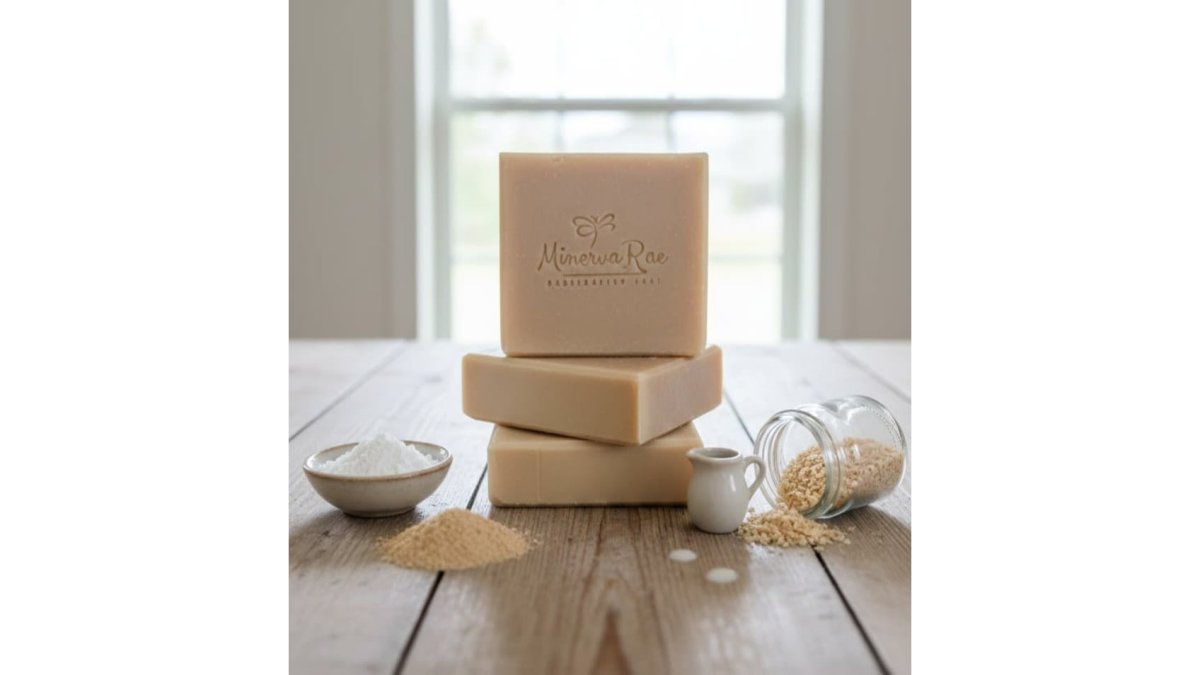
The glycerin retained in cold process soap acts as a humectant, drawing moisture into your skin. Unlike commercial bars that leave your skin feeling tight, organic soap for skin leaves a protective layer of nourishing oils.
Sensitive skin responds well to unscented bars or those with pure essential oils rather than synthetic fragrances. The Tallow & Goat Milk bar is completely unscented, making it ideal for reactive skin. Those with slightly less sensitivity can explore options like the Bulgarian Lavender, which uses pure essential oil and soothing oatmeal.

Natural Antioxidants and Vitamins That Protect Skin Barrier Function
Your skin barrier is your first line of defense against environmental stressors, pollution, and pathogens. Organic soap for skin supports this barrier by delivering antioxidants and vitamins that commercial bars simply don't contain.
Natural ingredients like turmeric, honey, shea butter, and botanical extracts are rich in antioxidants. These compounds neutralize free radicals, unstable molecules that damage skin cells and accelerate aging. When you wash with soap containing these ingredients, you're not just cleansing; you're delivering active protection.
The Turmeric & Honey bar from Minerva Rae combines golden turmeric (known for anti-inflammatory properties) with honey (a natural humectant and antioxidant powerhouse). Turmeric has been used in skincare for centuries, and modern research validates its role in reducing inflammation and supporting skin health.

Shea butter, found in many Minerva Rae formulations, contains vitamins A and E, both critical for skin repair and protection. Vitamin E is a potent antioxidant that prevents oxidative stress, while vitamin A supports cell turnover.
The difference between organic soap for skin and commercial alternatives becomes clear when you understand ingredient density. A commercial bar might list "shea butter" but contain minimal amounts. Minerva Rae's handcrafted bars use substantial quantities of premium ingredients, ensuring you get actual benefits, not just marketing claims.
Soothing Relief for Skin Conditions: Eczema, Acne, and Psoriasis
For those dealing with eczema, acne, or psoriasis, soap choice can either aggravate or alleviate symptoms. Organic soap for skin offers genuine relief because it avoids the triggers that worsen these conditions.
Synthetic detergents, sulfates, and artificial fragrances are common irritants for eczema-prone skin. They disrupt the skin microbiome, the delicate ecosystem of beneficial bacteria that keeps your skin healthy. Organic soap maintains this microbiome instead of destroying it.
For acne-prone skin, the Charcoal & Tea Tree bar offers targeted support. Activated charcoal draws out impurities and excess oil without over-drying. Tea tree essential oil has natural clarifying properties, while the soap's nourishing oil base prevents the tight, stripped feeling that leads to rebound oil production.
Psoriasis requires gentle care combined with soothing ingredients. Oatmeal, found in Minerva Rae's Old Fashioned Tallow & Oatmeal, provides gentle exfoliation and natural soothing compounds.
Organic Soap vs Commercial Soap: Why Natural Formulations Win
The comparison between organic soap for skin and commercial alternatives reveals stark differences in ingredient quality, production methods, and skin outcomes.
| Factor | Organic Soap | Commercial Soap |
|---|---|---|
| Glycerin Content | Retained in bar | Extracted and sold separately |
| Synthetic Ingredients | None | Detergents, sulfates, phthalates |
| Production Temperature | Lower (preserves actives) | Often high-heat (degrades ingredients) |
| Shelf Life | 1-2 years | Extended with preservatives |
| Skin Barrier Impact | Supportive | Often stripping |
| Price Point | $12 per bar | $2-4 per bar |
Commercial soap manufacturers prioritize shelf stability, cost reduction, and visual appeal. They extract glycerin (a valuable ingredient) to sell separately. They use synthetic fragrances because they're cheaper than essential oils.
Environmental and Ethical Impact: Biodegradable and Eco-Conscious Choice
Choosing organic soap for skin isn't just about personal health, it's about environmental responsibility. Commercial soaps leave a chemical footprint; organic alternatives biodegrade naturally.
How to Read Labels and Avoid Greenwashing
Not all soaps labeled "natural" or "organic" are created equal. Learning to read labels protects you from greenwashing, marketing claims that suggest environmental or health benefits that don't exist.
Red flags on soap labels:
- "Natural fragrance" without specifying essential oils (often synthetic)
- "Organic" without third-party certification
- Ingredient lists that include synthetic detergents (sodium lauryl sulfate, sodium laureth sulfate)
- Parabens, phthalates, or synthetic preservatives
- Vague terms like "botanical extract" without naming the plant
What to look for:
- Full ingredient transparency (INCI list)
- Named essential oils or fragrance oils (not "fragrance")
- Cold process or melt and pour methods stated
- Specific natural oils and butters (olive oil, shea butter, coconut oil)
- No synthetic detergents
- Simple, readable ingredient lists
| Label Claim | What It Actually Means | What to Verify |
|---|---|---|
| "Natural" | Contains natural ingredients | Check full INCI list for synthetics |
| "Organic" | Made from organic-certified materials | Look for third-party certification |
| "Cold Process" | Lower-temperature production | Confirm with full ingredient list |
| "Handmade" | Crafted in small batches | Verify production method, not just marketing |
| "Cruelty-Free" | No animal testing | Check certification or brand statement |
Frequently Asked Questions
What makes organic soap better for sensitive skin than commercial bars?
Organic soap avoids synthetic detergents, parabens, sulfates, and phthalates that trigger irritation in sensitive skin. Cold-process soaps retain glycerin naturally produced during saponification, which locks moisture into the skin barrier. Commercial bars strip glycerin to use elsewhere, leaving skin dry and inflamed. Handcrafted options like Tallow & Goat Milk use simple, skin-loving ingredients without synthetic fragrances or dyes, making them ideal for reactive skin.
How does the saponification process in cold-process soap benefit skin?
Saponification is the chemical reaction where oils and lye combine to create soap and naturally occurring glycerin. Cold-process methods preserve heat-sensitive botanical extracts and antioxidants that commercial high-heat processes destroy. The result is a bar richer in skin-conditioning emollients and vitamins. This method also retains the glycerin byproduct, delivering superior hydration compared to commercial soaps that remove it for profit.
Will organic soap help with acne or eczema?
Organic soap can help manage these conditions by avoiding irritants that worsen inflammation. Bars with kaolin clay and charcoal, like Charcoal & Tea Tree, gently draw out impurities without stripping the skin barrier. For eczema, unscented options like Tallow & Goat Milk prevent flare-ups from synthetic fragrances and essential oils. Always patch-test first, as some botanical extracts may trigger sensitivity in severe cases. Consult a dermatologist if symptoms persist.
How long does handcrafted organic soap last compared to commercial bars?
Cold-process bars are denser and lather more efficiently, meaning you use less per wash. Store organic soap on a draining rack between uses to extend shelf life further.
What should I look for on an organic soap label to avoid greenwashing?
Look for a complete ingredient list. Avoid vague claims like 'natural' or 'eco-friendly' without backing. Check for synthetic fragrances listed as 'fragrance' or 'parfum', genuine organic soaps use essential oils or botanical extracts. Transparent brands disclose sourcing and production methods.