

Table of Contents
- Why Monticello Soap Alternatives Matter for Sensitive Skin
- Ingredients to Avoid in Soap for Sensitive Skin
- Best Natural Soap for Sensitive Skin: Minerva Rae Handcrafted Options
- How to Choose a Sensitive Skin Soap: What Dermatologists Look For
- Cost Per Use and Longevity: Why Handcrafted Bars Last Longer
- Water Hardness and pH Balance: How They Affect Sensitive Skin
- Conclusion
Last Updated: August 24, 2026
Why Monticello Soap Alternatives Matter for Sensitive Skin
If you've struggled with conventional soaps that leave your skin tight, inflamed, or worse, you're not alone. Many people with sensitive skin have tried popular brands only to discover they're paying for fragrance and marketing rather than genuine care. That's where understanding sensitive skin soap alternatives becomes essential. The right bar doesn't just clean, it repairs your skin barrier while delivering the luxurious experience you deserve.
At Minerva Rae, we've spent years perfecting handcrafted soaps specifically for people whose skin demands gentler treatment. The difference between a generic bar and one formulated for sensitive skin comes down to ingredient selection, pH balance, and the absence of common irritants. This guide walks you through what makes a soap truly suitable for reactive skin, and introduces you to alternatives that actually deliver results without compromise.
The stakes matter here. Using the wrong soap on sensitive skin isn't just uncomfortable, it can trigger flare-ups, worsen eczema, or create a cycle of irritation that takes weeks to recover from. The good news: once you understand what to look for, finding a bar that works becomes straightforward.
Ingredients to Avoid in Soap for Sensitive Skin
Not all soap ingredients are created equal, and for sensitive skin, certain components are outright problematic. Understanding what to eliminate is often more important than knowing what to add.
Synthetic surfactants like sodium lauryl sulfate (SLS) are the primary culprit. These aggressive cleansing agents strip your skin's natural oils, compromising the lipid barrier that keeps moisture in and irritants out. When that barrier breaks down, you get the tight, uncomfortable feeling that sends many people searching for alternatives in the first place.
Parabens present another concern. These preservatives penetrate skin easily and can accumulate over time, triggering sensitivity in people whose skin has become reactive to chemical preservatives (peer-reviewed research). Many dermatologists recommend avoiding them entirely for compromised skin barriers.
Essential oils, while natural, aren't inherently gentle. Citrus oils, cinnamon, and clove are particularly problematic, they're volatile compounds that can irritate sensitive skin even in small amounts. If you've had bad experiences with "natural" soaps, essential oil concentration is often the culprit.
Artificial fragrances and dyes serve no purpose beyond aesthetics. They're among the most common triggers for contact dermatitis and eczema flare-ups. Fragrance-free isn't a compromise, it's a necessity for truly sensitive skin.
Sulfates beyond SLS (like sodium laureth sulfate) create similar stripping effects. Your skin doesn't need aggressive foaming action; it needs gentle cleansing that respects your skin's natural pH and protective layers.
Best Natural Soap for Sensitive Skin: Minerva Rae Handcrafted Options
When you're looking for a sensitive skin soap alternative that actually performs, handcrafted bars made with intention beat mass-produced options consistently. Minerva Rae creates soaps using cold process methods, which preserve the natural glycerin that commercial soap manufacturers strip out for profit. That glycerin is crucial, it draws moisture into your skin rather than depleting it.
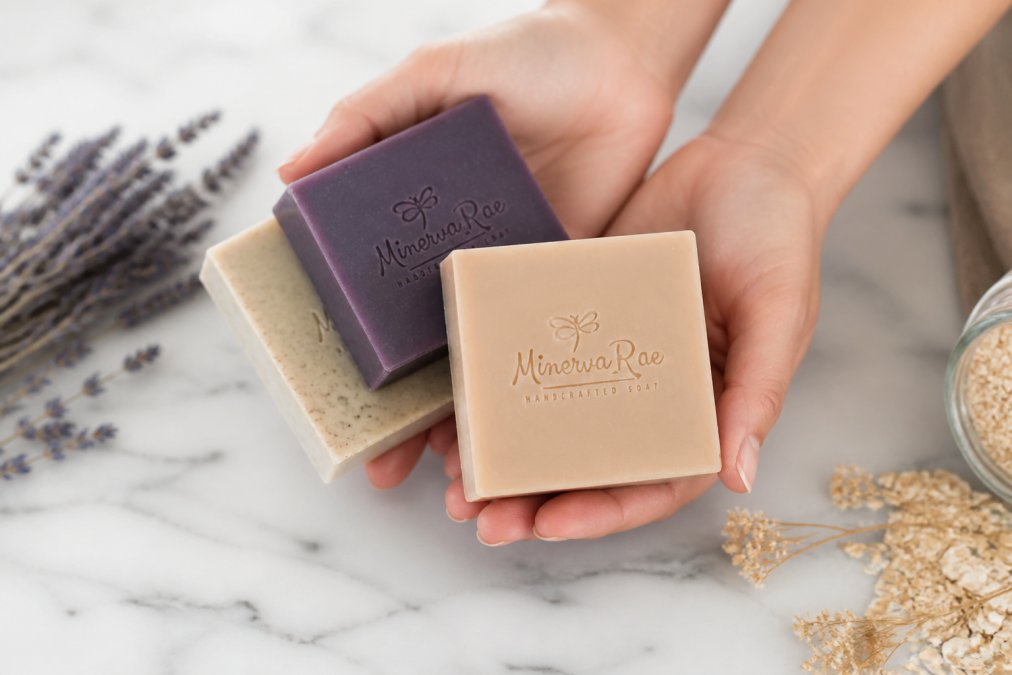
Tallow & Goat Milk: The Fragrance-Free Foundation
Tallow gets dismissed by modern skincare culture, but it's one of the most biocompatible ingredients for sensitive skin. Your skin recognizes tallow as similar to its own natural sebum, which means it absorbs without that greasy residue. Combined with goat milk, a natural humectant that holds moisture, this bar delivers serious hydration without any added fragrance or botanical irritants.

The Tallow & Goat Milk bar at Minerva Rae costs $12.00 and is completely unscented. For people whose skin reacts to any fragrance, natural or synthetic, this is the starting point. It contains approximately 4.5 ounces of pure, simple ingredients: tallow, olive oil, water, goat milk, coconut oil, and sodium hydroxide (which converts to soap during saponification, none remains in the finished bar).

The creamy lather feels luxurious without stripping. Many users report that after switching to this bar, their skin stops over-producing oil because it's finally getting the hydration it needs. That's the lipid barrier repairing itself.
Bulgarian Lavender: Soothing Essential Oil Alternative
Not everyone with sensitive skin needs to avoid all fragrance, many do fine with pure essential oils at appropriate concentrations. Bulgarian lavender essential oil is one of the gentlest options available. Unlike synthetic fragrance or irritating citrus oils, lavender has documented calming properties and rarely triggers reactions.
The Bulgarian Lavender bar ($12.00) combines lavender essential oil with colloidal oats and Tussah silk, creating a bar that soothes while it cleanses. The oats provide gentle exfoliation, important because sensitive skin still needs to shed dead cells, just without harsh scrubbing. Brazilian purple clay adds a subtle detoxifying element without over-drying.

This bar works particularly well for people whose sensitivity manifests as inflammation or redness. The combination of lavender's calming properties, oatmeal's soothing effect, and the bar's balanced pH means you're addressing the root cause rather than just masking irritation.
The ingredient list reveals the care taken: olive oil, water, coconut oil, sodium hydroxide, shea butter, castor oil, Bulgarian lavender essential oil, Brazilian purple clay, cane sugar, colloidal oats, and Tussah silk. Each component serves a purpose, no filler, no irritants.
Old Fashioned Tallow & Oatmeal: Gentle Exfoliation Without Irritation
This bar ($12.00) splits the difference between the completely unscented option and the lavender. It includes oatmeal for light exfoliation and a mild fragrance of oatmeal, milk, and honey, natural enough that most people with fragrance sensitivity tolerate it well.
The formulation combines tallow, coconut oil, shea butter, olive oil, castor oil, and finely ground oatmeal. The oatmeal isn't harsh; it's been ground fine enough to exfoliate without creating micro-tears in already-compromised skin. Tussah silk and cane sugar add additional soothing and moisturizing benefits.
For people who find completely unscented soap boring but can't handle traditional fragrances, this is the bridge. The oatmeal itself provides gentle mechanical exfoliation, which is often what sensitive skin actually needs, not chemical exfoliants, but physical removal of dead cells that can trap bacteria and worsen irritation.
How to Choose a Sensitive Skin Soap: What Dermatologists Look For
Choosing the right bar requires understanding what actually matters on an ingredient label. Most people focus on the wrong signals.
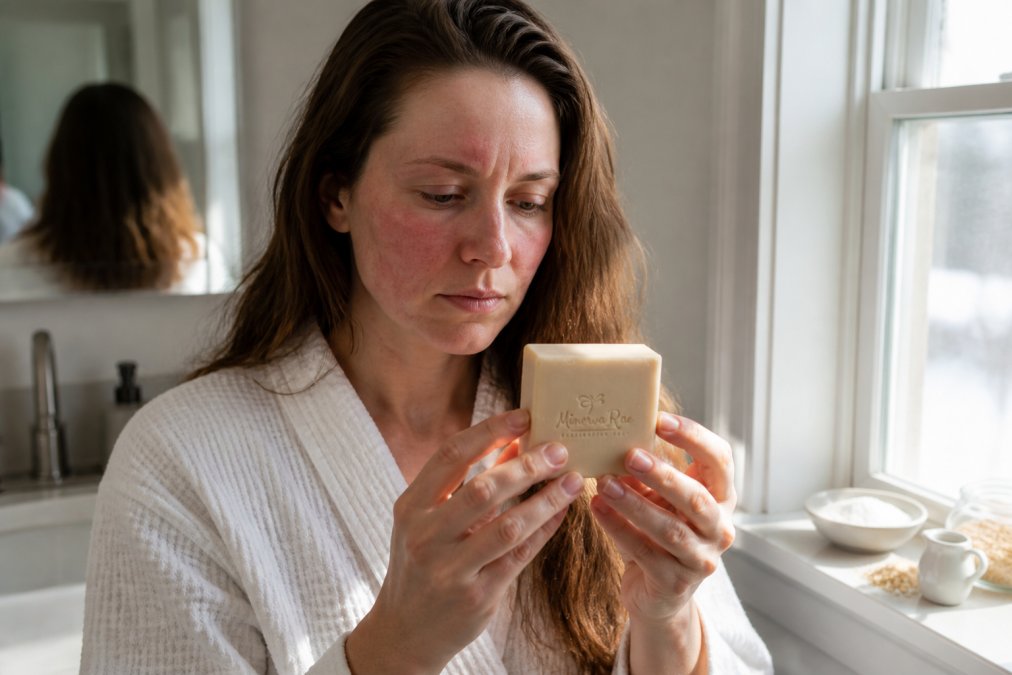
Start with the ingredient list, reading from the first item onward. The first three ingredients determine what that bar actually is. If you see "sodium lauryl sulfate" or "sodium laureth sulfate" anywhere in the top five, move on. These create the stripping action that damages sensitive skin.
Look for pH-balanced claims backed by actual pH testing. Your skin's natural pH is around 4.5 to 5.5 (slightly acidic) (the American Academy of Dermatology). Soap made through traditional saponification is naturally alkaline, which is why many people experience tightness. Cold-processed handcrafted soaps like Minerva Rae's minimize this effect by preserving glycerin and using oils that create a more skin-friendly pH environment.
Check whether the bar is non-comedogenic. This means it won't clog pores, which matters because sensitive skin often comes with acne-prone tendencies. Oils like coconut can be comedogenic for some people, so look for formulations that prioritize lighter oils or use them sparingly.
Hypoallergenic labeling is mostly marketing, but it signals intent. A truly hypoallergenic bar avoids the most common allergens: synthetic fragrance, essential oils at high concentrations, and preservatives like parabens or formaldehyde-releasers.
The presence of natural humectants like glycerin, goat milk, or honey matters significantly. These draw moisture into your skin rather than just cleaning it away. If the ingredient list doesn't include at least one humectant, the bar will likely feel drying.
Avoid bars with synthetic surfactants entirely. Look instead for soaps made through cold process saponification, where oils are converted to soap through a chemical reaction with lye. The lye doesn't remain in the finished product, it's consumed during saponification, but the method preserves beneficial compounds that commercial soap manufacturing strips away.
Cost Per Use and Longevity: Why Handcrafted Bars Last Longer
This is where many people discover that handcrafted soap isn't actually more expensive, it's more economical.
A drugstore bar might cost $1.50 and last two weeks of daily showers. That's roughly 14 uses before it's gone, or about 11 cents per use. You're also paying for water weight (drugstore bars are often 50% water) and packaging that costs more than the product.
A Minerva Rae bar at $12.00 lasts significantly longer. Handcrafted cold-process soap is denser and contains less water. Most users report a single bar lasting 4-6 weeks with daily use, translating to 28-42 uses. That's roughly 29-43 cents per use, but here's the critical part: the quality difference is substantial.
You're not just getting more uses; you're getting a bar that doesn't strip your skin, which means you're not spending money on expensive moisturizers to repair the damage caused by cheap soap. Many people with sensitive skin spend $30-50 monthly on remedial skincare products that wouldn't be necessary if they used the right bar to begin with.
The math shifts further when you consider that proper soap for sensitive skin often prevents flare-ups, eczema treatments, and dermatologist visits. A $12 bar that prevents a $200 dermatology appointment is objectively cheaper.
Cold-processed bars also maintain their integrity longer. The natural glycerin keeps them firm rather than mushy. A handcrafted bar in a proper soap dish (not sitting in standing water) will last through its entire intended use without dissolving prematurely.
Water Hardness and pH Balance: How They Affect Sensitive Skin
This is the factor almost nobody discusses, but it's critical for understanding why a soap works beautifully for one person and poorly for another.
Water hardness, the mineral content in your water supply, dramatically affects how soap performs. Hard water contains calcium and magnesium ions that interfere with soap's cleansing action. Instead of lathering, the soap binds to those minerals and leaves a film on your skin. For sensitive skin, that film can trigger irritation or feel uncomfortable.
If you have hard water, you need a bar formulated to handle it. Soaps containing more castor oil and less coconut oil perform better in hard water because their molecular structure resists mineral binding. Minerva Rae's formulations account for this by using balanced oil ratios that work across different water types.
pH balance is equally important. Your skin's acid mantle, the slightly acidic layer that protects against bacteria and irritants, gets disrupted by alkaline soap. Traditional soap is naturally alkaline (pH 8-10), which is why many people experience that tight, uncomfortable feeling immediately after washing.
Handcrafted cold-process soap minimizes this problem. The natural glycerin that remains in the bar acts as a buffer, bringing the effective pH closer to skin-neutral. Additionally, the slower saponification process in cold-process methods allows for more complete conversion of oils to soap, reducing excess alkalinity.
For sensitive skin, this matters more than almost any other factor. A bar with the perfect ingredients but wrong pH will still cause irritation. A bar with simpler ingredients but correct pH will perform well. This is why dermatologists often recommend handcrafted bars over commercial options, the cold-process method naturally produces a more skin-appropriate product.
If you're unsure about your water hardness, check with your local water utility or use an inexpensive test kit. Knowing this helps you choose a bar formulated to work with your specific water chemistry rather than against it.
Conclusion
Finding a sensitive skin soap alternative that works means moving beyond marketing claims and understanding actual chemistry. Minerva Rae's handcrafted bars, particularly the Tallow & Goat Milk for extreme reactivity and the Bulgarian Lavender for those who tolerate gentle essential oils, deliver the combination of skin-nourishing ingredients, proper pH balance, and careful formulation that sensitive skin requires. Each bar is made using cold process methods that preserve beneficial glycerin while avoiding the harsh surfactants that trigger irritation. Explore the Collection and discover how the right soap transforms your daily routine from something that damages your skin barrier into something that repairs it.
Frequently Asked Questions
What makes a soap safe for extremely sensitive skin?
A safe soap for sensitive skin should be fragrance-free or scented only with essential oils, free from synthetic surfactants like SLS, and formulated with natural humectants and emollients such as glycerin, shea butter, and oatmeal. Look for bars labeled hypoallergenic and non-comedogenic, ideally dermatologist-tested. The Tallow & Goat Milk bar from Minerva Rae exemplifies this approach, it's unscented, contains no added fragrance or harsh chemicals, and includes soothing goat milk that supports the skin barrier without stripping natural oils.
How do I know if a soap will irritate my sensitive skin before buying?
Check the full ingredient list for common irritants like parabens, sulfates, artificial fragrances, and dyes. Start with fragrance-free options or those scented only with pure essential oils. Cold-process soaps tend to retain more glycerin and are gentler than industrial bars. Request samples if available, or begin with a single bar rather than bulk orders. Patch-test new soaps on a small area first, especially if you have eczema-prone or dermatitis-prone skin. Minerva Rae's handcrafted bars list all ingredients upfront, making it easy to screen before purchase.
What's the difference between bar soap and liquid wash for sensitive skin?
Bar soaps made through cold-process methods retain natural glycerin, creating a gentler cleanse that doesn't strip the lipid barrier. Liquid washes often contain synthetic surfactants and preservatives that can disrupt the skin microbiome. Handcrafted bars like those from Minerva Rae are typically free of excess water and fillers, meaning they last longer and deliver concentrated natural ingredients. However, liquid formulations can be easier to control for those with severe sensitivities, as you can dilute them. For most sensitive skin types, a quality bar soap offers superior value and gentleness.
Why do artisanal soaps cost more than drugstore brands?
Handcrafted soaps cost more because they're made in small batches using premium ingredients like tallow, shea butter, and pure essential oils rather than synthetic fillers. Cold-process and melt-and-pour methods preserve beneficial glycerin that commercial producers remove to resell separately. Artisanal makers source ethically and often use organic, cruelty-free ingredients. A 4.5 oz bar at $12 from Minerva Rae provides better cost-per-use than drugstore alternatives because the concentrated formula means less soap is needed per wash, and the bars last significantly longer due to their density and lack of water filler.
This article was written using GrandRanker