

Table of Contents
- Why Natural Soap Matters for Sensitive Skin
- Key Ingredients to Look for in Natural Soap for Sensitive Skin
- Ingredients to Avoid in Soap for Sensitive Skin
- How to Choose Fragrance-Free Soap
- Cold Process Soap: Why It Matters for Your Skin
- Transitioning to Natural Soap: What to Expect
- Addressing Specific Skin Conditions
- Conclusion
Last Updated: August 15, 2026
Why Natural Soap Matters for Sensitive Skin
Sensitive skin means your skin barrier is compromised, your pH is off balance, and conventional soaps make things worse. Mass-market soaps are built for efficiency and shelf life, not skin health. Most contain synthetic surfactants, harsh detergents, and chemical preservatives designed to strip oils quickly.
Natural soap works differently. It respects your acid mantle, the protective layer that keeps irritants out and moisture in. When that barrier is intact, your skin can heal. The difference between a bar that soothes and one that stings comes down to how it's made and what it contains.
Key Ingredients to Look for in Natural Soap for Sensitive Skin
When choosing natural soap for sensitive skin, ingredient lists matter more than marketing claims. The best formulations combine plant-based oils that nourish with soothing agents that calm inflammation.
Plant-Based Oils and Natural Glycerin
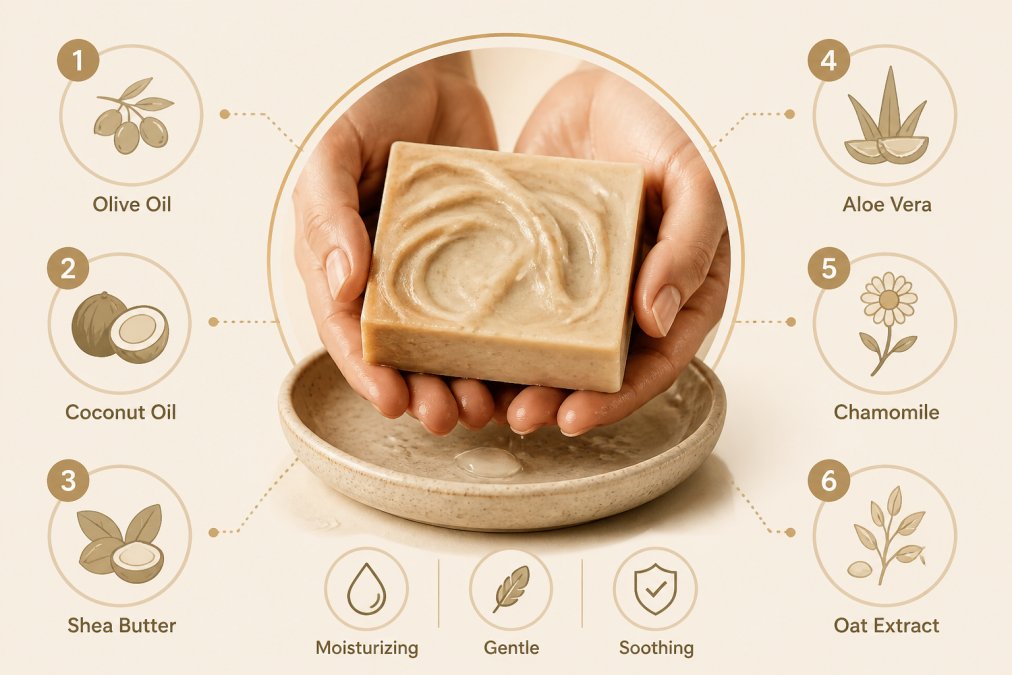
Plant-based oils form the foundation of quality natural soap. Olive oil brings antioxidants and deep moisturizing power. Coconut oil provides lather without stripping when used in balance. Sunflower oil adds vitamins and gentle conditioning.
Natural glycerin is the unsung hero of sensitive skin soap. During cold process soap making, glycerin forms naturally as a byproduct. Many commercial manufacturers strip it out to sell separately, leaving their bars harsh and drying. Quality natural soap retains this glycerin, which acts as a humectant, drawing moisture into your skin rather than pulling it away.
A bar with retained glycerin feels creamy and leaves skin soft rather than tight. Your sensitive skin needs that moisture retention, especially if you deal with winter dryness or eczema-prone patches.
Benefits of Goat Milk Soap for Skin
Goat milk soap stands apart because goat milk's pH and protein structure closely mirror human skin. The alpha hydroxy acids in goat milk gently exfoliate without harshness, while the proteins and fats nourish the skin barrier.
For eczema-prone and psoriasis-prone skin, goat milk soap offers measurable relief. The milk proteins reduce inflammation, the fats restore lipids your compromised barrier is missing, and the gentleness means no additional irritation. Many people report reduced itching and redness within days of switching to a quality goat milk formulation.
Shea Butter and Soothing Agents
Shea butter is a powerhouse for sensitive skin because it's rich in fatty acids and vitamins that restore the lipid barrier. Unlike mineral oil or silicones that sit on top of skin, shea butter absorbs and integrates, strengthening your skin's ability to hold moisture.
Soothing agents amplify the calming effect. Oatmeal provides gentle exfoliation while soothing inflammation. Honey adds antimicrobial properties and humectant power. Chamomile, calendula, and other plant extracts reduce redness and support healing. A bar combining shea butter with oatmeal, honey, and a fragrance-free formulation is significantly better for reactive skin.
Ingredients to Avoid in Soap for Sensitive Skin
Just as important as knowing what to include is understanding which ingredients to avoid. Common irritants hide behind familiar names.
Synthetic surfactants like sodium lauryl sulfate are designed to strip oils aggressively. They create dramatic lather that consumers associate with cleaning power, but they strip your acid mantle and disrupt your skin barrier. Synthetic fragrances and essential oils in high concentrations trigger reactions in sensitive skin. Fragrance is a catch-all term that can hide dozens of undisclosed chemicals.
Parabens, phthalates, and synthetic dyes serve no purpose for your skin. They're common allergens, and eliminating them often eliminates the reactions that made you think your skin was "just difficult."
Natural soap for sensitive skin should be short in ingredient count and long on transparency. If you can't recognize most of what's listed, it's probably not the right bar for compromised skin.
How to Choose Fragrance-Free Soap
Fragrance-free soap isn't a punishment, it's a strategic choice that eliminates a major irritation source. The challenge is that "fragrance-free" isn't regulated, so manufacturers can use the term loosely. A truly fragrance-free formulation contains no added fragrance, no essential oils, and no masking compounds.
When evaluating fragrance-free soap, check the ingredient list for these red flags: fragrance, parfum, essential oils, or botanical extracts listed for scent rather than function. The best fragrance-free soaps are cold process bars made with a simple oil blend.
Test fragrance-free soap on a small area first if you're transitioning from scented products. Your skin may need a few days to adjust to the absence of fragrance. This adjustment is normal and typically resolves within a week.
Cold Process Soap: Why It Matters for Your Skin
Cold process soap making is a specific technique where oils are mixed with lye at room temperature, allowing a chemical reaction to occur naturally over time. This method takes 4-6 weeks from pour to finished bar, but the payoff for sensitive skin is significant. The slow saponification preserves natural glycerin, maintains the integrity of delicate ingredients, and creates a denser, longer-lasting bar.
During the cold process, the soap maker has precise control over the reaction. The natural glycerin remains in the bar instead of being extracted. Temperatures stay low, protecting heat-sensitive oils and botanical ingredients. Compare this to melt and pour soap, where a pre-made soap base is melted and reformulated. While faster to produce, melt and pour typically requires additional emulsifiers, preservatives, and binders that can irritate sensitive skin.
The density of cold process bars also means they last significantly longer, making the cost per use competitive with conventional options.
Transitioning to Natural Soap: What to Expect
Switching to natural soap for sensitive skin isn't instantaneous. Most people experience a 1-2 week adjustment phase where their skin may feel different, sometimes drier initially, before improving.
This adjustment happens because your skin is rebalancing. Conventional soaps strip oils aggressively, triggering your skin to overproduce sebum to compensate. When you switch to a gentler natural soap, your skin stops overproducing but hasn't yet recalibrated.
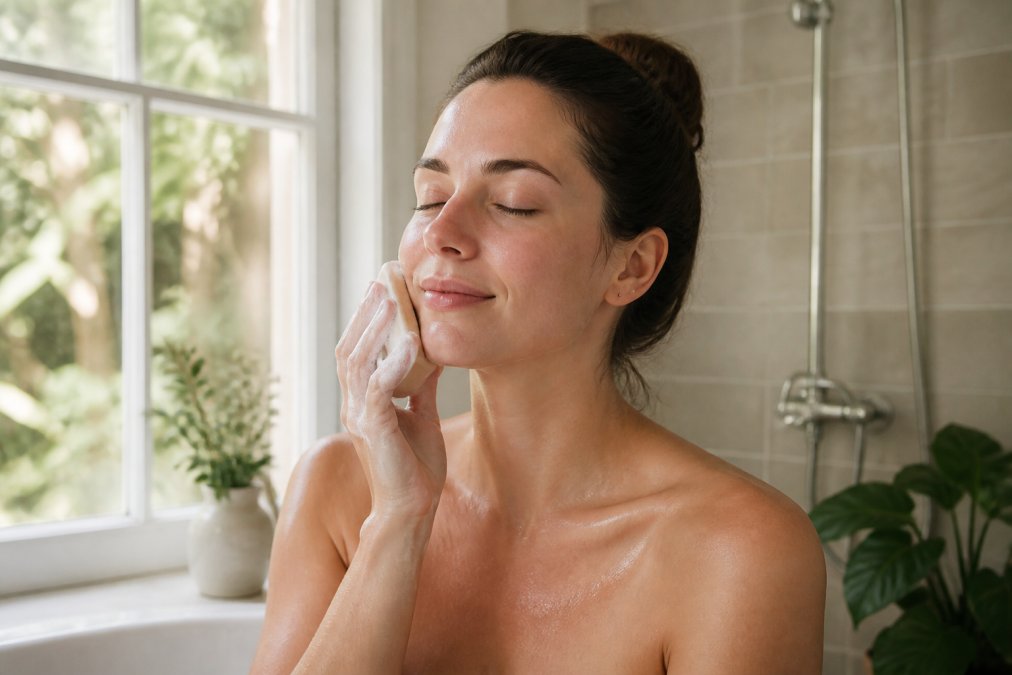
During the first week, use your new natural soap once daily, preferably in the evening. By week two, if you're not experiencing increased irritation, move to twice daily. By week three, most people notice their skin feeling softer, less tight, and less reactive.
Keep your routine simple during transition. Don't introduce new moisturizers, serums, or other products simultaneously. Let your skin adjust to the natural soap first. Many people find that natural soap alone is enough once their barrier heals.
Addressing Specific Skin Conditions
Different skin conditions respond to natural soap differently. Understanding your specific issue helps you choose the right formulation and set realistic expectations.
Eczema and Psoriasis Relief
Eczema and psoriasis both involve inflammation and a compromised skin barrier. Natural soap can't cure either condition, but it can significantly reduce flare-ups by eliminating irritants and providing nourishing ingredients.
For eczema, the priority is eliminating triggers. Synthetic surfactants, fragrances, and dyes are common triggers. Switching to a fragrance-free, dye-free natural soap removes these irritants immediately. Adding goat milk or oatmeal provides anti-inflammatory and soothing benefits. Most people see noticeable improvement within 2-3 weeks.
Psoriasis responds similarly but may need additional support. A natural soap with gentle exfoliating properties like oatmeal, combined with deeply nourishing ingredients like shea butter, helps manage symptoms. The key with both conditions is consistency. Your skin needs sustained support to show results.
Dry Skin and the Acid Mantle
Dry skin often isn't actually dry, it's dehydrated and irritated. True dry skin lacks lipids (oils). Dehydrated skin lacks water. Many people with sensitive skin experience both simultaneously, and conventional soaps make both worse by stripping the acid mantle.
Natural soap for sensitive skin breaks this cycle by maintaining pH balance and preserving natural glycerin. A cold process bar with plant-based oils and natural glycerin supports both lipid and water retention. Your skin can heal its barrier, and once functional again, dryness typically improves significantly.
If you have chronic dry skin, look for natural soaps with higher percentages of conditioning oils like olive oil or shea butter. These create a creamier lather and leave more nourishing residue on your skin.
Choosing natural soap for sensitive skin means prioritizing ingredients that support rather than compromise your skin barrier. The best bars combine plant-based oils, natural glycerin, and soothing agents in formulations that respect your skin's chemistry. Minerva Rae's handcrafted soaps, created using cold process methods with intriguing designs and premium ingredients, exemplify how natural soap can transform your routine from a source of irritation into a moment of genuine care. When your skin stops reacting and starts healing, you'll understand why so many people make the switch to natural soap permanent.
National Eczema Association guidance on gentle cleansing
American Academy of Dermatology resources on sensitive skin care
FDA overview of soap and detergent ingredients
Frequently Asked Questions
What makes natural soap better for sensitive skin than conventional soap?
Natural soap for sensitive skin avoids synthetic surfactants, parabens, and sulfates that strip the acid mantle, your skin's protective barrier. Cold process soaps retain natural glycerin, which conventional soaps often remove. Plant-based oils and butters nourish rather than irritate. Many natural formulas include hypoallergenic ingredients like oat, shea butter, and goat milk, which soothe inflammation and support the lipid barrier without triggering reactions.
Is goat milk soap good for sensitive skin conditions like eczema?
Yes. Goat milk soap contains fatty acids and pH levels close to healthy skin, making it non-comedogenic and gentle. The natural fats and proteins in goat milk help restore the skin barrier and reduce itching. Many people with eczema or psoriasis report relief from redness and dryness when using goat milk soap. It's dermatologically suitable for sensitive, reactive skin and supports healing without harsh chemicals.
What's the difference between fragrance-free and unscented soap?
Fragrance-free soap contains no added scents, neither synthetic nor essential oils. Unscented soap may still have a faint natural aroma from ingredients like cocoa or oats but has no added fragrance compounds. For extremely sensitive skin, fragrance-free is safer because even essential oils can trigger reactions. Check labels carefully: 'unscented' doesn't always mean fragrance-free, and some brands add masking fragrances to unscented products.
How long does a natural soap bar actually last compared to drugstore soap?
Handcrafted natural soaps, especially cold process bars, typically last 2-3 weeks longer than commercial bars due to higher oil content and retained glycerin. The denser formula creates a creamier lather that uses less soap per wash. Proper storage on a well-draining soap dish extends longevity further. While natural bars may cost more upfront, the longer lifespan and superior skin benefits offset the price difference over time.
This article was written using GrandRanker