

Table of Contents
- Why Winter Strips Your Skin Barrier
- The Best Natural Oils for Dry Skin
- The Benefits of Cold Process Soap for Dry Skin
- How to Prevent Winter Skin Flaking
- Internal vs. External Hydration Synergy
- Skin-Type Specific Winter Routines
- Environmental Impact Beyond Humidity
- Conclusion
- Frequently Asked Questions
Last Updated: September 16, 2026
Why Winter Strips Your Skin Barrier
Cold air holds less moisture than warm air, and indoor heating pulls what little humidity remains right out of your home. The result is a skin barrier that struggles to hold water, which is why so many people search for natural ways to hydrate skin during winter once the first cold snap hits.
Your skin barrier is the outermost layer of skin, made of lipids and dead skin cells that lock in water and keep irritants out. When that lipid layer thins, water escapes through a process called transepidermal water loss, and you feel it as tightness, flaking, and irritation. This guide from Minerva Rae walks through the habits, ingredients, and products that actually rebuild that barrier instead of just masking the dryness.
The fix is not one miracle product. It is a routine: gentler cleansing, immediate moisture retention after bathing, and a few environment tweaks most people skip entirely.
The Best Natural Oils for Dry Skin
The best natural oils for dry skin fall into two camps: humectants that pull water into the skin and occlusives that seal it there. Jojoba oil, squalane, and shea butter are the three worth building a routine around.
Jojoba is technically a liquid wax, and its structure sits close to your skin's own sebum, so it absorbs without a greasy film. Squalane is lightweight and unlikely to clog pores, which makes it a good pick for facial use. Shea butter is heavier and better suited to elbows, knees, and anywhere that cracks.
The mistake most people make is layering oil onto dry skin and wondering why nothing changes. Oil cannot attract water. It can only trap water that is already there.
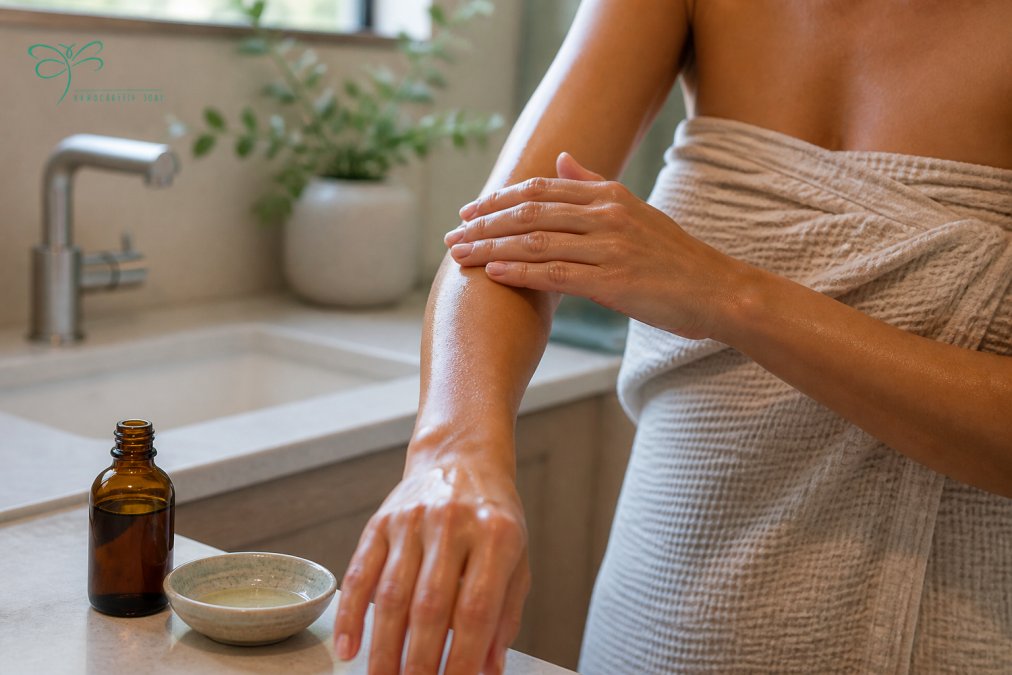
How to Apply Oils to Damp Skin
Apply oils to damp skin within about three minutes of stepping out of the shower. This is the single highest-impact change you can make to a winter routine.
Here is the sequence:
- Pat skin lightly with a towel, leaving it visibly damp
- Press three to five drops of oil between your palms
- Press, do not rub, the oil into your arms, legs, and torso
- Follow immediately with a heavier cream or butter on rough areas
- Repeat every time you bathe, not just when skin feels tight
The water already on your skin is what the oil seals in. Skip the damp step and you are sealing in nothing.
The Benefits of Cold Process Soap for Dry Skin
The main benefit of cold process soap for dry skin is that it retains the natural glycerin created during saponification. Commercial bars often extract that glycerin to sell separately, which leaves a harsher bar behind.
Cold process soap is made by mixing oils and lye, then curing the bars for weeks. Because the process never applies external heat, the glycerin stays in the finished bar. Glycerin is a humectant, meaning it draws moisture toward your skin rather than stripping it away.
Two other factors matter just as much. First, look for non-fragranced bars if your skin is reactive, since fragrance is one of the most common triggers for irritation. Second, check the fat profile: bars built on tallow, olive oil, or shea butter leave more of a conditioning film than bars built mostly on coconut oil.
A common mistake is assuming "natural" automatically means gentle. Plenty of botanical essential oils cause reactions in sensitive skin. Unscented is the safer default until you know how your skin responds.
How to Prevent Winter Skin Flaking
Flaking is a hydration problem, not an exfoliation problem, and treating it as the latter makes it worse. Most people reach for a scrub the moment they see flakes, which removes the very cells still holding their barrier together. The flakes you see are corneocytes that never shed cleanly because the lipid matrix between them has thinned, scrubbing them off exposes raw, under-hydrated skin underneath and triggers more flaking within days.
- Lower your shower temperature. Hot water dissolves the sebum and intercellular lipids that hold water in. Lukewarm water keeps more of that lipid layer intact. A practical test: if the water fogs the mirror within seconds, it is too hot for a winter shower.
- Shorten showers to under ten minutes. Water exposure itself, not just heat, drives transepidermal water loss. Ten minutes is a reasonable ceiling; five is better on flare-up days.
- Moisturize immediately after bathing, while skin is still damp. The three-minute window matters because evaporating water pulls moisture out of the skin with it once the surface dries.
- Add a humidifier to the rooms where you sleep and work. Aim for indoor relative humidity in the 30-50% range; above 50% invites mold and dust mites, below 30% keeps the barrier in a constant state of water loss.
- Switch to a gentle cleanser and stop using anything with scrubbing beads or strong fragrance. Fragrance is one of the most common triggers for contact irritation, and physical exfoliants cause micro-tears on already-compromised skin.
- Drink water consistently through the day. Hydration levels start from within, though as the next section explains, water intake alone cannot patch a leaking barrier.
- Protect exposed skin outdoors. Wind accelerates water loss on cheeks, hands, and lips faster than still cold air does. A scarf and gloves are legitimate barrier tools.
| Problem | Fix | What It Protects |
|---|---|---|
| Hot showers | Switch to lukewarm water | Natural skin oils and intercellular lipids |
| Dry indoor air | Run a humidifier overnight, target 30-50% RH | Skin water content |
| Harsh bar soap | Use cold process or unscented bars | Lipid barrier and glycerin content |
| Post-shower delay | Moisturize within 3 minutes | Moisture retention during evaporation |
| Untreated flakes | Add ceramide cream, stop scrubbing | Barrier repair at the lipid level |
| Wind exposure | Scarf and gloves outdoors | Exposed skin on cheeks, hands, lips |
Internal vs. External Hydration Synergy
Internal and external hydration work on different timelines, and the synergy between them is what most winter skincare advice ignores entirely. Drinking water supports your skin elasticity and overall hydration levels from the inside, but it cannot fix a barrier that is actively losing water.
So do both, and understand what each one does:
- Internal: water, nutrient-rich foods with healthy fats, and omega-3 sources support the skin from within over weeks.
- External: oils, butters, and creams reduce water loss within hours.
Skin-Type Specific Winter Routines
Winter routines should be built around your skin type, not copied from a general guide. Dry skin needs heavier occlusives, oily skin still needs hydration but in lighter form, and sensitive skin needs the fewest ingredients possible.
Environmental Impact Beyond Humidity
Humidity is only one of several environmental stressors working against your skin in winter, and the others often go unnoticed. Indoor heating, wind, temperature swings, and even the fabrics you wear all strip the skin microbiome and the lipid barrier in ways a humidifier alone will not fix. This is the part of winter skincare most guides skip entirely, they tell you to buy a humidifier and stop there.
Conclusion
Winter dryness is a barrier problem, and no single product solves it. The routine that works combines lukewarm showers, immediate moisturizing on damp skin, cold process soap, and a humidifier running in the background.
Frequently Asked Questions
Why is dry skin worse in winter?
Cold outdoor air holds less moisture, and indoor heating pulls humidity out of the air even further. Your skin barrier, the outer layer that locks in water, has to work harder to retain moisture. This leads to transepidermal water loss, where water evaporates through the skin faster than it can be replaced. The result is flaking, tightness, and irritation. Using a humidifier and moisturizing immediately after bathing can counter both the outdoor cold and indoor dryness.
What are the best natural oils for winter skin hydration?
Jojoba oil, squalane, and shea butter are among the best natural oils for dry skin in winter. Jojoba closely resembles your skin's own sebum, so it absorbs without feeling greasy. Squalane is lightweight and helps restore the lipid barrier. Shea butter is richer and works well for very dry areas like elbows and knees. Apply any of these to damp skin right after a lukewarm shower to seal in water before it evaporates.
How do I rehydrate my skin naturally during the colder months?
Start from the inside: drink enough water and eat nutrient-rich foods with healthy fats. Outside, switch to a gentle cleanser, take lukewarm showers, and moisturize within three minutes of patting dry. Run a humidifier in rooms where you spend the most time. Avoid harsh soaps and fragrances that strip your lipid barrier. A handcrafted bar like Minerva Rae's Tallow & Goat Milk, which is unscented and made with nourishing tallow and goat milk, cleanses without stripping and supports your skin barrier through winter.
Can cold process soap help with winter dryness?
Cold process soap retains naturally occurring glycerin, a humectant that draws water into the skin. Many commercial soaps remove this glycerin during processing, which leaves them more stripping. The benefits of cold process soap for dry skin come from that retained glycerin plus the oils and butters used in the recipe. Minerva Rae's Cocoa Shea bar, for example, combines shea butter, cocoa butter, and olive oil with African Black Soap and oatmeal to cleanse gently while supporting moisture retention.