

Table of Contents
- Why Winter Demands a Different Soap
- Key Moisturizing Ingredients for Dry Skin
- How to Prevent Winter Skin Dryness
- Benefits of Goat Milk Soap for Skin
- Top Natural Soaps for Dry Winter Skin
- How to Choose the Right Soap for Sensitive Skin
- Post-Cleansing Layering for Maximum Hydration
- Conclusion
Last Updated: August 14, 2026
Why Winter Demands a Different Soap
Winter strips moisture faster than any other season through cold air, indoor heating, and harsh winds, leaving your skin barrier compromised. Standard soaps with synthetic surfactants accelerate this damage by removing natural oils your skin needs to stay hydrated.
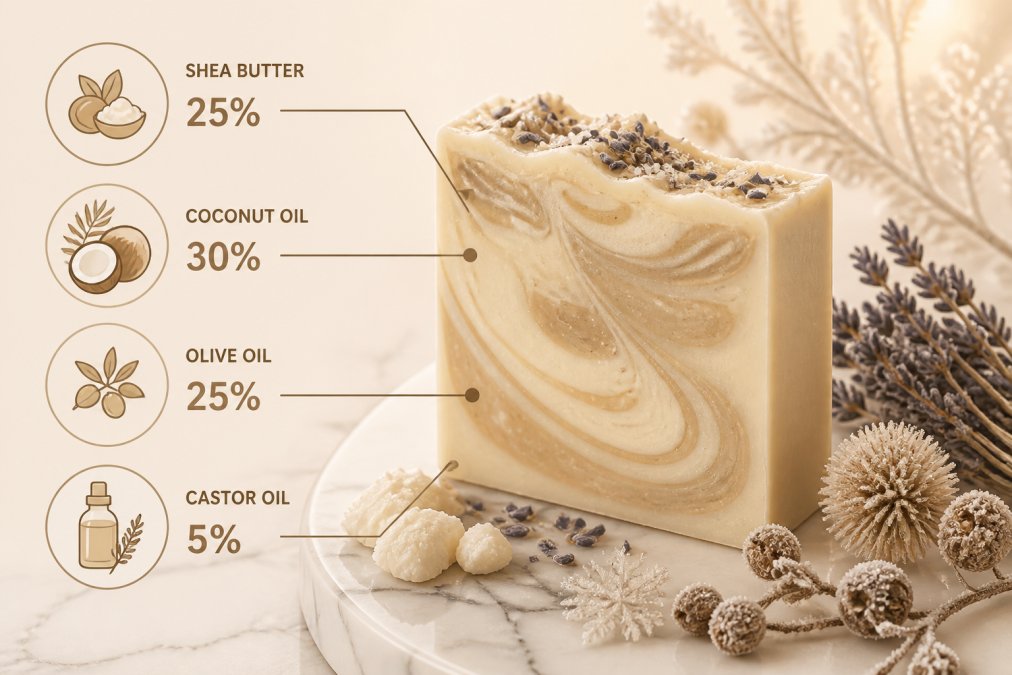
The best natural soap for dry winter skin is specifically formulated to replenish what winter takes away. This guide from Minerva Rae explores what makes certain soaps genuinely effective during harsh months and which ingredients actually lock in hydration. When your skin barrier weakens, irritation compounds, sensitivity increases, and conditions like eczema or psoriasis flare. The right soap choice prevents this cascade entirely.
Key Moisturizing Ingredients for Dry Skin
Oils, Butters, and Humectants That Lock Hydration
The best natural soap for dry winter skin relies on three ingredient categories: oils that seal moisture, butters that nourish, and humectants that draw water into the skin.
Superfatted soaps contain extra fats (5-10% beyond saponification needs) that remain unsaponified and coat your skin with protective lipids. Plant-based oils like coconut, olive, and castor oil restore the skin barrier. Shea butter and cocoa butter add richness standard soaps lack.
Glycerin is the workhorse humectant in quality soaps, attracting moisture from air and deeper skin layers. Hyaluronic acid performs similarly in higher-end formulations. Ceramides, naturally present in your skin barrier, help restore what winter depletes. CeraVe Hydrating Cleanser Bar includes three essential ceramides (1, 3, and 6-II) specifically to reinforce barrier function.
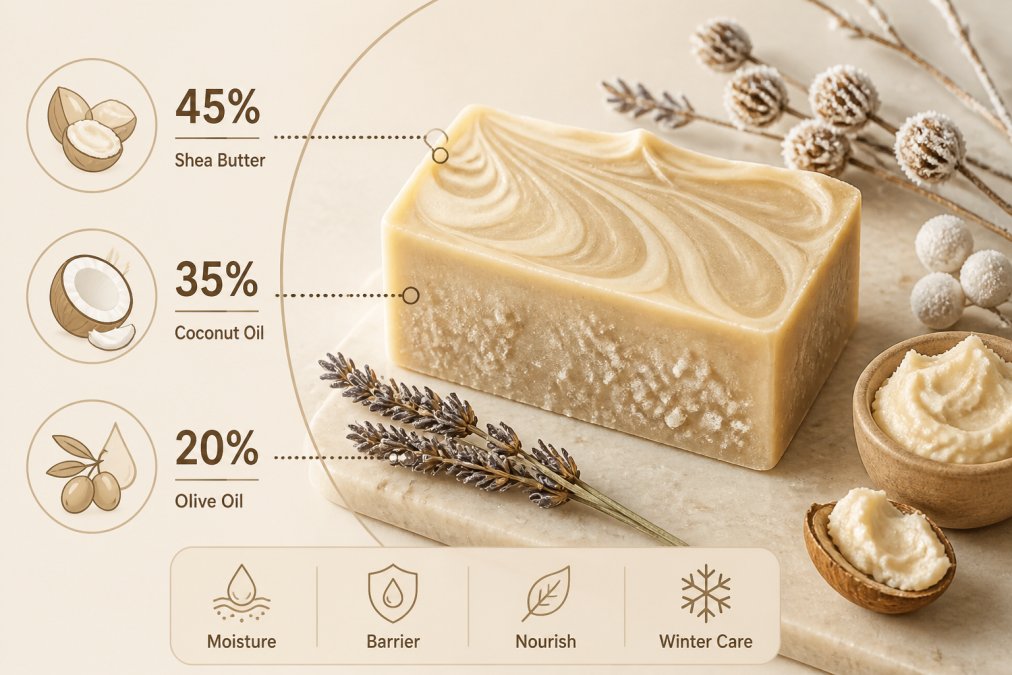
The difference between moisturizing and drying soap often comes down to sulfates. Sodium lauryl sulfate and sodium laureth sulfate strip skin aggressively. Sulfate-free formulations use gentler surfactants derived from coconut or palm that clean without destroying your skin's protective layer.
Understanding the Skin Barrier in Cold Months
Your skin barrier is a lipid-rich outer layer regulating moisture and protecting against irritants. Winter attacks this barrier through low humidity pulling transepidermal water loss higher, cold air constricting blood vessels reducing nutrient delivery, and heating systems evaporating moisture faster than your skin can replace it.
When your barrier weakens, water escapes and irritants penetrate more easily. This explains why winter skin feels tight, flaky, and reactive. A pH-balanced soap becomes critical. Your skin's natural pH hovers around 4.5-5.5 (acidic), but many conventional soaps are alkaline (pH 8-10), disrupting your barrier's protective acid mantle.
Handcrafted cold process soaps like those from Minerva Rae maintain better pH balance because saponification is slower and more controlled, leaving beneficial compounds intact. Superfatted formulations directly address barrier weakness by leaving extra oils on your skin's surface, acting as a sealant that reduces water loss and strengthens your barrier's lipid profile.
How to Prevent Winter Skin Dryness
Choose a moisturizing formula that's sulfate-free, superfatted, and contains humectants like glycerin or hyaluronic acid. Avoid exfoliating soaps during winter; save physical exfoliation for warmer months.
Water temperature matters enormously. Hot water increases transepidermal water loss. Lukewarm water cleanses effectively while minimizing moisture loss. Keep showers brief and pat your skin dry gently rather than rubbing.
Immediately after cleansing, while your skin is still slightly damp, apply a heavier moisturizer or facial oil. This layering technique traps water in your skin and prevents rapid evaporation.
Humidify your environment. Indoor heating reduces humidity to 20-30% during winter, far below the 40-50% your skin prefers. A humidifier, especially in your bedroom, significantly reduces dryness and irritation.
Consider your water's mineral content. Hard water leaves mineral deposits disrupting the barrier. If you have hard water, install a shower filter or use a chelating cleanser once weekly.
Benefits of Goat Milk Soap for Skin
Goat milk soap contains naturally occurring lactic acid, an alpha-hydroxy acid that gently exfoliates dead skin without harshness. The protein and fat content creates a creamy lather that feels luxurious while remaining gentle. Unlike coconut-oil-heavy soaps that feel waxy, goat milk soap rinses cleanly and leaves skin soft.
Goat milk's pH is closer to skin's natural pH than most conventional soaps, reducing irritation. It contains selenium, an antioxidant supporting skin barrier function and reducing inflammation. For winter skin showing redness or sensitivity, this anti-inflammatory benefit is meaningful. Zum Bar Goat's Milk Soap exemplifies how this ingredient works in practice, cleansing effectively while the milk's fats and proteins provide moisturizing benefit.
The catch: goat milk soaps cost more than standard bars, and the milk's natural scent is polarizing. Quality goat milk soaps minimize this by adding essential oils or botanicals, but the underlying scent may still be detectable.
Top Natural Soaps for Dry Winter Skin
1. Minerva Rae Handcrafted Cold Process Soaps
Minerva Rae elevates the best natural soap for dry winter skin category through meticulous attention to formulation and craftsmanship. Their handcrafted cold process soaps preserve heat-sensitive ingredients and maintain optimal pH balance.
Cold process saponification takes 4-6 weeks, allowing the chemical reaction to complete slowly. This extended timeline preserves glycerin naturally produced during saponification; most commercial soaps strip this out and sell it separately. Minerva Rae's bars retain this glycerin, making them inherently more moisturizing.
The curated ingredient selection focuses on what actually works: superfatted formulations with essential fatty acids, humectants that draw moisture into skin, and botanicals chosen for skin-supporting properties. Each bar is designed as a refined addition to your winter routine.
What sets Minerva Rae apart is the personalization option. Custom soaps for specific skin concerns allow you to address your exact winter needs. The high-quality formulation means these bars outlast standard drugstore soaps, with pricing depending on quantity, dates, and delivery. Please visit Minerva Rae's website for current prices or a quote.
2. Zum Bar Goat's Milk Soap
Zum Bar stands out for its goat milk formulation, delivering gentle exfoliation combined with deep moisturizing. The lactic acid content removes dead skin without irritation, revealing fresher skin while the milk's fats nourish.
Handcrafted in small batches with plant-based oils including olive, coconut, and castor oil, Zum Bar maintains cold process benefits. The goat milk creates a creamy lather that feels indulgent while remaining non-drying.
Available in multiple essential oil blends, the scent variety appeals to those seeking specific aromatherapy benefits. Lavender and oatmeal options work particularly well for winter skin.
The primary limitation: goat milk soaps can trigger reactions in people sensitive to dairy proteins, even topically. Additionally, the natural goat milk scent, even when masked by essential oils, remains somewhat detectable to some users.

3. Weleda Calendula Soap
Weleda brings a botanical approach to winter dryness through calendula and chamomile extracts, both with documented skin-soothing properties. The vegetable oil base provides essential fatty acids that barrier-supporting soaps require.
NATRUE certification ensures the formulation meets strict natural standards, with no synthetic fragrances, colorants, preservatives, or mineral oil-derived materials. The mild formulation makes Weleda suitable for frequent hand washing during winter without the tight, uncomfortable feeling that follows most conventional hand soaps.
The trade-off: Weleda's gentle approach means less lather than more aggressive formulations, and the scent is subtle to the point of being nearly imperceptible. The soap also requires careful storage; it dissolves more quickly than superfatted bars if left sitting in water.
4. CeraVe Hydrating Cleanser Bar
CeraVe's dermatologist-developed formulation focuses on barrier repair through three essential ceramides (1, 3, and 6-II) and hyaluronic acid. The inclusion of 5% CeraVe Moisturizing Cream in the bar itself distinguishes it from standard moisturizing soaps.
The MVE Delivery Technology allows gradual release of moisturizing ingredients over time, extending hydration benefits beyond the immediate post-shower window. Non-comedogenic and fragrance-free, the bar suits sensitive, acne-prone skin alongside dry skin, a rare combination.
The limitation: the bar produces less lather than traditional soaps, which some users interpret as "not cleaning well" despite the opposite being true. Some users report slight residue if not rinsed thoroughly, though this residue is actually the beneficial moisturizing ingredients coating your skin.
5. Cleure Glycerin Face & Body Bar
Cleure's formulation centers on glycerin as the primary humectant, with soothing oats and nourishing shea butter supporting barrier function. The fragrance-free, paraben-free, phthalate-free composition appeals to those with multiple sensitivities.
The high glycerin content makes this soap particularly effective for drawing moisture into skin during winter's low-humidity months. Suitable for face and body, the bar can replace multiple products in your winter routine, simplifying your regimen.
The trade-off: higher price point compared to mass-market alternatives, and the lack of lather may disappoint those accustomed to foaming cleansers. The bar also requires proper storage to prevent rapid dissolution.
6. SheaMoisture African Black Soap
SheaMoisture's formulation combines African Black Soap made from cocoa pod ash and coconut oil with shea butter, oats, aloe, and vitamin E. The cocoa pod ash provides natural exfoliation and mineral content supporting skin health, while coconut oil and shea butter address moisturizing needs.
The sustainably produced, cruelty-free approach appeals to eco-conscious consumers. The soap effectively balances and smooths dry, troubled skin without harshness. For winter skin showing both dryness and irritation, this multi-benefit approach works well.
The primary limitation: the scent is strong and earthy, pleasant to some, overwhelming to others. Some users with extreme sensitivities may find the active ingredients too stimulating, though reactions are relatively rare.

How to Choose the Right Soap for Sensitive Skin
Choosing the right soap for sensitive skin requires evaluating your specific trigger factors. Start by identifying whether your sensitivity stems from dryness (barrier dysfunction), irritation (active inflammation), or reactivity (allergic responses to specific ingredients).
For barrier-compromised skin, prioritize superfatted soaps with ceramides, hyaluronic acid, or goat milk. CeraVe Hydrating Cleanser Bar and Minerva Rae's cold process soaps excel here because they combine barrier-supporting ingredients with gentle surfactants.
For reactive skin prone to inflammation, seek soaps with soothing botanicals: calendula, chamomile, aloe, or colloidal oatmeal. Weleda Calendula Soap and SheaMoisture African Black Soap both include these ingredients. Avoid essential oils if you're sensitive to fragrance; opt for unscented formulations like Cleure Glycerin Face & Body Bar.
Check the ingredient list for known triggers. Common culprits include fragrance, coconut oil (comedogenic for some), and activated charcoal (too abrasive for compromised barriers). pH balance matters significantly for sensitive skin. Most handcrafted cold process soaps maintain better pH balance than commercial bars.
Consider patch testing before committing to full-body use. Apply a small amount to your inner arm or behind your ear, wait 24 hours, and observe for redness, itching, or burning.
Post-Cleansing Layering for Maximum Hydration
The best natural soap for dry winter skin only works if you layer moisturizing products immediately after cleansing. Apply your first moisturizing product within 60 seconds of patting your skin dry. Your skin is still slightly damp, and this residual moisture becomes trapped by the products you apply, creating an occlusive barrier that prevents transepidermal water loss.
Start with a hydrating toner or essence if your skin is extremely dry. Apply with gentle pressing motions rather than rubbing.
Next, apply a lightweight facial oil or serum containing humectants like hyaluronic acid or glycerin. For body skin, a hydrating body lotion serves the same purpose.
Finally, seal everything with an occlusive moisturizer, a richer cream or body butter that prevents water loss. For extremely dry areas like elbows, heels, or hands, apply an additional layer of heavier balm or oil.
This three-step approach, hydrate, nourish, seal, transforms your skin's moisture retention dramatically. Most people see visible improvement in tightness, flaking, and irritation within 3-5 days of consistent layering.
For nighttime, extend this routine with an additional occlusive layer. Apply your entire daytime routine, then add a sleeping mask or very heavy night cream as a final seal. Your skin repairs and regenerates during sleep; maximizing hydration during this window accelerates improvement.
Dry winter skin doesn't require expensive treatments or complicated routines; it requires the right soap paired with intentional post-cleansing care. Minerva Rae's handcrafted cold process soaps deliver the moisturizing benefit and barrier support that winter demands, with the option to customize for your specific skin concerns. Explore the Collection and discover how the right soap transforms your winter skincare from a source of frustration into an experience of genuine indulgence and skin improvement.
Frequently Asked Questions
What ingredients should I look for in a natural soap for dry skin?
Look for soaps containing superfatted oils like shea butter, coconut oil, and olive oil that provide essential fatty acids. Humectants such as glycerin and hyaluronic acid draw moisture into skin. Ceramides and plant-based emollients help restore the skin barrier. Avoid sulfates and harsh synthetic surfactants that strip natural oils. Cold-processed soaps retain more nourishing ingredients than commercial alternatives.
Is goat milk soap actually better for dry winter skin?
Goat milk soap offers specific benefits for dry skin. The natural fats and proteins in goat milk help restore the skin barrier and lock in hydration. Its pH level is closer to skin's natural pH, making it gentler and less likely to cause tightness or flaking. The lactic acid in goat milk also gently exfoliates dead skin cells, allowing moisturizers to penetrate more effectively during harsh winter months.
How does natural soap differ from commercial body wash for dry skin?
Natural soaps, especially cold-processed varieties, retain glycerin and plant oils that commercial products often strip away. They lack sulfates and synthetic surfactants that disrupt the skin barrier. Natural soaps typically have a higher pH balance suited to sensitive skin and contain botanicals with itch-soothing properties. Commercial washes prioritize lather and shelf stability over moisturizing benefits, making them less ideal for winter dryness.
Can natural soap help with winter-induced eczema or itching?
Yes, when chosen carefully. Hypoallergenic natural soaps with oat extracts, aloe vera, and calendula can soothe irritation and reduce itching. Paraben-free and sulfate-free formulas minimize irritation triggers. Cold-processed soaps preserve skin-soothing botanicals that commercial options destroy. However, test on a small area first, as some essential oils or botanicals may trigger sensitivity in severely reactive skin. Dermatologist-tested options provide added assurance.
This article was written using GrandRanker