

Table of Contents
- What Makes Shea Butter Soap Different for Dry Skin
- How Shea Butter Soap Hydrates and Repairs Dry, Scaly Skin
- Cold Process Soap Benefits: Why the Making Method Matters
- Shea Butter Soap vs Commercial Soap: What You Are Actually Comparing
- Will Shea Butter Soap Clog Your Pores? The Comedogenic Rating Explained
- How to Add Shea Butter Soap to Your Daily Routine
- Frequently Asked Questions
Last Updated: September 12, 2026
What Makes Shea Butter Soap Different for Dry Skin
Shea butter soap is a cleansing bar made with shea butter, the fat pressed from the nuts of the African shea tree, which is prized for its high concentration of fatty acids and vitamins that support the skin barrier. This guide from Minerva Rae explains why that composition matters for dry skin specifically, and how to choose a bar that helps rather than harms. The benefits of shea butter soap for dry skin come down to one thing: what it leaves behind after it rinses off.
Most commercial bars are built to clean aggressively. They strip the natural oils that hold moisture in, and dry skin pays the price within hours. Shea butter soap takes a different approach. It cleanses while depositing emollient fats that help the skin hold onto water.
Below, we break down the fatty acid science, the making method, the pore-clogging question, and how to actually work a shea bar into your routine.
How Shea Butter Soap Hydrates and Repairs Dry, Scaly Skin
A shea butter bar helps dry skin by replenishing the lipids that form your skin barrier, the outer layer that keeps water in and irritants out. When that barrier is compromised, moisture escapes through a process called transepidermal water loss, and skin turns rough, scaly, and tight.
What Is Actually in the Bar
The reason shea butter works on dry skin is its fatty acid profile, not its texture. Shea butter is roughly half stearic acid and a large share oleic acid, with smaller amounts of linoleic and palmitic acids (PubMed). Stearic acid is a saturated fat that forms a breathable, semi-occlusive film on the surface, slowing water loss without smothering the skin. Oleic acid is unsaturated and more fluid, which is part of why a shea bar feels creamy rather than waxy. Linoleic acid matters for a different reason: dry and eczema-prone skin often runs low on it, and it supports the barrier's ability to hold water.
Shea butter also carries vitamins A, E, and F. Vitamin A supports normal cell turnover, vitamin E is a fat-soluble antioxidant that helps defend against oxidative stress, and vitamin F is a catch-all term for the essential fatty acids linoleic and linolenic acid. None of these are present in large enough amounts to act like a treatment, but together they support the repair process rather than just coating the surface.
Why the Barrier Matters More Than the Lather
A common mistake is judging a soap by how much it foams. Foam is a cosmetic signal, not a moisturizing one. A dense, low-lather shea bar can leave skin more comfortable than a big-bubbled commercial bar because the lather tells you nothing about what stays behind after rinsing.
What stays behind is the point. When the lipid barrier is intact, it holds water in and keeps irritants out. When it is depleted, water escapes and skin turns rough, scaly, and tight. Ingredients that mimic the skin's own fats, like the fatty acids in shea butter, help reduce that loss. This is why a shea bar often feels different from a detergent-based one: it is not just removing less, it is giving something back.
Moisture Retention and Transepidermal Water Loss
Transepidermal water loss is the measurable escape of water through the skin's surface, and it rises sharply when the lipid barrier is depleted (peer-reviewed research). A useful way to think about it: your skin loses water constantly, and the barrier sets the rate. Strip the barrier and the rate climbs; support it and the rate falls.
This is also why timing matters. Shea butter soap supports the barrier; it does not replace a moisturizer applied afterward. The strongest results come from washing with a gentle shea bar, patting dry while skin is still slightly damp, and sealing that moisture with a moisturizer within a few minutes. The soap reduces how much water escapes during cleansing; the moisturizer handles the hours after.
Cold Process Soap Benefits: Why the Making Method Matters
Cold process soap benefits come from how the bar is made. In cold process soapmaking, oils and butters are mixed with lye in a reaction called saponification, which converts them into soap and glycerin. That glycerin stays in the bar.
Mass-produced soaps often extract the glycerin to sell separately, leaving a bar that cleans but does not moisturize. Cold process bars keep it. Glycerin is a humectant, meaning it draws moisture toward the skin, and it works alongside the unsaponified shea butter that remains in a well-formulated bar.
The method also affects how the finished soap treats your skin. A slower, cooler saponification preserves more of the naturally occurring nutrients in the butters and oils. Minerva Rae handcrafts its bars using both cold process and melt and pour methods, which is why a bar like Soulful Shea ($12.00) can deliver a creamy, gentle lather without stripping.

Shea Butter Soap vs Commercial Soap: What You Are Actually Comparing
The shea butter soap vs commercial soap comparison is really a comparison of what each bar does to your skin barrier. Commercial bars frequently rely on synthetic detergents, often called syndets, which clean effectively but can disrupt the lipid barrier and worsen dryness over time.
| Feature | Shea Butter Soap | Commercial Soap |
|---|---|---|
| Primary cleanser | Saponified oils and butters | Synthetic detergents |
| Glycerin | Retained from saponification | Often removed |
| Effect on barrier | Supports and replenishes | Can strip and deplete |
| Best for | Dry, sensitive, reactive skin | Quick, low-cost cleansing |
Neither option is universally superior. If your skin is oily and resilient, a commercial bar may be perfectly adequate. If your skin is dry or sensitive, the difference shows up fast, usually within a week of switching.
The comparison also extends to how long each bar lasts. A dense, cold process bar tends to hold its shape longer than a soft commercial bar, though how long any bar lasts depends on how you store it.
Will Shea Butter Soap Clog Your Pores? The Comedogenic Rating Explained
Shea butter soap is generally considered non-comedogenic, meaning it is unlikely to clog pores, though the rating depends on the finished formula rather than shea butter alone. The comedogenic scale runs from 0 to 5, and shea butter typically scores around 0 to 2 depending on how it is processed and how much is in the bar (PubMed).
This is where a lot of advice online gets muddled. A raw, heavy butter applied straight to the face can feel occlusive. A saponified shea butter bar is a different product entirely, because the chemistry has changed. The soap rinses clean rather than sitting on the skin.
That said, anyone prone to breakouts should patch test a new bar on a small area first. Individual skin responds differently, and a formula that works for one person may not suit another.
How to Add Shea Butter Soap to Your Daily Routine
Integrating shea butter soap into your routine is straightforward, but a few habits make a real difference. Follow this sequence for the best results:
- Wet your skin with lukewarm water, not hot, since hot water accelerates moisture loss.
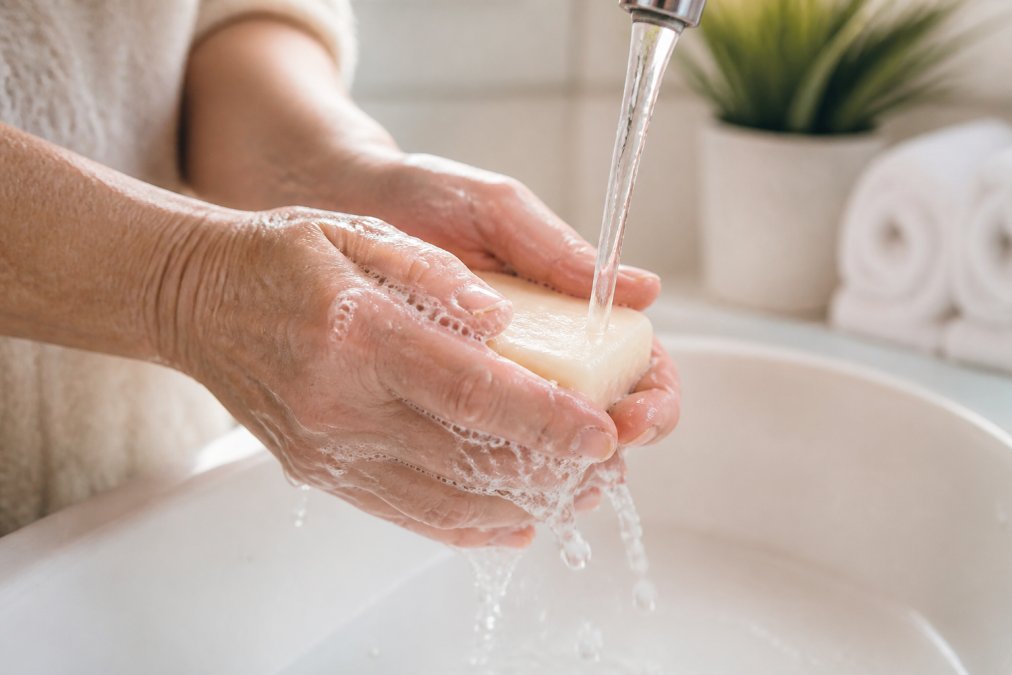
- Lather the bar in your hands or on a soft cloth rather than scrubbing it directly against dry skin.
- Massage the lather over your body in gentle circles, then rinse thoroughly.
- Pat dry with a towel instead of rubbing, leaving skin slightly damp.
- Apply a moisturizer within a few minutes to seal in hydration.
- Store the bar on a draining dish so it dries completely between uses.
How Often to Use It
Most people with dry skin do well washing with a shea bar once a day, usually in the evening, and using lukewarm water only on the areas that need it. Daily full-body washing is not required for everyone. If your skin feels tight within minutes of drying off, that is a signal you are washing too often or too hot, not that the bar is wrong.
For very dry or sensitive skin, some people alternate: shea bar one day, plain water rinse the next. There is no rule that says you must use soap every shower. The goal is clean skin that still feels comfortable afterward.
Adjusting for Season and Flare-Ups
Dry skin is not static. Indoor heating in winter pulls moisture out of the air and out of your skin, so a bar that feels perfect in July can feel insufficient in January. When that happens, the fix is usually not a different soap but a heavier moisturizer applied faster after washing.
During an active flare, when skin is cracked, stinging, or visibly inflamed, scale back. Shorten showers, drop the water temperature, skip fragranced products, and consider washing only the areas that need it. If a flare does not improve with gentler habits, that is a conversation for a dermatologist, not a soap aisle.
Matching the Bar to Your Skin
For very dry or sensitive skin, consider an unscented option. Minerva Rae's Soulful Shea is made for exactly that situation, with tallow and goat milk alongside the shea for a smooth lather that cleanses without stripping. If you prefer a richer sensory experience, Cocoa Shea ($12.00) pairs African black soap with a butter-heavy base for deep moisture, while Dew Drops ($12.00) offer concentrated, mess-free hydration that melts into skin.

Scent is worth a second look if your skin is reactive. Fragrance is one of the most common triggers for irritation in dry, compromised skin, and unscented does not mean ineffective. It means fewer variables.
The Habits That Matter Most
The routine matters as much as the product. A quality bar used correctly will outperform a premium bar used carelessly. Three habits carry most of the weight: keep the water lukewarm, moisturize while skin is still damp, and let the bar dry completely between uses. Get those right and the rest is preference.
Frequently Asked Questions
Which soap is best for very dry skin?
Soaps made with shea butter and other emollient-rich ingredients are generally the best choice for very dry skin. Shea butter soap contains fatty acids and vitamins that help repair the skin barrier and reduce transepidermal water loss. Look for cold process bars with short ingredient lists and no added sulfates or synthetic fragrances. Minerva Rae's Soulful Shea bar, for example, combines shea with tallow and goat milk for a gentle, non-stripping cleanse that supports moisture retention.
Does shea butter help aging skin?
Yes. Shea butter is rich in vitamins A, E, and F, which support cell regeneration and antioxidant protection. For aging skin, this can mean improved elasticity, softer texture, and a reduction in the appearance of fine lines caused by dryness. Shea butter soap delivers these benefits during cleansing, so your skin stays nourished rather than tight. Consistent use helps maintain a supple, hydrated complexion over time.
What happens if you apply shea butter every day?
Daily use of shea butter, whether in soap or a leave-on product, strengthens the lipid barrier and improves moisture retention. Most people with dry or sensitive skin see softer, smoother skin within a week or two. Shea butter is non-comedogenic for most skin types, so it is unlikely to clog pores. If you have oily or acne-prone skin, start with once-daily use and adjust based on how your skin responds.
Is shea butter soap better than commercial soap for sensitive skin?
For many people with sensitive skin, yes. Commercial soaps often contain synthetic detergents, sulfates, and artificial fragrances that strip natural oils and trigger irritation. Shea butter soap, especially when made via the cold process method, retains glycerin and natural fatty acids that cleanse gently without disrupting the skin barrier. It is also hypoallergenic and anti-inflammatory, making it a soothing option for eczema-prone or dermatitis-prone skin.
Dry skin is stubborn, and no single product erases years of barrier damage overnight. What a good shea butter soap does is stop working against you, giving your skin the fatty acids and glycerin it needs to hold moisture instead of losing it. Minerva Rae handcrafts its bars using cold process and melt and pour methods, with premium ingredients and designs made to turn an ordinary shower into something worth looking forward to. Explore the Collection and find the bar that fits your routine.