

Table of Contents
- Understanding Baby Eczema and Skin Barrier Function
- Why Natural Soap Is Better for Babies With Eczema
- Key Ingredients to Look for in Baby Soap for Eczema
- Ingredients to Avoid in Baby Soap for Eczema
- How to Bathe a Baby With Eczema
- How to Prevent Dry Skin in Winter
- The Role of Water Hardness and Post-Bath Routine
- Frequently Asked Questions
Last Updated: September 28, 2026
Understanding Baby Eczema and Skin Barrier Function
Baby eczema, also called atopic dermatitis in infants, is a chronic inflammatory skin condition that disrupts the natural protective layer of your child's skin. This barrier function, the outermost layer of skin cells and lipids, normally traps moisture and keeps irritants out. When it's compromised, water escapes through transepidermal water loss, leaving skin dry, inflamed, and vulnerable to infection.
At Minerva Rae, we understand that choosing natural soap babies eczema care isn't just about finding something gentle. It's about actively supporting skin barrier recovery. The condition typically appears as red, itchy patches that worsen with certain triggers: harsh soaps, synthetic dyes, fragrance chemicals, and even hard water minerals.
Babies with eczema often experience flare-ups during winter months or after bathing with conventional products that strip away natural oils. The skin's lipid barrier, made up of ceramides, cholesterol, and fatty acids, needs protection, not stripping. This is where natural soap becomes a meaningful intervention rather than a luxury choice.
Understanding the mechanism helps you see why natural soap matters. Conventional soaps use surfactants that can be too harsh, disrupting the delicate pH balance babies need. Natural soaps, especially those formulated with skin-loving ingredients, work with the skin's chemistry rather than against it.
Why Natural Soap Is Better for Babies With Eczema
Natural soap for babies with eczema works differently than conventional drugstore options because it respects the skin's natural pH and composition. Most commercial soaps are engineered to be highly lathering and long-lasting, which requires aggressive surfactants that strip away the very oils babies need.
Natural soap, particularly cold-process varieties, retains glycerin, a humectant that draws moisture into the skin. Conventional manufacturers remove this glycerin to sell it separately for profit. When you choose natural soap, you're keeping that moisturizing benefit intact.
The difference shows up in practice. Babies bathed with natural soap experience fewer post-bath flare-ups because their skin isn't left in a state of chemical shock. The gentle cleansing removes dirt and sweat without triggering the inflammatory response that harsh surfactants cause.
Hypoallergenic formulations matter here too. Natural soaps without synthetic dyes, artificial fragrances, or phthalates eliminate common irritants that trigger eczema attacks.
The anti-inflammatory properties of certain natural ingredients, like oatmeal and goat milk, provide additional benefit beyond simple cleansing. These ingredients soothe active irritation while the gentle surfactants in natural soap avoid creating new problems.

Key Ingredients to Look for in Baby Soap for Eczema
When evaluating natural soap babies eczema formulations, focus on ingredients that support barrier function and reduce inflammation. Colloidal oatmeal stands out as one of the most effective additions, it's finely ground oat particles suspended in the soap base that provide gentle exfoliation and soothing properties without irritation.
Goat milk brings another layer of benefit. This ingredient contains fatty acids and proteins that closely match human skin composition, making it less likely to trigger reactions. Goat milk naturally supports the skin barrier while providing gentle cleansing. Many parents specifically seek out goat milk formulations because the results are measurable.
Look for soaps that include nourishing oils: olive oil, coconut oil, and castor oil all contribute to emollient properties that prevent transepidermal water loss. These oils don't just sit on top of skin, they integrate into the barrier structure, supporting long-term skin health.
Shea butter appears in quality formulations because it contains natural compounds that reduce inflammation and support moisture retention. Unlike synthetic moisturizers, shea butter works with your baby's skin chemistry rather than creating a plastic-like coating.
Tallow, rendered beef fat, deserves mention because it's one of the most skin-compatible fats available. Traditional soap makers used tallow for centuries precisely because it mimics the lipids naturally present in healthy skin. Modern formulations using tallow create exceptionally gentle, barrier-supporting bars.
The Tallow & Goat Milk bar from Minerva Rae combines these principles in an unscented format, making it ideal for babies with severe sensitivity. At $12.00, it delivers the core ingredients needed without fragrance complications. The Old Fashioned Tallow & Oatmeal ($12.00) adds colloidal oatmeal for gentle exfoliation, making it suitable for babies whose eczema is stable enough to tolerate mild exfoliation.

| Ingredient | Benefit | Best For |
|---|---|---|
| Colloidal oatmeal | Soothes itch, gentle exfoliation | Stable eczema, mild irritation |
| Goat milk | Barrier support, anti-inflammatory | Severe sensitivity, active flare-ups |
| Tallow | Lipid barrier mimicry, deeply nourishing | All eczema types |
| Olive oil | Emollient, antioxidant | Dry, inflamed skin |
| Shea butter | Moisture retention, anti-inflammatory | Winter dryness, barrier damage |
Ingredients to Avoid in Baby Soap for Eczema
This is where many parents make critical mistakes. Ingredients to avoid in baby soap for eczema aren't always obvious, and "natural" labeling doesn't guarantee safety for sensitive skin.
Synthetic fragrances, even those labeled "natural fragrance", contain phthalates and other chemicals that commonly trigger eczema flare-ups. These compounds are designed to persist on skin, which means prolonged irritation. Unscented formulations eliminate this risk entirely.
Parabens and synthetic preservatives create another common problem. While preservatives serve a purpose, synthetic versions like methylparaben and propylparaben can irritate eczema-prone skin. Look for soaps preserved with natural methods or vitamin E instead.
Sulfates, sodium lauryl sulfate (SLS) and sodium laureth sulfate (SLES), are the harsh surfactants that strip skin. These appear in many "natural" soaps marketed for babies, which is why reading ingredient lists matters more than marketing claims.
Synthetic dyes add no functional benefit and create unnecessary irritation. Even "baby-safe" colorants can trigger reactions in children with atopic dermatitis. The safest choice is undyed or naturally colored soap.
Essential oils present a nuanced situation. While some essential oils have anti-inflammatory properties, they're concentrated plant compounds that can irritate sensitive skin. For babies with active eczema, unscented soap removes this variable entirely. Once skin stabilizes, mild essential oils like lavender might be tolerated, but that's a later step.
Avoid soaps with added exfoliating particles like plastic microbeads or overly coarse natural materials. The goal is gentle cleansing, not mechanical removal of skin cells.
How to Bathe a Baby With Eczema
The bathing routine itself matters as much as the soap choice. Water temperature, duration, and post-bath care all influence whether bathing helps or harms your baby's eczema.
Warm, not hot, water is essential. Hot water opens pores and increases transepidermal water loss, worsening dryness. Aim for lukewarm water around 90-95°F.
Keep bath time brief: five to ten minutes maximum (the American Academy of Dermatology). Extended soaking, even in warm water, increases water loss from the skin. Quick, efficient cleansing is better than leisurely baths for eczema-prone babies.
Use minimal soap. A small amount of natural soap, roughly the size of a pea, is sufficient for a baby's entire body. Oversoaped skin experiences more irritation and barrier disruption. Wet the washcloth, apply soap sparingly, and gently cleanse without scrubbing.
Pat skin dry gently rather than rubbing. Rubbing creates friction that irritates inflamed areas. Leave skin slightly damp, this is the critical step most parents miss.
Apply moisturizer immediately after bathing while skin is still damp. This traps water in the skin barrier, maximizing hydration. Thick creams or oils work better than lotions for eczema-prone babies. The damp-skin application is more effective than applying moisturizer to completely dry skin.
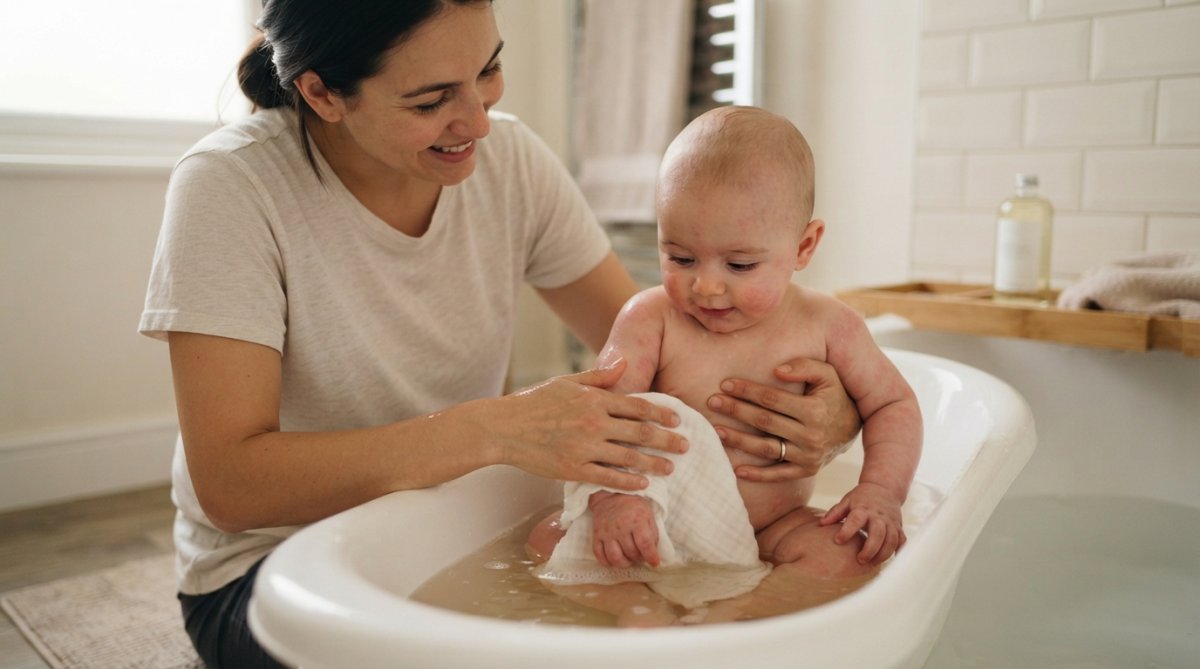
For babies with severe eczema, some parents find that bathing every other day works better than daily bathing.
How to Prevent Dry Skin in Winter
Winter creates a perfect storm for eczema flare-ups: indoor heating reduces humidity, cold outdoor air is naturally dry, and the seasonal shift often triggers increased inflammatory response. Preventing dry skin in winter requires proactive strategy beyond just choosing the right soap.
The Role of Water Hardness and Post-Bath Routine
Water hardness, the mineral content in your tap water, directly impacts eczema severity, yet most guides overlook this factor entirely. Hard water contains calcium and magnesium minerals that deposit on skin, creating a film that irritates eczema-prone babies.
Frequently Asked Questions
What natural soap is good for babies with eczema?
Look for unscented or hypoallergenic natural soaps with skin-soothing ingredients like goat milk, colloidal oatmeal, and tallow. Avoid bars with added fragrance, synthetic dyes, or harsh surfactants. Minerva Rae's Tallow & Goat Milk soap is specifically formulated for sensitive and dry skin, combining nourishing tallow with soothing goat milk in an unscented bar designed for babies prone to flare-ups.
What ingredients should I avoid in baby soap if my child has eczema?
Steer clear of sulfates, parabens, phthalates, synthetic fragrances, synthetic dyes, and essential oils in high concentrations. These can strip the skin barrier and trigger irritation or flare-ups. Also avoid soaps with sodium lauryl sulfate (SLS) and sodium laureth sulfate (SLES), which are common in commercial baby products but are too harsh for atopic dermatitis. Check ingredient labels carefully and choose fragrance-free formulations when possible.
Can goat milk soap help with baby eczema?
Yes. Goat milk contains natural fats and proteins that support skin barrier function and reduce transepidermal water loss. It's naturally pH-balanced and less likely to disrupt the skin's protective lipid layer compared to conventional soaps. Many dermatologist-tested formulations include goat milk specifically for its anti-inflammatory and moisturizing properties, making it an excellent choice for babies with sensitive skin or atopic dermatitis.
How often should you bathe a baby with eczema?
Bathe your baby 2-3 times per week with lukewarm water (not hot), using only a small amount of gentle, natural soap. More frequent bathing can worsen dry skin and strip natural oils. Keep baths brief (5-10 minutes) and apply moisturizing emollients immediately after bathing while skin is still damp to lock in hydration and support the skin barrier.
Choosing natural soap for babies with eczema addresses the root cause of irritation: harsh surfactants and irritating additives that damage the skin barrier. The right formulation, like Minerva Rae's handcrafted options featuring tallow and goat milk, supports barrier recovery while delivering the gentle cleansing your baby needs. Explore the Collection and discover how intentionally formulated natural soap can transform your baby's skin health.