

Table of Contents
- Why Handmade Soap Can Help Eczema-Prone Skin
- Best Natural Soap Ingredients for Eczema
- How to Patch Test Handmade Soap Before Full Use
- Step-by-Step: How to Use Handmade Soap for Eczema Relief
- How to Prevent Dry Skin in Winter While Using Handmade Soap
- Common Mistakes That Trigger Eczema Flare-Ups
- Choosing the Right Handmade Soap for Your Skin
- Frequently Asked Questions
Last Updated: September 25, 2026
Why Handmade Soap Can Help Eczema-Prone Skin
Handmade soap can help eczema-prone skin because it often skips the harsh detergents and synthetic fragrances that strip the skin barrier. Eczema leaves skin dry, cracked, and itchy; the right cleanser supports the barrier instead of tearing it down.
Best Natural Soap Ingredients for Eczema
The best natural soap ingredients for eczema clean gently while supporting the lipid barrier: nourishing fats, soothing additives, and no added fragrance.
Ingredients That Support the Skin Barrier
- Tallow and goat milk: rich fats that leave skin soft, not tight
- Olive oil and shea butter: emollients that help hold moisture in
- Colloidal oats: calm itching and irritation
- Ceramides and glycerin: humectants that pull water into the skin
- Oatmeal: lightly exfoliates without scratching
These act as emollients (which smooth and soften) and humectants (which draw in moisture).

Ingredients to Avoid During a Flare-Up
- Synthetic fragrance and dyes
- Essential oils like citrus or peppermint
- Coarse exfoliants such as ground seeds
- Antibacterial additives that dry the skin
- "Cooling" menthol or camphor
Fragrance-free is not the same as unscented. Fragrance-free means no added scent at all. Unscented can still hide masking fragrances. If your skin is reactive, choose fragrance-free.
How to Patch Test Handmade Soap Before Full Use
How to patch test handmade soap comes down to one small test before you commit. It takes about 48 hours and can save you a painful flare.
Here's how to do it:
- Wash a small area on your inner forearm with the bar.
- Rinse with lukewarm water and pat dry.
- Wait 24 hours and check for redness, itching, or bumps.
- If the skin is calm, repeat on the same spot.
- Wait another 24 hours before using it on your face or body.
Step-by-Step: How to Use Handmade Soap for Eczema Relief
To use handmade soap for eczema relief, keep water lukewarm, lather gently with your hands, and limit contact time, hot water and long scrubs pull moisture from skin.
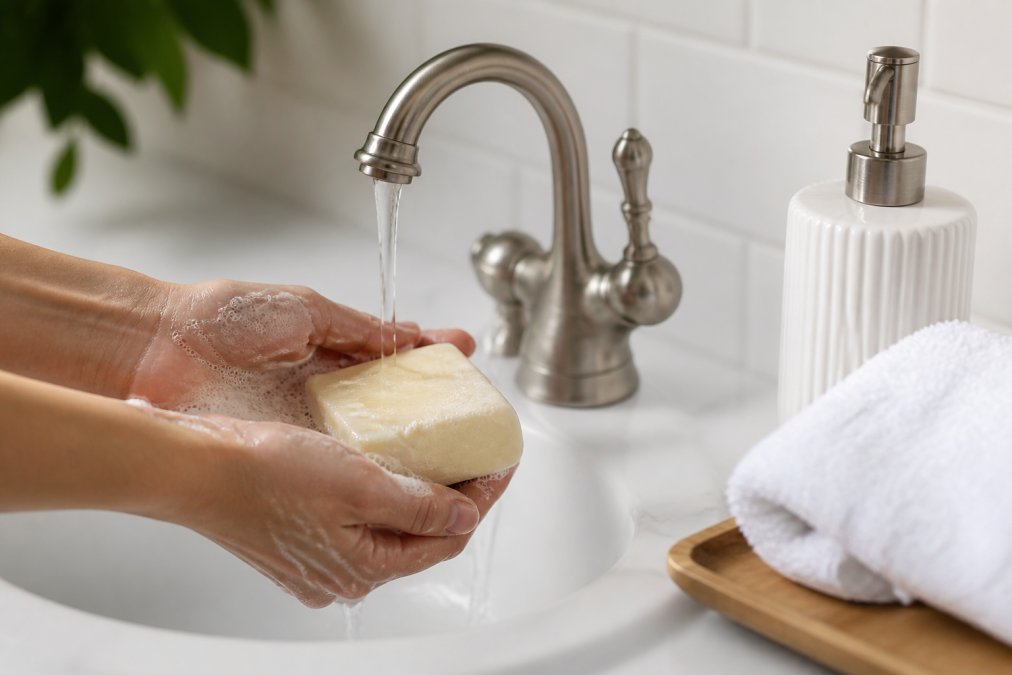
Follow these steps:
- Set the water to lukewarm, not hot.
- Wet your skin and lather the bar in your hands.
- Smooth the lather on with your palms. Skip the washcloth.
- Rinse within a few minutes.
- Pat dry with a soft towel. Don't rub.
- Apply moisturizer within three minutes, while skin is still damp.
The Three-Minute Lukewarm Routine
Keep the whole wash under three minutes, short contact means less stripping. Use a gentle cleanser only where you need it, then seal in moisture right away with a thick cream or ointment, which acts as an occlusive to hold water in.
How to Prevent Dry Skin in Winter While Using Handmade Soap
To prevent dry skin in winter, cut back on full-body washes, drop the water temperature, and layer moisture faster than dry air can pull it out. Indoor heating drops relative humidity into the 10-20% range, pulling water from the skin barrier all day and night, which is why eczema flares hardest in winter.
The Winter Wash Routine, Step by Step
- Cap full-body washes at two to three per week. On other days, wash face, underarms, groin, and feet with a gentle bar and lukewarm water.
- Keep showers under five minutes. Long contact with water, even lukewarm, leaches out skin's natural moisturizing factor.
- Set the water to lukewarm, not hot. Hot water feels good for about thirty seconds, then strips lipids and worsens the itch.
- Use a fragrance-free handmade bar only where you need it. Lather in your hands, apply with palms, and skip the washcloth or loofah.
- Pat dry and moisturize within three minutes, while damp skin still holds water an occlusive can trap.
- Reapply moisturizer at least twice a day, once after your wash and once before bed.
Layer Your Moisturizer Like a Dermatologist Would
A single cream is rarely enough in winter. Most practitioners recommend a three-layer stack:
- Humectant first (glycerin, hyaluronic acid, or a colloidal-oat lotion) to pull water into the top layer of skin.
- Emollient second (shea butter, ceramide cream, or a rich body butter) to soften and fill the gaps between skin cells.
- Occlusive last (petrolatum, dimethicone, or a thick ointment) to seal the water in. On cracked or flaring patches, plain petrolatum at bedtime is still the gold standard.
Control the Air in Your Home
- Run a humidifier in the bedroom and aim for 30-50% relative humidity. Below 30% and the air starts pulling water from your skin overnight.
- Keep the humidifier clean, a dirty tank sprays mold and bacteria into the air and can trigger a different kind of flare.
- Lower the thermostat a degree or two at night. Hot, dry bedrooms are the worst combination for itchy skin.
- Avoid sitting directly in front of a space heater or forced-air vent.
Adjust Your Cleanser for the Season
If your skin still feels tight ten minutes after a shower, your cleanser is too harsh for winter. A mild, fragrance-free handmade bar with tallow, goat milk, or shea butter suits cold months better than a lighter summer bar. Rotate out oatmeal or exfoliating bars during a flare and bring them back once the barrier recovers.
Common Mistakes That Trigger Eczema Flare-Ups
The biggest mistake is scrubbing. Hard loofahs, hot water, and long showers strip the skin barrier and set off the itch-scratch cycle: scratching damages the barrier, which makes skin itch more, which makes you scratch more.
Other common slip-ups:
- Using scented soap during a flare
- Skipping moisturizer after washing
- Testing several new products at once
- Washing with very hot water
- Letting skin air-dry completely before moisturizing
- Using a bar with coarse exfoliants on irritated skin
- Reusing a washcloth for more than a day or two
The Home-Environment Audit Most Guides Skip
What most guides miss: soap is only one input. The fabric touching your skin sixteen hours a day matters just as much.
Clothing and bedding:
- Wool and rough synthetics, polyester, nylon, and acrylic, rub against skin and trap heat and sweat. Loose cotton, bamboo, and Tencel are gentler.
- Tight waistbands, cuffs, and seams create friction points that turn into itchy patches. Size up rather than snug down.
- Tags and rough stitching inside shirts and pants are a common, fixable trigger. Cut them out.
- New clothing often carries formaldehyde-based finishes and dyes. Wash anything new before wearing it.
Laundry routine:
- Switch to a fragrance-free, dye-free detergent. "Free and clear" formulas cost about the same as scented versions.
- Skip fabric softener and dryer sheets. Both leave a waxy, fragranced residue that transfers to skin.
- Add an extra rinse cycle if your machine has one. It pulls out leftover detergent.
- Wash bedding weekly in hot water if dust mites are a trigger for you.
Home air and surfaces:
- Dust mites, pet dander, and mold are common eczema triggers. Vacuum with a HEPA filter and wash curtains and throw blankets regularly.
- Keep indoor humidity between 30% and 50%. Too dry cracks the barrier; too damp feeds dust mites and mold.
Diet and Internal Hydration: The Piece Top Results Leave Out
Most articles on eczema stop at the skin, but the barrier you're protecting is built from the inside, and two internal factors matter more than most people realize.
- Common suspects: cow's milk, eggs, soy, wheat, and peanuts are the most frequently reported triggers, especially in children.
- Anti-inflammatory eating: diets rich in fatty fish, olive oil, leafy greens, and colorful vegetables tend to support a calmer barrier. Omega-3s are widely studied for skin support.
- Alcohol and highly processed foods are linked to more frequent flares for some people.
- Track, don't guess. Keep a food-and-flare log for two to four weeks before cutting anything out. Elimination diets without evidence can create nutritional gaps.
A Day-in-the-Life Routine for Eczema-Prone Skin
Generic advice is easy to nod at and hard to follow. Here's what a full day looks like:
- Morning: Rinse face with lukewarm water, no cleanser needed. Apply moisturizer to damp skin. Dress in soft, loose cotton.
- Midday: Reapply moisturizer to hands after every wash. Keep a fragrance-free hand cream at your desk.
- After work: Change into soft loungewear. If you exercised, rinse off sweat with lukewarm water and re-moisturize.
- Evening shower: Three to five minutes, lukewarm, fragrance-free handmade bar, palms only. Pat dry. Moisturize within three minutes.
- Before bed: Apply a thicker occlusive layer to any dry or itchy patches. Cotton sheets, cotton pajamas, cool room.
- Overnight: If you wake up scratching, keep a tube of ointment on the nightstand and reapply rather than scratch.
Choosing the Right Handmade Soap for Your Skin
Choosing the right handmade soap means matching the bar to your skin, not the label. For eczema-prone skin, start with unscented and simple.
| Bar | Scent | Best For | Key Ingredients |
|---|---|---|---|
| Tallow & Goat Milk | Unscented | Sensitive, dry skin | Tallow, goat milk, olive oil |
| Old Fashioned Tallow & Oatmeal | Oatmeal, milk and honey | Gentle daily care | Tallow, shea butter, oatmeal |
| Bulgarian Lavender | Lavender essential oil | Calming routines | Colloidal oats, Tussah silk, clay |
Frequently Asked Questions
Is handmade soap better for eczema than commercial soap?
Handmade soap often contains glycerin, a humectant that draws moisture to the skin, while many commercial bars strip it out. Handmade bars also skip harsh detergents and synthetic fragrances that can irritate eczema-prone skin. That said, not every handmade bar is gentle. Look for short ingredient lists with emollients like tallow, shea butter, or colloidal oats, and always patch test before full use.
What ingredients should I look for in handmade soap for eczema?
Prioritize emollients and occlusives: tallow, shea butter, olive oil, and goat milk help seal in moisture. Colloidal oats support the lipid barrier. Avoid bars with synthetic fragrance, essential oils in high concentrations, or exfoliants like ground coffee. Fragrance-free options such as unscented tallow and goat milk soap are a safe starting point for reactive skin.
How often should someone with eczema wash their skin?
Once daily is enough for most people with eczema, and a quick lukewarm rinse on other days works if you are not visibly dirty. Overwashing strips the lipid barrier and increases transepidermal water loss. When you do wash, use a gentle cleanser or handmade soap, keep it under three minutes, pat dry, and apply moisturizer within three minutes while skin is still damp.
Can natural soap trigger an eczema flare-up?
Yes. Natural does not automatically mean non-irritating. Essential oils like citrus or peppermint, botanical exfoliants, and even some plant extracts can provoke dermatitis in sensitive skin. That is why patch testing on your inner forearm for 48 hours matters. If redness, itching, or burning appears, stop using that bar and try a simpler, fragrance-free formula.
Eczema care is a daily balancing act, and the wrong cleanser can undo your best efforts in a single shower. Minerva Rae makes that choice easier with handcrafted bars built for sensitive skin. The Tallow & Goat Milk bar is unscented and gentle, the Old Fashioned Tallow & Oatmeal bar adds light exfoliation, and every bar is made with premium ingredients and lasting quality. Explore the collection and find a bar that treats your skin with the care it deserves.