

Table of Contents
- What Is Melt and Pour Soap?
- Is Melt and Pour Soap Natural? Breaking Down the Label
- Melt and Pour vs Cold Process Soap: What's the Real Difference?
- Benefits of Cold Process Soap for Natural Skincare
- Understanding Soap Base Ingredients and Transparency
- FDA Soap Regulations for Handmade Soap: What You Need to Know
- How to Choose Genuinely Natural Soap
- Frequently Asked Questions
Last Updated: August 31, 2026
What Is Melt and Pour Soap?
Melt and pour soap is a pre-made soap base that's already been through saponification, the chemical reaction where lye transforms oils and fats into soap. You simply melt the base, add fragrance and color, pour it into molds, and let it harden. It's the faster, safer alternative to cold process soap making, which requires handling sodium hydroxide directly and waiting weeks for curing.
Most commercial melt and pour bases contain vegetable oils, glycerin, water, and sodium hydroxide (the lye that's already reacted). Some bases also include emulsifiers, preservatives, and synthetic colorants. The ingredient list varies wildly depending on the supplier and formulation.
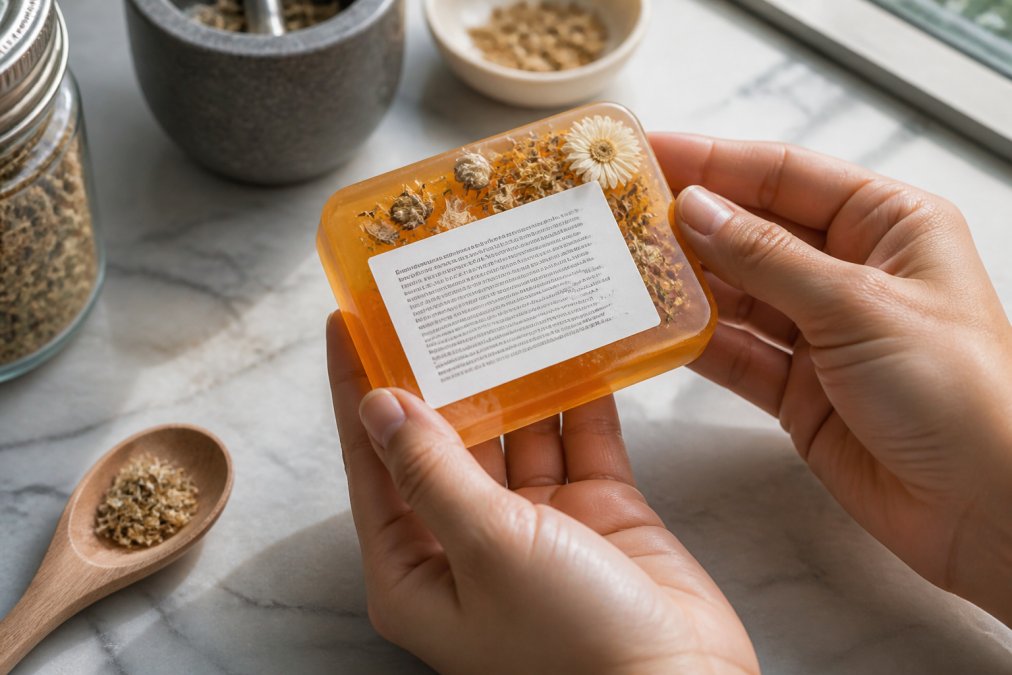
Is Melt and Pour Soap Natural? Breaking Down the Label
The answer depends on what "natural" actually means.
The Chemistry Behind 'Natural' Claims
When a supplier labels their melt and pour base as "natural," they're usually referring to the source of the oils, not the final product. A base made from coconut oil, olive oil, and shea butter does start with natural ingredients. But once those oils undergo saponification, they're no longer oils, they're new compounds entirely.
Saponification fundamentally changes the molecular structure of the original ingredients. The fatty acids break down and recombine with sodium hydroxide to create soap molecules. The term "naturally derived" is more accurate than "natural" for most melt and pour bases. The oils came from natural sources, but the finished product is the result of a controlled chemical process.
If your goal is a soap with minimal processing and maximum ingredient transparency, cold process soap gives you more control over exactly what goes into your bar from start to finish.
Common Additives in Commercial Soap Bases
Here's what you'll find in most melt and pour bases beyond the core oils and lye:
Glycerin is a humectant that draws moisture into the skin and is present in all soap bases as a natural byproduct of saponification. Commercial bases often have extra glycerin added for better lather and skin feel.
Propylene glycol appears in many bases as a preservative and humectant. It's synthetic, derived from petroleum, and FDA-approved for cosmetic use, but it's not "natural" by any definition.
Emulsifiers like polysorbate 80 and sodium stearoyl lactylate help keep ingredients mixed together and prevent separation.
Preservatives like sodium benzoate or potassium sorbate prevent mold and bacterial growth, especially important in bases with added water or milk.
Colorants range from natural mica and iron oxides to synthetic FD&C dyes.
Fragrance oils are synthetic aromatic compounds, while essential oils are distilled from plants. Some bases use one, some use both, and some use neither.
If you're looking for a soap with the fewest possible additives and the most ingredient transparency, melt and pour isn't your best option. It's designed for convenience and consistency, not minimalism.
Melt and Pour vs Cold Process Soap: What's the Real Difference?
Both methods produce soap, but they take fundamentally different paths.
Production Methods and Ingredient Integrity
Cold process soap is made by mixing oils with lye solution at specific temperatures, then pouring the mixture into molds. Saponification happens inside the mold over 24 to 48 hours, and the bars cure for four to six weeks before use (peer-reviewed research). You control every ingredient that goes into your soap.
Melt and pour starts with a finished soap base that has already gone through saponification at a manufacturing facility. You're not making soap, you're customizing a pre-made product. This matters for ingredient transparency: with cold process, you know exactly what's in your soap because you put it there. With melt and pour, you're dependent on the supplier's ingredient list and manufacturing practices.
At Minerva Rae, we use both methods strategically. Our cold process soaps like the Bulgarian Lavender are made with olive oil, coconut oil, shea butter, and pure Bulgarian lavender essential oil, no synthetic fragrances, no propylene glycol, no unnecessary additives. Our melt and pour creations, like the Orange Patchouli, use a carefully selected base that allows us to create intricate designs while maintaining quality ingredients.


Customization and Control
Cold process gives you complete control over formulation. You can adjust oil ratios for specific skin types, create custom color combinations, embed botanicals, and layer different scents. The tradeoff is time, complexity, and the need to handle lye safely.
Melt and pour limits you to what the base allows. You can add fragrance, color, and some additives, but you can't change the fundamental oil composition. For commercial soap makers, this constraint ensures consistency batch to batch. For hobbyists who want to experiment, cold process offers more creative freedom.
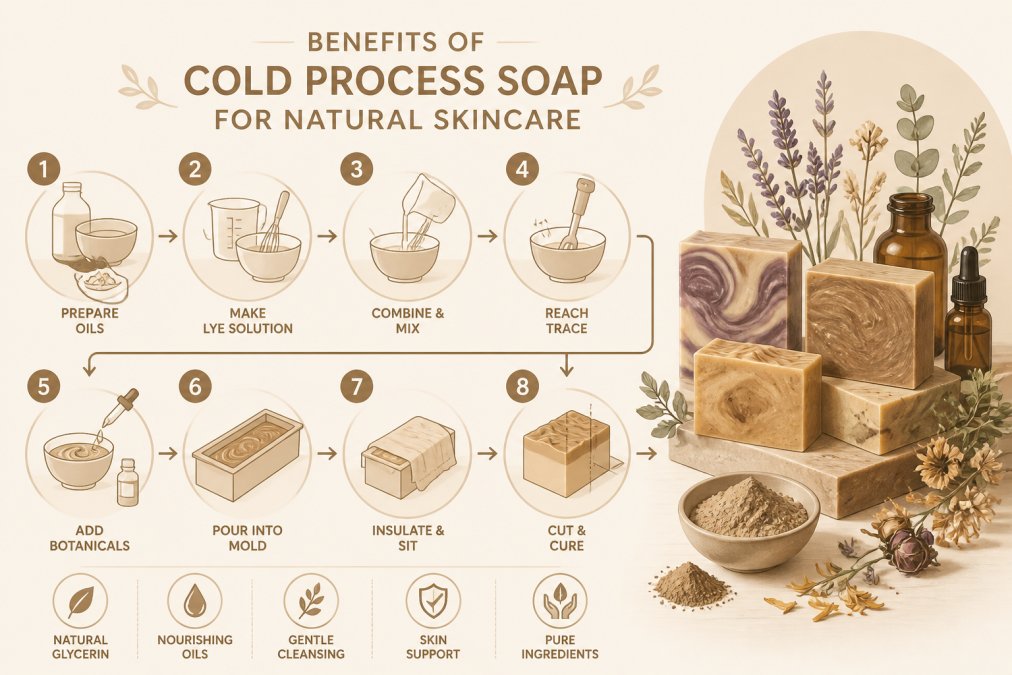
Benefits of Cold Process Soap for Natural Skincare
Cold process soap has legitimate advantages. First, the glycerin stays in the soap. During industrial manufacturing, glycerin is often extracted and sold separately. Cold process soap keeps that glycerin in the bar, providing better moisturizing properties and a creamier lather.
Second, a properly cured cold process soap (four to six weeks minimum) has a harder bar that lasts longer in the shower. Melt and pour bases harden quickly but often soften and dissolve faster.
Third, the ingredient list is shorter and more transparent. If you make cold process soap with five oils, lye, water, and essential oil, that's all that's in it. No emulsifiers, no preservatives, no propylene glycol.
Fourth, cold process allows true customization for skin types. You can formulate with more conditioning oils for dry skin or adjust ratios toward coconut and palm for oily skin. Melt and pour bases are one-size-fits-most.
The tradeoff is that cold process requires more knowledge, time, and caution during the lye stage. But for people who want to know exactly what's in their soap and have a product that performs well, it delivers.
Understanding Soap Base Ingredients and Transparency
Every soap ingredient list should include the oils used, water, and sodium hydroxide. Beyond that, look for glycerin, shea butter or cocoa butter, essential oils or fragrance oils, colorants (mica, iron oxide, or FD&C dyes), additives like oatmeal or clay, preservatives, and emulsifiers.
The longer the ingredient list, the more processing has happened. A truly minimal soap has 5 to 8 ingredients. A typical commercial melt and pour base has 12 to 18 (peer-reviewed research). That gap tells you something about the level of processing and additives involved.
If transparency matters to you, ask suppliers for their full ingredient list before buying. Better brands list every component rather than hiding behind vague terms.
FDA Soap Regulations for Handmade Soap: What You Need to Know
The FDA regulates soap as a cosmetic if it makes claims about skin health or appearance. If it's marketed purely as a cleansing bar with no skincare claims, it falls under different regulations.
For handmade soap makers, the key rule is: list your ingredients accurately and don't make health claims. You can say your soap is "made with shea butter" or "scented with lavender essential oil," but you can't say it "treats eczema" or "cures dry skin."
According to FDA guidelines on cosmetic labeling and soap, all ingredients must be listed using their International Nomenclature of Cosmetic Ingredients (INCI) names. That's why you see "sodium hydroxide" instead of "lye" on ingredient lists.
If you're buying soap from a maker, check that they list ingredients. If they don't, that's a red flag about their transparency and regulatory compliance.
How to Choose Genuinely Natural Soap
Start by defining what "natural" means to you. It's not a regulated term in soap, so different people prioritize different things.
If you want soap made with minimal processing and no synthetic additives, cold process is your best bet. Look for makers who list their exact oils, use essential oils instead of fragrance oils, and skip preservatives and emulsifiers.
If you want soap that lasts longer in the shower and has consistent performance, melt and pour from a quality supplier is a legitimate choice. Look for bases that use vegetable oils, skip propylene glycol, and rely on essential oils for fragrance.
If you have sensitive skin, patch-test any new soap before committing to a full bar. "Natural" doesn't mean hypoallergenic. The most important factor is finding what works for your skin.
At Minerva Rae, we recognize that different people need different things. Our Tallow & Goat Milk soap is handcrafted using cold process methods with tallow, olive oil, goat milk, and coconut oil, no fragrance, no additives, just pure ingredients for sensitive skin. For those who prefer more complexity, our Bulgarian Lavender uses cold process methods with pure essential oil, Brazilian purple clay, colloidal oats, and Tussah silk.

The choice between melt and pour and cold process isn't about one being "natural" and the other not. It's about what matters most to you: ingredient transparency, performance, design flexibility, or a combination of those factors.
| Aspect | Cold Process | Melt and Pour |
|---|---|---|
| Ingredient Control | Complete, you choose every ingredient | Limited, dependent on base formulation |
| Processing Time | 4-6 weeks curing required | 24-48 hours to harden |
| Glycerin Content | Retained in finished bar | Often reduced in commercial bases |
| Bar Longevity | Longer lasting, harder bars | Softer, dissolves faster |
| Customization | Full creative freedom | Constrained by base properties |
| Lye Handling | Required, safety precautions needed | Not required, already saponified |
| Cost | Variable, can be economical | Depends on base quality |
| Best For | Ingredient transparency, skin customization | Design consistency, quick production |
Choosing between melt and pour and cold process soap comes down to what you actually value. If you're looking for soap with transparent ingredients, maximum skin benefits, and bars that last weeks instead of days, cold process is worth the wait. If you want beautiful, consistent bars without the safety concerns of handling lye, a quality melt and pour base is a legitimate choice, just verify the ingredient list and skip bases loaded with synthetic additives.
The real question isn't whether melt and pour is "natural." It's whether the specific base you're using aligns with your priorities. Explore Minerva Rae's collection of handcrafted soaps to see how both methods can deliver luxury, quality, and the sensory experience you're seeking.
Frequently Asked Questions
Does melt and pour soap contain chemicals?
Most commercial melt and pour bases contain some level of chemical additives, including emulsifiers, preservatives, and synthetic fragrance carriers. However, 'chemical' doesn't automatically mean harmful, sodium hydroxide (lye) is a chemical essential to soap-making through saponification. The key is knowing what additives are present. Cold process soaps like Minerva Rae's handcrafted bars allow greater control over ingredients, letting you avoid specific additives if that matters to your skin.
What is the healthiest melt and pour soap?
The healthiest melt and pour soap prioritizes minimal additives and skin-safe ingredients. Look for bases that skip parabens, synthetic dyes, and harsh surfactants. Glycerin-rich bases support skin hydration, while naturally derived emulsifiers are gentler than synthetic alternatives. For sensitive or dry skin, unscented options like Tallow & Goat Milk eliminate fragrance irritants entirely. Cold process soaps offer even more control, they preserve the natural glycerin created during saponification, which commercial bases often remove and must add back. If skin sensitivity is your priority, handcrafted cold process options give you transparency into every ingredient.
Can I legally sell homemade soap?
Yes, you can sell homemade soap under FDA regulations, but there are strict rules. If your soap contains added claims about health benefits (moisturizing, healing, treating skin conditions), it's classified as a drug and requires FDA approval. Plain soap that cleanses without therapeutic claims is regulated as a cosmetic, not a drug. You must label it with all ingredients in descending order by weight, include your business name and address, and avoid false or misleading statements. You cannot claim your soap is 'all natural' or 'organic' unless you meet specific standards. Many artisan soapmakers like Minerva Rae operate within these guidelines by focusing on ingredient transparency and avoiding unsubstantiated health claims.
How do you identify a natural soap base?
Check the ingredient list for red flags: propylene glycol (a humectant that's not naturally derived), parabens (synthetic preservatives), sodium lauryl sulfate (harsh surfactant), and synthetic fragrance oils. Natural bases rely on vegetable glycerin, botanically based emulsifiers, and essential oils instead of fragrance oils. Look for transparency, reputable makers list every ingredient and explain their purpose. Cold process soaps are easier to verify because the ingredient list reflects what went into the batch; melt and pour bases are pre-made, so you're trusting the supplier's claims. Minerva Rae's cold process soaps like Bulgarian Lavender disclose all components including clay, silk fibers, and essential oils, giving you full visibility into what touches your skin.
This article was written using GrandRanker