

Table of Contents
- What Is Cold Process Soap and Why Ingredients Matter
- How the Saponification Process Preserves Natural Ingredients
- Best Oils for Cold Process Soap and Their Skin Benefits
- Natural Soap Additives for Skin Health and Sensory Experience
- Benefits of Superfatting in Soap for Moisture and Skin Barrier Protection
- Cold Process Soap Ingredients vs. Commercial Soap: What Sets Them Apart
- Why Cold Process Soap Ingredients Work Better for Sensitive Skin
- Conclusion
Last Updated: August 16, 2026
What Is Cold Process Soap and Why Ingredients Matter
Cold process soap is made by mixing oils and lye at low temperatures, allowing saponification to occur naturally without external heat. This method preserves beneficial properties that commercial manufacturing strips away. When manufacturers use heat, they degrade skin-nourishing compounds. Cold process temperatures protect delicate botanicals, essential oils, and fatty acids, delivering measurable skin benefits.
During saponification, oils transform into soap while glycerin forms naturally as a byproduct. Commercial manufacturers strip out the glycerin to sell separately, leaving their products drying. Cold process soap keeps that glycerin intact, which is why it feels different on your skin.
Understanding your soap's ingredients matters because formulation determines performance. A bar made with coconut oil behaves differently than one made with olive oil. A soap superfatted at 5% offers different moisture benefits than one at 8%. These distinctions determine whether a soap will cleanse gently or strip your skin, whether it will last weeks or dissolve quickly, and whether it will leave your skin feeling hydrated or tight.
At Minerva Rae, we prioritize this method precisely because it honors the integrity of every ingredient we select. You're not just buying soap, you're investing in a product where every component serves a purpose and maintains its effectiveness from production to your shower.
How the Saponification Process Preserves Natural Ingredients
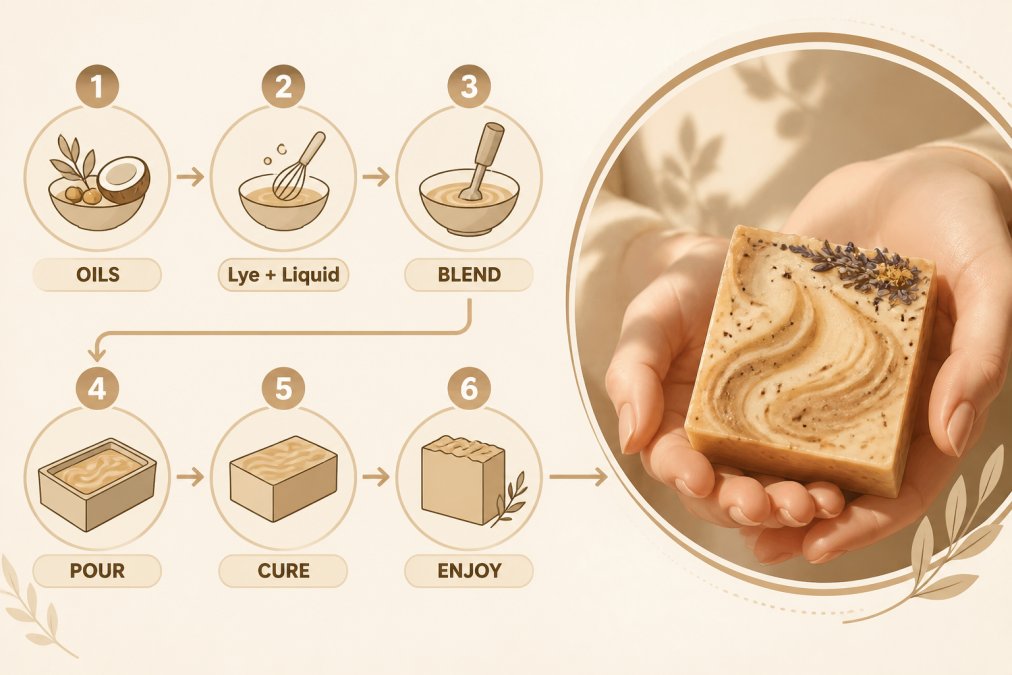
The saponification process is the controlled chemical reaction where oils meet sodium hydroxide, transforming both into soap and glycerin. Cold process methods keep temperatures between 90-110°F, allowing this reaction to proceed slowly without destroying heat-sensitive compounds.
Essential oils begin to evaporate at temperatures above 140°F. Natural colorants like mica and botanical powders maintain their vibrancy when not exposed to high heat. Plant extracts retain their beneficial compounds, antioxidants, vitamins, and minerals stay intact rather than breaking down.
After saponification completes, cold process soap bars cure for 4-6 weeks. During this time, excess water evaporates and the soap hardens, creating a denser bar that lasts longer in the shower. This extended curing period allows the saponification reaction to finish completely, ensuring no caustic soda remains and all oils have fully transformed into soap.
Commercial soap manufacturers use hot process methods or melt-and-pour bases that skip these preservation steps, prioritizing speed over ingredient integrity.
The molecular structure of cold process soap differs meaningfully from commercial alternatives. Because the reaction occurs slowly, soap molecules align more completely, creating a denser, harder bar.
Best Oils for Cold Process Soap and Their Skin Benefits
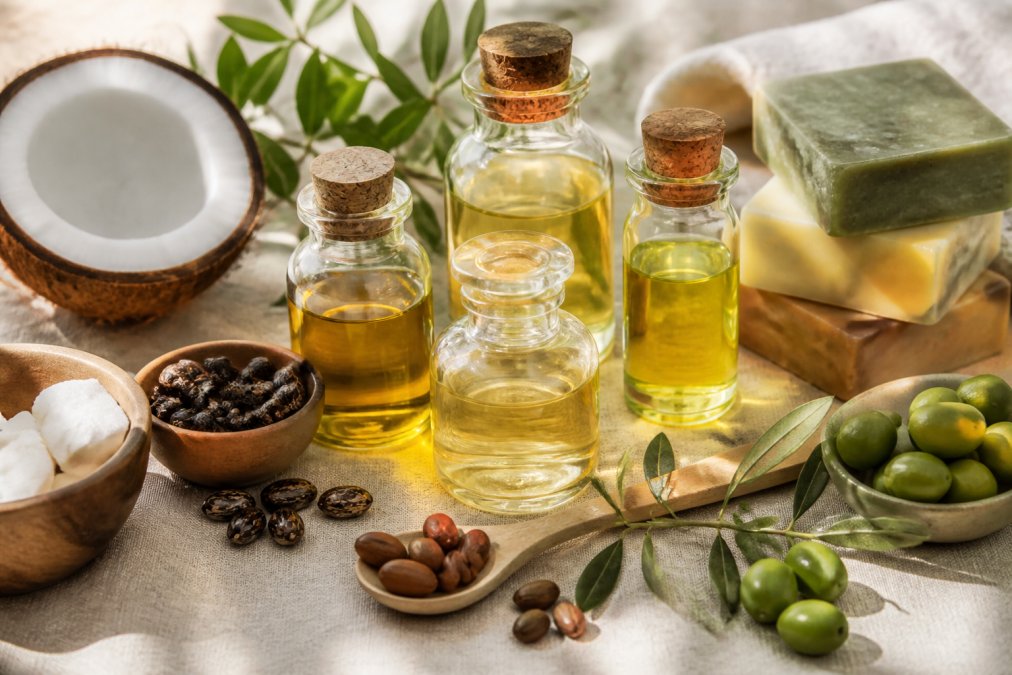
Coconut oil creates lather and cleansing power, making up 20-30% of most cold process formulas. It produces abundant bubbles and removes dirt effectively, but used alone it can be drying.
Olive oil is the workhorse of gentle soap, comprising 30-50% of quality cold process bars. Its fatty acids closely match skin's natural lipid barrier, making it ideal for sensitive skin. Soap made primarily from olive oil produces creamy, stable lather and leaves skin feeling soft rather than stripped.
Castor oil acts as a humectant, drawing moisture into the skin. Even at 5-10% in a formula, it significantly improves lather quality and adds skin conditioning, particularly valuable for dry skin.
Jojoba oil mimics skin's natural sebum, making it excellent for sensitive or acne-prone skin. At 3-5% in cold process formulas, jojoba provides deep conditioning without clogging pores.
Palm oil creates hardness and stability, allowing bars to last longer. However, sustainability concerns make it controversial. Many soap makers now use sustainable alternatives or skip it entirely, relying on coconut and other oils for hardness.
Shea butter adds luxury and skin conditioning. At 5-8% in a formula, shea butter provides vitamins and fatty acids that improve skin barrier function.
The ratio of these oils determines the soap's performance. A formula heavy in coconut oil creates more lather but may be drying. A formula emphasizing olive oil produces gentler, creamier lather. The best cold process soap ingredients work in balance, each contributing specific benefits.
Natural Soap Additives for Skin Health and Sensory Experience
Natural additives transform cold process soap from functional to exceptional. Essential oils provide fragrance and therapeutic properties. Lavender offers calming benefits and supports skin healing. Peppermint invigorates and can help with circulation. Tea tree oil has antimicrobial properties valuable for acne-prone skin. Cold process soap preserves these oils' potency because lower temperatures prevent evaporation during production.
Botanical powders add color, texture, and skin benefits. Turmeric provides anti-inflammatory properties and a warm golden hue. Activated charcoal draws out impurities and creates visual interest with dark swirls. French green clay offers detoxifying benefits. These additives remain vibrant and effective in cold process soap because heat doesn't degrade their active compounds.
Honey acts as a humectant and adds antimicrobial properties. In cold process soap, honey dissolves into the base during saponification, distributing its benefits throughout rather than sitting on the surface.
Oatmeal provides gentle exfoliation and soothing properties for irritated skin. Finely ground oatmeal removes dead skin cells effectively without scratching.
The key difference between cold process additives and commercial soap additives is stability. Heat degrades many beneficial compounds. Cold process temperatures preserve them, meaning the therapeutic benefits you see listed on the label actually survive into your finished bar.
Benefits of Superfatting in Soap for Moisture and Skin Barrier Protection
Superfatting means leaving extra oils unreacted during saponification. Instead of converting all oils into soap, soap makers intentionally hold back 5-10% of the oil. This oil remains in the finished bar as an emollient rather than transforming into soap.
The benefit is direct: superfatted soap leaves a protective layer of oil on your skin. This layer supports your skin barrier, which prevents water loss and keeps irritants out. For dry skin, sensitive skin, or skin damaged by harsh commercial soaps, this extra conditioning is transformative.
A 5% superfat is standard for most cold process soap, providing noticeable conditioning without greasiness. An 8% superfat creates a more luxurious feel and greater moisture retention, ideal for winter or very dry skin. Beyond 10%, the soap becomes unstable.
The oils used for superfatting matter. Coconut oil adds conditioning but can feel waxy. Olive oil creates a softer, more absorbing feel. Castor oil adds conditioning and improves lather. Premium soap makers superfat with a blend of oils specifically chosen to complement their base formula.
Commercial soap contains no superfat. Manufacturers remove all glycerin and don't leave extra oils in the finished product. This is why commercial soap often leaves skin feeling tight or dry. The difference is immediately noticeable when switching from commercial soap to a properly superfatted cold process bar.
Superfatting also affects lather. A superfatted bar produces creamier, more stable lather than a non-superfatted bar. The extra oils contribute to lather quality while conditioning skin. This is why cold process soap feels luxurious, it's a functional difference created by thoughtful formulation.
For sensitive skin, superfatting is non-negotiable. The extra oils buffer the soap's cleansing action, making it gentle enough for compromised or reactive skin.
Cold Process Soap Ingredients vs. Commercial Soap: What Sets Them Apart
Cold process soap ingredients remain intact and effective because of how they're processed. Commercial soap ingredients are often damaged or removed during manufacturing. The difference is fundamental.
Commercial soap starts with crude oil derivatives or pre-made soap bases. Manufacturers add fragrance, color, and preservatives, then mold and package. The entire process takes hours, leaving no time for proper saponification, curing, or preservation of delicate ingredients.
Cold process soap retains the glycerin produced during saponification, typically 8-12% of the finished bar. This glycerin is a humectant, drawing moisture into skin. Commercial manufacturers strip out the glycerin to sell separately, leaving their bars without this natural moisturizer.
Essential oils and botanical extracts survive in cold process soap because temperatures stay low. In commercial manufacturing, heat degrades these compounds or they're never included. When you see "lavender fragrance" on a commercial bar, it's synthetic fragrance, not actual lavender oil.
The lather quality reflects ingredient integrity. Cold process soap creates creamy, stable lather because the oils are properly saponified and glycerin remains in the bar. Commercial soap creates thin, quick lather because it's missing glycerin and may contain partially synthetic or damaged oils.
The ingredient list itself reveals the difference. Cold process soap lists oils, lye (sodium hydroxide), water, and natural additives. The lye is listed because it's part of saponification, but it's completely consumed, no caustic soda remains in the finished product. Commercial soap lists dozens of ingredients including preservatives and synthetic fragrances needed because the manufacturing process creates instability.
For people with sensitive skin, the difference is profound. Commercial soap's synthetic ingredients and harsh surfactants irritate reactive skin. Cold process soap's natural ingredients and retained glycerin support skin barrier function instead of damaging it.
Why Cold Process Soap Ingredients Work Better for Sensitive Skin
Sensitive skin reacts to synthetic ingredients, harsh surfactants, and stripping cleansers. Cold process soap avoids all three. The ingredients are natural, the surfactants are mild, and the retained glycerin and superfat protect rather than strip.
The pH of cold process soap is closer to skin's natural pH than commercial soap. Commercial soap is often alkaline enough to disrupt skin barrier function. Cold process soap, especially when properly formulated, maintains a pH that skin tolerates well.
The absence of synthetic fragrance is critical. Synthetic fragrances are common irritants and allergens. Cold process soap made with essential oils and natural botanicals avoids this trigger. People with fragrance sensitivity often find they can use essential oil-scented cold process soap without irritation.
Superfatting specifically benefits sensitive skin. The extra oils buffer the soap's cleansing action, making the soap gentle enough for compromised skin. A properly superfatted cold process bar cleans without stripping.
A fully cured cold process bar has had time for all saponification to complete. There's no residual lye, no unreacted sodium hydroxide. Commercial soap may not cure adequately, leaving trace alkalinity that irritates sensitive skin.
People who have struggled with commercial soap often describe switching to quality cold process soap as transformative. Their skin stops reacting, redness decreases, and they experience genuine comfort. This is the direct result of using ingredients and methods that support skin barrier function rather than compromising it.
Cold process soap ingredients represent a fundamentally different approach to cleansing. By preserving natural oils, retaining glycerin, and using gentle additives, cold process soap delivers benefits that commercial alternatives cannot match. For anyone with sensitive skin, dry skin, or simply a desire for higher-quality skincare, understanding these ingredients explains why the investment in handcrafted cold process soap makes sense. Explore the Collection at Minerva Rae to experience how thoughtfully selected cold process soap ingredients transform your daily routine into a luxurious ritual that nourishes rather than strips.
Frequently Asked Questions
What makes cold process soap ingredients better for sensitive skin than commercial soap?
Cold process soap ingredients retain their natural glycerin and fatty acids during production, which commercial manufacturers typically remove. This glycerin acts as a humectant, drawing moisture into the skin rather than stripping it away. The lower heat used in cold process production preserves the beneficial properties of oils and botanicals, reducing irritation for people with sensitive skin. Additionally, the absence of synthetic detergents and surfactants means fewer harsh chemicals that can trigger reactions.
How do the best oils for cold process soap affect skin hydration?
Different oils contribute unique benefits to skin hydration. Coconut oil provides lather and cleansing, olive oil offers emollients that soften skin, and castor oil acts as a humectant to lock in moisture. The combination of these oils during saponification creates a bar that cleanses without stripping your skin's natural oils. Superfatting, adding extra oil beyond what's needed for the chemical reaction, ensures additional emollients remain in the finished soap, enhancing hydration for dry or sensitive skin.
What natural soap additives for skin health should I look for in cold process soap?
Look for additives like essential oils, which provide both fragrance and therapeutic properties; botanicals such as oatmeal or chamomile for soothing irritation; and clays for gentle exfoliation and detoxification. Shea butter and cocoa butter add extra moisture and nourishment. These natural additives are preserved through cold process production, maintaining their skin-health benefits. Avoid soaps with synthetic fragrances or artificial colorants, which can irritate sensitive skin and lack the genuine therapeutic value of natural ingredients.
How long do cold process soap bars actually last compared to commercial soap?
Cold process soap bars typically last significantly longer than commercial alternatives because they're denser and contain retained glycerin, which doesn't dissolve as quickly in water. A quality handcrafted bar often outlasts drugstore soap by 2-3 weeks or more, depending on storage and use habits. The curing process, which takes 4-6 weeks for cold process soap, allows excess water to evaporate, creating a harder bar. Proper storage in a dry place between uses extends the life even further, making the investment worthwhile over time.
What's the difference between cold process and melt-and-pour soap ingredients?
Cold process soap is made from scratch using oils and sodium hydroxide, creating a chemical reaction called saponification that produces soap and glycerin. This method preserves the natural properties of ingredients because no heat is applied beyond the exothermic reaction itself. Melt-and-pour uses pre-made soap bases that are melted and poured into molds, allowing for faster production and easier customization but offering less control over ingredient quality. Cold process generally results in a gentler, more nourishing bar because the ingredients retain more of their beneficial properties.
How does the curing time affect cold process soap ingredient benefits?
The 4-6 week curing period allows excess water to evaporate and the saponification process to complete fully, which strengthens the bar and enhances ingredient benefits. During curing, the pH of the soap stabilizes and becomes gentler on skin. The longer curing time also allows essential oils and botanical additives to fully integrate into the soap matrix, creating a more stable fragrance and maximizing therapeutic properties. A properly cured bar is less likely to cause irritation and delivers more consistent skin benefits than rushed production methods.
Are cold process soap ingredients biodegradable and environmentally friendly?
Yes, cold process soap ingredients are biodegradable because they're derived from natural oils and fats that break down naturally in the environment. Unlike synthetic detergents found in commercial soaps, cold process soap doesn't persist in waterways or harm aquatic ecosystems. Many artisanal makers also prioritize sustainable packaging and ethically sourced ingredients, reducing environmental impact further. The small-batch production model of handmade cold process soap also means less waste and lower carbon footprint compared to mass manufacturing.
What ingredients should I avoid in cold process soap if I have very dry skin?
Avoid soaps with high percentages of coconut oil, which can be drying despite its cleansing power, unless they're heavily superfatted to compensate. Skip bars with synthetic fragrances or alcohol-based additives, which strip moisture. Look instead for soaps rich in emollients like olive oil, shea butter, and castor oil, and ensure they include retained glycerin. Avoid bars marketed as 'clarifying' or 'deep cleansing' if your skin is very dry, as these formulations prioritize cleansing over hydration and may worsen dryness.
This article was written using GrandRanker