

Table of Contents
- Why Winter Breaks Down Your Skin Barrier
- Signs of a Damaged Skin Barrier
- Ceramides for Skin Repair: The Lipid Your Barrier Is Missing
- The 7 Best Ingredients for Winter Skin Barrier Repair
- How to Fix Dry Flaky Skin in Winter
- Layering Order, Ingredient Conflicts, and What to Skip
- Conclusion
- Frequently Asked Questions
Last Updated: October 2, 2026
Why Winter Breaks Down Your Skin Barrier
The best ingredients for winter skin barrier repair are ceramides, niacinamide, hyaluronic acid, glycerin, squalane, fatty acids, peptides, and colloidal oatmeal. Each supports the lipid barrier differently, and together they keep moisture in and irritants out.
Your skin barrier is the outermost layer of skin, a thin wall of lipids and skin cells that holds water in and keeps irritants out. When cold air and dry indoor heat strip that wall down, skin loses water faster, a process called transepidermal water loss.
Cold air holds less moisture, and indoor heating dries the air further. The result is tightness, flaking, redness, and stinging that shows up every December. The American Academy of Dermatology's guidance on winter skin care confirms that cold weather, low humidity, and hot showers all pull moisture from the skin.
Below, we break down what damages the barrier, how to spot it, and the seven ingredients worth adding to your routine this season.
Signs of a Damaged Skin Barrier
The clearest signs of a damaged skin barrier are persistent dryness, redness, stinging, and rough or flaky patches that do not improve with one moisturizing session.
Watch for these indicators:
- Tightness after washing, even with lukewarm water
- Flaking around the nose, cheeks, and jawline
- Redness that lingers rather than fading
- Stinging when you apply products that never bothered you before
- Increased sensitivity to fragrance, essential oils, and actives
A common mistake is treating these symptoms with more exfoliation; scrubbing a compromised barrier makes it worse. Sensitivity often is not a skin type at all but a temporary state caused by a barrier that needs rebuilding.
Ceramides for Skin Repair: The Lipid Your Barrier Is Missing
Ceramides for skin repair work because they are the same family of lipids your barrier is built from.
Think of ceramides as the mortar between the bricks: without enough, water escapes and irritants slip through.
Barrier repair is cumulative, so do not expect overnight results. Used daily, ceramide-rich products gradually improve moisture retention and resilience, with most people noticing a real difference within a couple of weeks.
The 7 Best Ingredients for Winter Skin Barrier Repair
These seven ingredients cover the full job: some rebuild the lipid barrier, some pull water in, and some seal it all in. Most routines only need three or four, layered correctly. Each entry below explains what the ingredient does at the barrier level, how to spot a well-formulated version on a label, and the trade-offs worth knowing.
| Ingredient | What It Does | Best For | Where It Fits |
|---|---|---|---|
| Ceramides | Rebuilds the lipid barrier | Chronic dryness, flaking | Moisturizer |
| Niacinamide | Calms redness, supports lipids | Sensitivity, uneven tone | Serum or moisturizer |
| Hyaluronic acid & glycerin | Draws water into skin | Dehydration, tightness | Damp skin, before cream |
| Squalane | Softens and seals | All skin types | After water-based steps |
| Fatty acids & tallow | Replaces barrier lipids | Very dry, reactive skin | Cleanser and balm |
| Peptides | Supports repair signals | Fine lines, thin skin | Serum |
| Colloidal oatmeal & shea | Soothes irritation | Itching, redness | Cleanser or mask |
1. Ceramides
Ceramides are the single most important ingredient for rebuilding a winter-stressed barrier because they are chemically identical to the lipids your skin already uses. The barrier's lipid matrix is roughly half ceramides by weight, with cholesterol and free fatty acids making up most of the rest. Research consistently shows that a mix of ceramides, cholesterol, and fatty acids outperforms ceramides alone, which is why the best formulas list all three.
On a label, look for ceramides in the first third of the ingredient list (INCI names like ceramide NP, ceramide AP, ceramide EOP). If they appear after the preservative, the concentration is likely too low to do much. A ceramide cream applied to slightly damp skin absorbs better than one applied to dry skin, and most people notice a real difference in moisture retention within two to four weeks of daily use.
2. Niacinamide
Niacinamide is a form of vitamin B3 that does two jobs at once: it calms inflammation, and it supports the skin's own ceramide synthesis.
Concentration is where most people go wrong. Niacinamide is effective at 2 to 5 percent; higher percentages (10 percent and up) are marketed as stronger but are more likely to trigger flushing or stinging on a compromised barrier.
3. Hyaluronic Acid and Glycerin
Hyaluronic acid and glycerin are humectants, drawing water into the skin from the air and deeper layers. Glycerin is the more reliable in winter: a small molecule that penetrates well and holds water even in low humidity, which is why it appears in almost every dermatologist-recommended moisturizer.
That is why application order matters. Apply humectants to damp skin and always follow with an occlusive or emollient layer within a minute, or they can backfire in dry winter air.
4. Squalane
Squalane is a lightweight emollient that mimics sebum, the oil your skin produces naturally. It softens without feeling greasy, making it a good fit for combination skin that still flakes in winter, and it is one of the least likely ingredients to trigger a reaction, which is why it shows up in formulas for post-procedure and reactive skin.
Apply it after humectants to seal in water. A few drops pressed into the skin, rather than rubbed, is enough. Squalane is stable and does not oxidize quickly, so a bottle lasts through the season without going rancid the way some plant oils do.
5. Fatty Acids and Tallow
Fatty acids replace the lipids winter strips away, and tallow is rich in them, particularly oleic and stearic acid, which are close in structure to the lipids in human sebum. A gentle, fatty-acid-rich cleanser matters as much as your moisturizer, because harsh cleansing undoes everything you layer on afterward: a cleanser that leaves skin tight has already damaged the barrier before your serum touches it.
Our Tallow & Goat Milk bar is made with tallow, olive oil, and goat milk and is unscented, so it cleanses without stripping, which is exactly what reactive winter skin needs.

6. Peptides
Peptides are short chains of amino acids that signal the skin to support its own repair processes. They are not a quick fix, but over weeks they help thin, winter-weary skin feel firmer and more resilient.
Pair them with ceramides rather than acids. If you use peptides and vitamin C, apply them at different times of day, since the low pH vitamin C needs can degrade some peptide chains.
7. Colloidal Oatmeal and Shea Butter
Colloidal oatmeal soothes itching and redness, while shea butter is an emollient that softens rough texture. Together they are the comfort layer of a winter routine. Colloidal oatmeal is one of the few ingredients recognized for barrier support that also has a direct anti-itch effect, which is why it appears in eczema-prone skin products.
Our Old Fashioned Tallow & Oatmeal combines finely ground oatmeal with shea butter and tallow for gentle exfoliation and a creamy lather, and Bulgarian Lavender pairs colloidal oats with shea for a softer, more calming wash.


How to Fix Dry Flaky Skin in Winter
To fix dry flaky skin in winter, stop stripping it. Swap hot showers for lukewarm ones, use a non-foaming cleanser, and apply moisturizer within a minute of stepping out while skin is still damp.
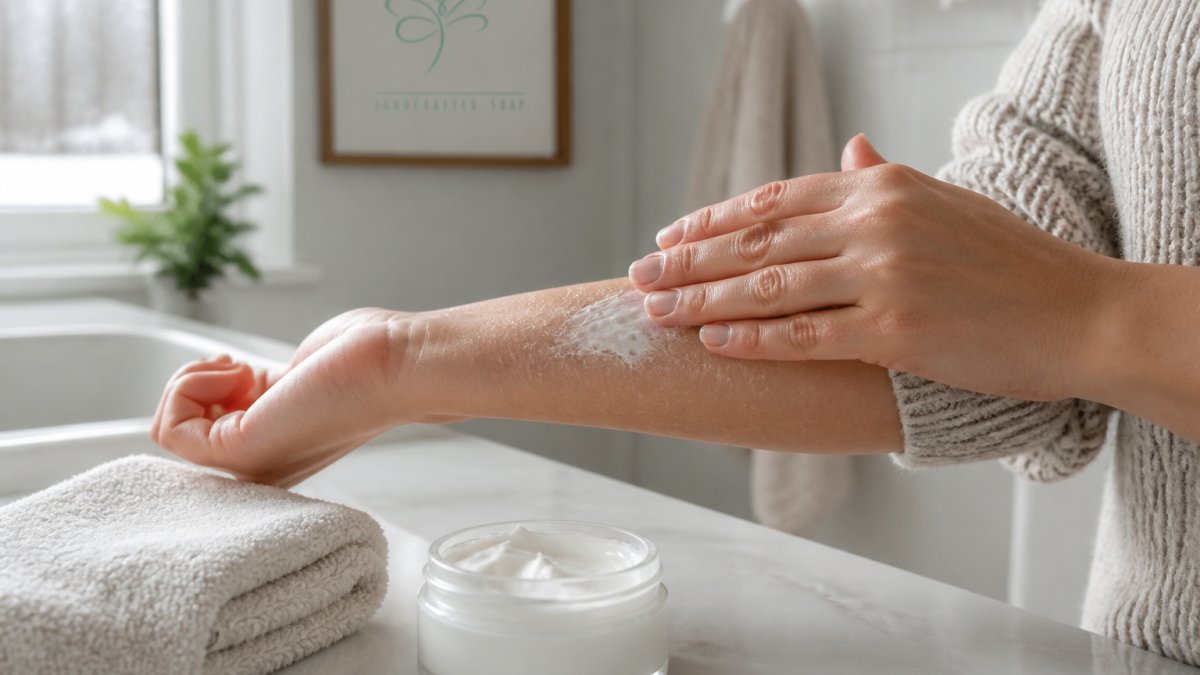
Here is the sequence that works:
- Cleanse with lukewarm water and a fragrance-free, non-foaming bar.
- Pat skin damp, never rub dry.
- Apply a humectant serum or essence to damp skin.
- Seal with a ceramide or squalane-rich moisturizer.
- Repeat morning and night, and add a thicker balm at night if needed.
Layering Order, Ingredient Conflicts, and What to Skip
Layering order matters more in winter than any other season: thinnest to thickest, water-based before oil-based.
But the bigger issue most guides skip is ingredient conflict.
What to skip while the barrier is compromised:
- High-strength retinol. Retinol accelerates cell turnover, which is the opposite of what a damaged barrier needs. Pause it entirely until tightness and stinging resolve, then reintroduce at half your usual frequency.
- Strong vitamin C (L-ascorbic acid at low pH). The acidic environment that makes vitamin C effective can sting compromised skin. Switch to a gentler derivative or pause it.
- Physical scrubs and exfoliating acids. AHA, BHA, and enzyme peels all remove surface cells. On a barrier that is already thin, that is the last thing you want.
- Fragrance and essential oils. Even pleasant-smelling botanicals can trigger reactions on a barrier that is not fully sealed.
What pairs well:
- Ceramides plus niacinamide: niacinamide supports the skin's own ceramide production, so the two reinforce each other.
- Humectants plus occlusives: glycerin or hyaluronic acid pulls water in, squalane or a ceramide cream seals it. Never use one without the other in winter.
- Peptides plus ceramides: peptides signal repair, ceramides supply the raw material.
A note on label literacy. You do not need luxury pricing for barrier repair.
Lifestyle factors that matter as much as topicals. Barrier health is not only about what you put on your skin.
Conclusion
Winter skin irritation is frustrating, but it is one of the most fixable problems in skincare, because the cause is mechanical rather than mysterious: cold air removes lipids, so you put them back. Start with a gentle cleanser, layer humectants under a ceramide or squalane moisturizer, and give it two weeks before judging results.
Frequently Asked Questions
What is the best ingredient for repairing skin barriers?
Ceramides are the closest match to the lipids your barrier already uses, so they slot straight into a compromised lipid barrier and help slow transepidermal water loss. Niacinamide supports ceramide production and calms redness, while fatty acids from tallow, shea butter, and olive oil seal moisture in. Most dermatologist-recommended routines pair a ceramide cream with a gentle, non-foaming cleanser rather than relying on one hero ingredient.
How do I know if my skin barrier is damaged?
The signs of a damaged skin barrier include persistent dryness, redness, stinging when you apply products that used to feel fine, rough or flaky texture, and skin that feels tight minutes after washing. Sensitivity that appears suddenly in winter, rather than gradually, usually points to barrier damage instead of a new allergy. If these signs last more than two weeks, scale back to a basic cleanse-and-moisturize routine.
How long does it take to repair a damaged skin barrier?
Most people notice improvement within two to four weeks of consistent, gentle care. The first week usually brings less stinging and tightness, while visible flaking and redness settle over the following weeks. Skin resilience, meaning how well your barrier bounces back from cold air and hot showers, takes the longest to return. Pause retinol and exfoliating acids during this window so repair can actually happen.
What ingredients should I avoid when my skin barrier is compromised?
Skip high-percentage retinol, AHAs, BHAs, and physical scrubs until redness and stinging stop. Fragrance oils and essential oils can trigger inflammation on already-sensitized skin, so an unscented bar is the safer choice while you recover. Foaming cleansers with sulfates strip the lipid barrier further. Once your skin feels calm again, reintroduce one active at a time, every few nights, and watch for a reaction.
Can cold weather cause permanent skin barrier damage?
Cold weather itself does not permanently damage the skin barrier. Low humidity and indoor heating pull water out of the skin, and the barrier weakens as a result, but it rebuilds once humidity and care improve. Permanent damage usually comes from repeated irritation, such as over-exfoliating or layering strong actives through the winter. Protecting your barrier with occlusives and humectants each winter keeps that cycle from repeating.
Rebuilding a winter-stressed barrier starts with what you wash with, not just what you apply afterward. Minerva Rae handcrafts soaps with tallow, goat milk, shea butter, and colloidal oats, made for sensitive and dry skin that reacts to harsh cleansing. Explore the collection and find a bar that supports your barrier instead of stripping it.