

Table of Contents
- Why Dry Skin on Hands Happens and How to Stop the Cycle
- What You'll Need Before You Start
- Step 1: Switch to a Gentle, Natural Hand Soap
- Step 2: Master Hand Washing and Lukewarm Water
- Step 3: Apply Moisturizer and Occlusives While Skin Is Damp
- Step 4: Treat Dry Skin on Hands Overnight for Deeper Repair
- Step 5: Natural Home Remedies for Dry Hands
- Step 6: How to Prevent Dry Skin in Winter
- Frequently Asked Questions
Last Updated: September 23, 2026
Why Dry Skin on Hands Happens and How to Stop the Cycle
Dry skin on hands starts when the outer layer loses water faster than it can hold onto it. That outer layer is your skin barrier, a mix of oils and skin cells that traps moisture. When the barrier weakens, water escapes through a process called transepidermal water loss. The result is tightness, chapped skin, and cracks that sting.
The fix is not one product. It is a routine. Below, we will show you exactly how to treat dry skin on hands naturally, in seven steps you can start tonight.
This guide from Minerva Rae is built for people with sensitive or dry skin who want real relief without harsh ingredients. The cycle is simple to break once you know what causes it.
What You'll Need Before You Start
Gather your supplies first, so you can move through the steps without stopping.
- A gentle, fragrance-free hand soap
- A rich moisturizer with ceramides or shea butter
- An occlusive balm or petroleum jelly
- Soft cotton gloves for nighttime
- Colloidal oatmeal for soothing soaks
- A small bottle of olive oil or coconut oil
Keep these items near your sink and your nightstand. That way, moisturizing becomes automatic, not a chore.
A common mistake is buying five products and using none of them daily. Pick three and use them every day.
Step 1: Switch to a Gentle, Natural Hand Soap
The best natural soap for dry skin is one that cleans without stripping your skin barrier. Most drugstore soaps use strong surfactants that remove your natural oils along with the dirt.
Look for soaps made with nourishing fats like tallow, olive oil, or shea butter. These leave a soft, creamy lather instead of a squeaky, tight feeling.
Minerva Rae's Tallow & Goat Milk bar is a strong pick here.

Step 2: Master Hand Washing and Lukewarm Water
Hot water feels good, but it strips oils from your skin. Lukewarm water cleans just as well and keeps your lipid barrier intact.
Step 3: Apply Moisturizer and Occlusives While Skin Is Damp
Timing is everything. Apply moisturizer within three minutes of washing, while your skin is still slightly damp. This locks water in instead of sealing it out. The three-minute window matters because once water evaporates off the surface, a humectant has nothing left to pull inward and an occlusive is just sealing dry skin.
| Product Type | What It Does | Common Ingredients | Best For |
|---|---|---|---|
| Humectant | Pulls water from the air and deeper skin layers into the top layer | Glycerin, hyaluronic acid, honey, aloe vera, panthenol | Damp skin, daytime, layering under a cream |
| Emollient | Fills the gaps between skin cells so the surface feels smooth and flexible | Shea butter, jojoba oil, squalane, ceramides, colloidal oatmeal | Rough, flaky, tight patches |
| Occlusive | Forms a physical film that slows water from escaping (reduces transepidermal water loss) | Petroleum jelly, beeswax, lanolin, dimethicone, tallow | Nighttime, cracked or bleeding skin |
What to Avoid if Your Skin Is Sensitive or Eczema-Prone
Most guides skip this, but it is the difference between relief and a flare. If your hands sting, itch, or turn red after applying a product, one of these is often the culprit:
- Denatured alcohol and SD alcohol, listed high on the ingredient list, these evaporate fast and take your skin's own moisture with them. Cetearyl alcohol and cetyl alcohol are different: they are fatty alcohols that actually soften skin, so do not avoid them by name alone.
- Fragrance and "parfum", the single most common cause of contact dermatitis on the hands. "Unscented" is not the same as "fragrance-free"; unscented products can still contain masking fragrance.
- Essential oils, lavender, citrus, peppermint, and tea tree are natural but are also frequent irritants, especially on broken skin.
- Formaldehyde releasers, quaternium-15, DMDM hydantoin, diazolidinyl urea, and imidazolidinyl urea. Common in liquid soaps and lotions, and a known trigger for allergic contact dermatitis.
- Methylisothiazolinone (MI) and methylchloroisothiazolinone (MCI), preservatives found in many "natural" liquid soaps and wipes. The American Contact Dermatitis Society named MI Contact Allergen of the Year, and it is worth checking labels if you have reacted to a product before.
- Physical exfoliants on cracked skin, sugar and salt scrubs feel satisfying but tear open fissures that are already there.
Step 4: Treat Dry Skin on Hands Overnight for Deeper Repair
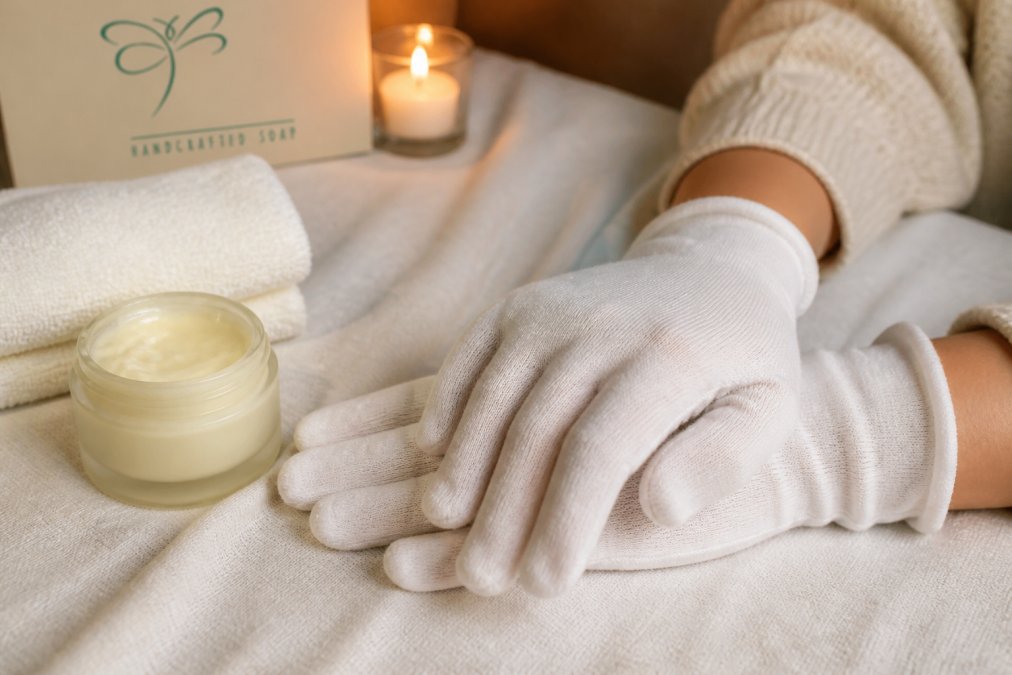
Nighttime is when your skin repairs itself, so use it. A thick layer of balm plus cotton gloves lets ingredients sink in for hours.
Step 5: Natural Home Remedies for Dry Hands
Most natural-remedy lists recycle the same five ingredients without saying which ones actually work, how to use them, or when to stop. Here is a more honest version, with the mechanism behind each remedy and a zero-waste angle for readers trying to avoid plastic-packaged petroleum products.
Colloidal Oatmeal Soak
Colloidal oatmeal is one of the few natural ingredients with a real mechanism: its avenanthramides are anti-inflammatory compounds that calm itch, and its beta-glucans form a thin film that helps hold water at the surface. It is recognized by the FDA as a skin protectant, which is why you see it in eczema creams.
Honey Mask
Honey is a humectant and also has mild antibacterial properties, which is why it shows up in wound-care literature. A thin layer of raw honey on clean, damp hands, left on for 10 minutes before rinsing, draws moisture in and can soothe minor fissures. Manuka honey is the most studied type, but any raw honey works for moisture. It is sticky, do this before bed, not before typing.
Aloe Vera Gel
Aloe is best for calming redness and post-sun or post-wash irritation, not for deep hydration. It is mostly water, so it needs an occlusive on top or it will evaporate and leave skin feeling tighter than before. If you keep a plant, cut a lower leaf, scoop the gel, and apply fresh. If you buy bottled, check that aloe is the first ingredient, many "aloe gels" are mostly water and alcohol.
Natural Oils, With Caveats
- Jojoba oil, closest in structure to human sebum, absorbs quickly, low irritation risk. Good daytime option.
- Coconut oil, effective emollient, but comedogenic for some and not ideal on eczema-prone skin.
- Olive oil, traditional, but high in oleic acid, which can weaken the barrier with repeated use. Better as an occasional treatment than a daily one.
- Sunflower seed oil, high in linoleic acid, which supports the barrier. A better daily choice than olive oil for most people.
A Zero-Waste Overnight Balm You Can Make
If you want to skip plastic-packaged petroleum jelly, this three-ingredient balm works as a natural occlusive:
- 2 tablespoons beeswax (or candelilla wax for a vegan version)
- 2 tablespoons jojoba or sunflower seed oil
- 1 tablespoon shea butter
Step 6: How to Prevent Dry Skin in Winter
Cold air holds less moisture, and indoor heating pulls more out of your skin. That is why dry skin on hands gets worse every winter.
Prevention comes down to a few habits:
- Moisturize after every wash, no exceptions
- Wear gloves outdoors and when doing dishes
- Run a humidifier in rooms you use most
- Avoid alcohol-based hand sanitizers when you can
- Drink water throughout the day
National Eczema Association on skin barrier care
Frequently Asked Questions
What is the best home remedy for extremely dry hands?
For very dry hands, start with a fragrance-free natural soap, then apply a thick moisturizer to damp skin and seal it with an occlusive like petroleum jelly before bed. Wear cotton gloves overnight to lock in hydration. Oatmeal, honey, and olive oil masks can soothe irritation, but the biggest gains come from consistent moisturizing after every hand washing and avoiding hot water that strips the skin barrier.
What vitamin am I lacking if my hands are dry?
Dry hands are usually caused by external factors such as frequent hand washing, cold weather, or harsh soaps rather than a vitamin deficiency. However, low levels of vitamin A, vitamin E, vitamin C, or B vitamins can affect skin hydration and repair. If dryness persists despite good topical care, ask a doctor about testing for deficiencies before adding supplements.
Which oil is best for dry hands?
Olive oil, jojoba, and coconut oil are popular natural oils for dry hands. Olive oil is rich in fatty acids and works well as an overnight treatment. Jojoba closely resembles skin's natural sebum and absorbs quickly. Coconut oil adds moisture but can feel greasy, so it is best used at night or layered under an occlusive like petroleum jelly to reduce transepidermal water loss.
How can I hydrate my hands naturally overnight?
Wash with lukewarm water and a gentle, fragrance-free soap, then pat dry and apply a humectant-rich moisturizer while skin is still damp. Follow with a thin layer of petroleum jelly or a natural balm, and slip on cotton gloves before sleep. This nighttime treatment traps hydration and gives the skin barrier hours to repair, reducing chapped skin and itchiness by morning.