

Table of Contents
- Why Choose Artisan Bath and Body Soap Alternatives
- Benefits of Cold Process Soap vs. Commercial Options
- How to Identify High-Quality Artisan Soap
- Natural Organic Body Wash Brands and Handcrafted Soaps
- Cost-Effectiveness: Bar Soap vs. Liquid Wash
- Artisan Soaps for Sensitive and Dry Skin
- Conclusion
Last Updated: August 28, 2026
Why Choose Artisan Bath and Body Soap Alternatives
Commercial bars strip your skin. Liquid washes leave residue. Artisan bath and body soap alternatives offer something different: genuine care formulated by people who understand skin, not just profit margins.
With artisan soaps, you know exactly what touches your skin. No synthetic surfactants hiding behind vague ingredient lists. No parabens or sulfates. Just intentional, often organic ingredients selected for their actual benefits.
At Minerva Rae, every bar is handcrafted using cold process or melt and pour methods, which preserve the natural glycerin that commercial manufacturers strip away to sell separately. That glycerin keeps your skin hydrated instead of tight and uncomfortable.
Benefits of Cold Process Soap vs. Commercial Options
Cold process soap is made by combining oils and lye at room temperature, then curing for 4-6 weeks (peer-reviewed research). During this process, natural glycerin is created as a byproduct and remains in the bar. Commercial manufacturers remove that glycerin to use in other products, leaving behind a bar that cleanses but dries skin.
Cold process bars lather richer and creamier, last longer due to their dense structure, and are gentler because the natural glycerin and preserved oils create a pH-balanced product that respects your skin barrier.
Commercial bars are made in hours using hot process methods or synthetic surfactants. They lather aggressively, dissolve quickly, and strip moisture, leaving skin feeling tight.
Handcrafted artisan alternatives preserve everything commercial manufacturing removes. You're buying skin care, not just a cleaner.
How to Identify High-Quality Artisan Soap
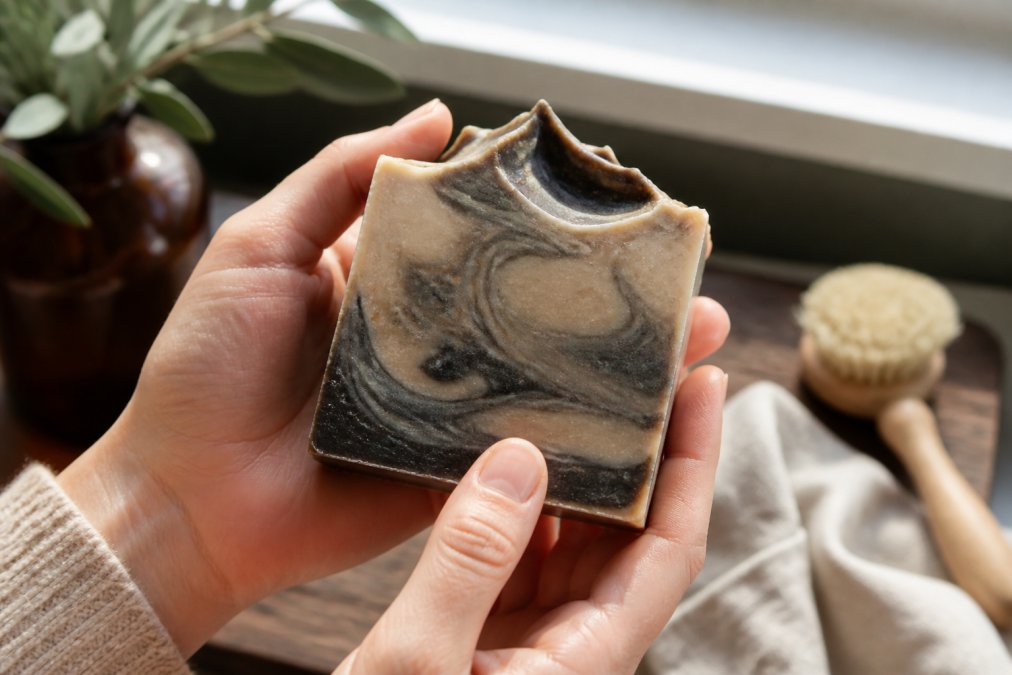
Read the ingredient list first. Quality artisan soaps list actual ingredients you recognize: olive oil, coconut oil, shea butter, goat milk, tallow, essential oils. If you see fragrance oil instead of essential oil or sodium lauryl sulfate, it's not artisan soap.

Check for the cure time. Legitimate cold process soap requires 4-6 weeks to cure properly. If a maker claims to sell cold process soap but ships within days, they're using hot process or misrepresenting their method.
Look at the weight. A quality artisan bar weighs approximately 4-5 ounces. Lighter bars contain more water and dissolve faster. Minerva Rae bars are formulated at 4.5 ounces to balance density with usability.
Evaluate the lather. Cold process soap creates a creamy, stable lather that lasts through your entire wash. If a bar produces weak lather or it vanishes immediately, the formulation is compromised.
Assess transparency about sourcing. Quality makers can tell you where their oils come from and why they chose specific components. Vague sourcing indicates lower quality.
Check for consistency. Each bar should look similar to others in the batch. Handmade means intentional, not inconsistent.
The best test is how your skin feels after using it. A quality artisan soap cleanses without tightness, leaves your skin soft rather than stripped, and doesn't cause irritation.
Natural Organic Body Wash Brands and Handcrafted Soaps
When evaluating artisan bath and body soap alternatives, you're choosing between bar soaps (solid) and body washes (liquid). Both can be handcrafted and organic, but they perform differently.
Bar soaps are concentrated. A single bar lasts 2-3 times longer than a bottle of liquid wash because there's no water weight. They're portable and require minimal packaging. The trade-off is that they require a soap dish to stay dry between uses.
Liquid body washes are convenient and feel luxurious, but most contain 70-80% water. Even artisanal liquid washes require preservatives to prevent bacterial growth.
For artisan bath and body soap alternatives, the bar format dominates because it allows makers to skip preservatives and focus on ingredient quality. Minerva Rae's Tallow & Goat Milk bar uses only seven ingredients: tallow, olive oil, water, goat milk, coconut oil, sodium hydroxide, and castor oil. At $12.00 per bar, it's priced competitively while delivering significantly better results.
The Bulgarian Lavender bar at $12.00 demonstrates how artisan makers create luxurious experiences: colored with Brazilian purple clay, enriched with colloidal oats and Tussah silk, while maintaining formulation integrity.

| Format | Longevity | Ingredient Complexity | Best For |
|---|---|---|---|
| Handcrafted Bar (Cold Process) | 2-3 months | 5-10 ingredients | Sensitive skin, eco-conscious users |
| Artisan Liquid Wash | 3-4 weeks | 15-25 ingredients | Convenience, familiar routine |
| Commercial Bar | 3-4 weeks | 8-12 ingredients | Budget-conscious, basic cleansing |
| Commercial Liquid | 2-3 weeks | 20+ ingredients | Fragrance priority, convenience |
Cost-Effectiveness: Bar Soap vs. Liquid Wash
A quality artisan bar at $12.00 lasts approximately 2-3 months with daily use. That's $4-6 per month. A bottle of liquid body wash at similar quality costs $8-12 and lasts 3-4 weeks. That's $24-48 per month.
An artisan bar delivers roughly 50-75 washes per bar at $0.16-0.24 per use (the FTC). A liquid wash delivers about 30-40 washes at $0.20-0.40 per use. Artisan wins on cost-per-use.
For a family, one person uses roughly 18-24 bars per year. That's $216-288 annually for premium artisan soap versus $300-500 for equivalent quality liquid washes.
Bar soaps also require minimal packaging, a cardboard wrapper versus a plastic bottle, reducing environmental impact and transportation costs.
Artisan Soaps for Sensitive and Dry Skin
If you have sensitive or dry skin, commercial soap is problematic. The combination of synthetic surfactants, stripped glycerin, and chemical fragrances creates irritation. Artisan soaps are often necessary.
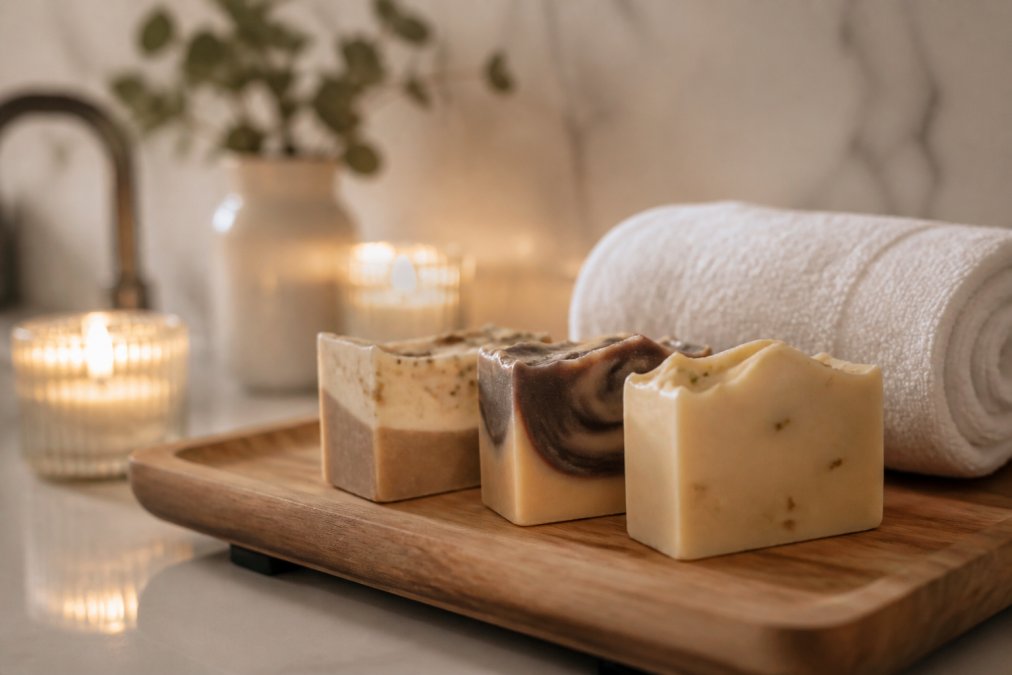
Artisan makers who understand sensitive skin avoid synthetic surfactants entirely. They use oils and butters chosen for their skin-soothing properties, skip fragrance oils in favor of essential oils, and add ingredients like colloidal oats, silk fibers, and goat milk that calm irritation.
For sensitive skin, the priority is minimal ingredients. The Tallow & Goat Milk bar contains seven ingredients and zero fragrance. Tallow is remarkably similar to skin's natural sebum, making it exceptionally gentle. Goat milk is naturally soothing and contains alpha-hydroxy acids that gently exfoliate without irritation (peer-reviewed research). At $12.00, it's accessible rather than a luxury option.
For dry skin, the focus shifts to butters and oils. The Old Fashioned Tallow & Oatmeal bar combines rich tallow with shea butter and castor oil for deep moisture. The oatmeal provides gentle exfoliation without stripping living cells.
For combination or reactive skin, the Charcoal & Tea Tree option at $12.00 addresses specific concerns. Activated charcoal draws out impurities without over-drying. Tea tree and rosemary essential oils offer natural antimicrobial benefits without harsh chemicals.
The Bulgarian Lavender bar demonstrates how artisan makers create luxurious experiences without compromising skin safety. It's colored with clay instead of synthetic dyes, scented with pure Bulgarian lavender essential oil, and enriched with silk fibers and oats. At $12.00, it delivers measurably better results for reactive skin.
Storage matters for sensitive skin. Keep artisan bars in a well-draining soap dish. Bars that stay wet develop mold, which can irritate sensitive skin.
If you've experienced tightness, irritation, or dryness with commercial soap, switching to a quality artisan bar is the most direct path to improvement.
Conclusion
Artisan bath and body soap alternatives represent a fundamental shift in how you approach daily skincare. You're choosing transparency over marketing, real ingredients over synthetic ones, and formulations designed for skin health instead of profit optimization.
The economics work. The skin benefits are measurable. The environmental impact is lower.
Minerva Rae's handcrafted soaps deliver exactly what artisan bath and body soap alternatives promise: intentional formulations using cold process methods, premium ingredients like tallow and goat milk, and designs that transform your daily routine into a refined ritual. Start with the Tallow & Goat Milk bar if you have sensitive skin, or explore the Bulgarian Lavender if you want luxury combined with skin care. Explore the Collection and experience the difference that genuine artisan soap makes.
Frequently Asked Questions
Q: What makes artisan soap different from mass-produced body wash?
A: Artisan soaps are handcrafted in small batches using cold process or melt-and-pour methods, which preserve natural glycerin and skin-loving oils that commercial manufacturers often strip out. Mass-produced body washes rely on synthetic surfactants and chemical preservatives, while artisan alternatives use botanical ingredients, essential oils, and minimal additives. This means artisan soaps deliver richer lather, better moisturizing, and fewer irritants, especially important for sensitive skin.
Q: How long does a handcrafted artisan soap bar actually last compared to drugstore soap?
A: A quality artisan soap bar typically lasts 2-3 times longer than conventional drugstore soap. Handcrafted bars made with cold process methods contain natural glycerin, which hardens the soap and slows dissolution. A 4.5 oz artisan bar can outlast a standard 3 oz commercial bar by weeks. This longevity directly cuts your cost per use, what seems like a premium price per bar becomes economical over time.
Q: Are artisan soaps truly better for sensitive skin than commercial alternatives?
A: Yes, when formulated correctly. Artisan soaps made without synthetic fragrances, parabens, sulfates, and harsh detergents are gentler on compromised skin barriers. Look for bars with minimal ingredients, natural essential oils or no fragrance, and moisturizing bases like shea butter, goat milk, or tallow. Brands like Minerva Rae specifically craft soaps for sensitive skin, for example, their Tallow & Goat Milk bar is unscented and designed to cleanse without stripping.
Q: What ingredients should I look for in a high-quality artisan soap?
A: Seek soaps with plant-based oils (olive, coconut, castor), natural butters (shea, cocoa), and skin-conditioning additives like colloidal oats, silk fibers, and glycerin. Cold process soaps retain this glycerin naturally. Avoid synthetic fragrances, parabens, sulfates, and petroleum-derived ingredients. Essential oils and natural colorants (clays, botanicals) indicate quality craftsmanship. Check ingredient lists for recognizable names, if you can't pronounce it, it's likely synthetic.
Q: How do I know an artisan soap brand is ethically sourced and cruelty-free?
A: Reputable artisan makers transparently disclose their ingredient sources and production methods. Ask brands directly about their sourcing practices and whether they use animal testing. Many ethical artisan soap makers publish their supply chains and ingredient origins on their websites, making it easy to verify their commitment to sustainable and humane practices.
This article was written using GrandRanker