

Last Updated: October 30, 2026
Quick Summary
The soap ingredients dermatologists recommend for sensitive skin include colloidal oatmeal, glycerin, shea and other butters, olive and sunflower oils, goat milk, tallow, aloe vera, and calendula. Choose short ingredient lists that skip added fragrance, drying alcohols, harsh exfoliants, and preservatives like methylisothiazolinone.
- Fragrance-free means no added fragrance or essential oils, while unscented may still contain a masking fragrance.
- Traditional bar soap is alkaline at around pH 9 to 10, while skin sits closer to pH 4.5 to 5.5.
- For eczema-prone skin, pick a fragrance-free bar with colloidal oatmeal or glycerin and skip essential oils.
- Patch test by applying lather to your inner forearm and waiting 24 to 48 hours for a reaction.
- Avoid patch testing during a flare-up, or you will not know whether the soap or your skin caused the reaction.
Table of Contents
- Why Soap Ingredients Matter More Than the Label
- Soap Ingredients to Avoid for Sensitive Skin
- 9 Dermatologist-Recommended Soap Ingredients for Sensitive Skin
- Fragrance-Free Soap for Sensitive Skin: What the Label Really Means
- Bar Soap vs. Liquid Soap for Sensitive Skin
- Choosing a Soap for Eczema-Prone Skin
- How to Patch Test and Introduce a New Cleanser
- Find Your Gentle Bar in the Minerva Rae Collection
- Frequently Asked Questions
Why Soap Ingredients Matter More Than the Label
The word "gentle" on a soap wrapper is marketing, not chemistry. What actually touches your skin is the ingredient list, and for people with sensitive skin, that list decides whether a wash calms irritation or triggers it.
Sensitive skin is skin that reacts faster and more visibly to cleansers, fragrances, and harsh surfactants than most skin does. The reaction usually shows up as redness, tightness, itching, or flaking after washing.
Here is the part most guides get wrong: a soap can be "natural," "handmade," and still strip your skin. Castile-style bars, essential oils, and exfoliants all cause reactions in the wrong formulation. The American Academy of Dermatology's guidance on gentle skin care makes the point plainly: fragrance and harsh cleansers are common irritants, and simpler is usually safer.
Below, we break down the soap ingredients to avoid, the ones dermatologists tend to favor, and how to test a new bar before it touches your whole body.
Soap Ingredients to Avoid for Sensitive Skin
Start with what to skip. Four categories cause most reactions: added fragrance, drying alcohols, harsh exfoliants, and preservatives like methylisothiazolinone. Fragrance is a frequent cause of cosmetic contact allergy, which is why "fragrance-free" is often the safer label than "unscented" (more on that below).
Watch out for "parfum" and "fragrance" hiding near the end of an ingredient list. A bar can smell faintly of nothing and still contain a masking fragrance. Drying alcohols like denatured alcohol sit high on some liquid cleansers and leave skin tight. Rough exfoliants, including crushed shells and coarse salt, create micro-tears that irritate already-reactive skin.
If you want a deeper reference before you shop, our guide to handcrafted soap ingredients to avoid walks through the hidden names these ingredients use on labels.
9 Dermatologist-Recommended Soap Ingredients for Sensitive Skin
These are the ingredients dermatologists tend to point to when they recommend a gentle bar: colloidal oatmeal, glycerin, butters, plant oils, goat milk, tallow, aloe, and calendula. Each one earns its place for a specific reason, and each works best in a simple formula rather than a long list. Below, each entry is graded by how well-established the benefit is, paired with the irritation risk the marketing rarely mentions.
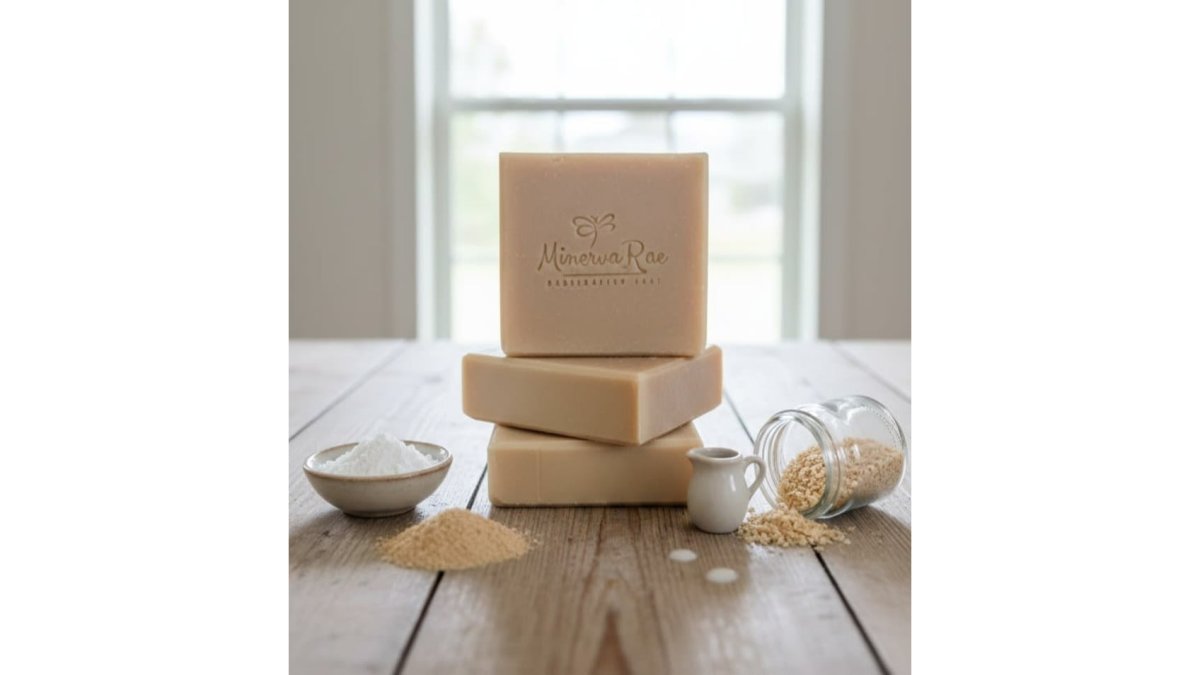
1. Colloidal Oatmeal
Colloidal oatmeal is an ingredient widely used in skin-care products for dry, itchy, or irritated skin. In a bar, it adds a soft, comforting texture. Watch for: oat allergy is uncommon but real; if you react to oat-based cereals, patch test first.

2. Glycerin
Glycerin is a humectant, meaning it draws water toward the skin. Glycerin left in a bar can help it feel less tight after washing. Watch for: in very humid conditions some people find high-glycerin bars feel tacky; that is a texture issue, not irritation.
3. Shea, Sal, and Other Butters
Shea butter, sal butter, cocoa butter, mango butter, and kokum butter are rich, fatty butters often used in soap for a creamy feel rather than a squeaky one. Watch for: shea is a tree nut derivative; most people with nut allergies tolerate it, but those with known shea sensitivity should spot-test. If shea is the ingredient you want, our shea butter soap shows what a shea-forward bar looks like in practice.

4. Olive, Sunflower, and Jojoba Oils
Evidence: moderate. Olive oil, sunflower oil, sweet almond oil, jojoba oil, and grapeseed oil are the conditioning base of most gentle bars. They are common conditioning oils in handcrafted soap. Watch for: almond oil is a tree nut derivative; grapeseed and sunflower are generally lower-risk alternatives.
5. Goat Milk and Tallow
Evidence: traditional, limited formal study. Goat milk and tallow are traditional, deeply moisturizing ingredients that make a dense, creamy lather without stripping. Watch for: milk-derived ingredients are not suitable for dairy allergy; tallow is animal-derived, which matters for some buyers. Our Tallow & Goat Milk bar, an unscented handcrafted soap, pairs tallow and goat milk for a simple option.

6. Aloe Vera and Calendula
Evidence: moderate for soothing, weaker for treatment claims. Aloe vera and calendula are soothing botanicals with a calming reputation. Watch for: both are botanicals, and botanical extracts can cause contact allergy in a minority of users. They work best as supporting ingredients in a short list, not as headline claims on a long one.
Here is a quick scan of the nine ingredients dermatologists tend to favor, with the caveat each one carries.
| Ingredient | Why it helps | Watch for |
|---|---|---|
| Colloidal oatmeal | Used for dry, itchy, irritated skin; soft texture | Oat allergy is uncommon but real |
| Glycerin | Humectant that draws water toward skin | High-glycerin bars feel tacky in humidity |
| Shea, sal, and other butters | Creamy feel rather than squeaky clean | Shea is a tree nut derivative |
| Olive, sunflower, jojoba oils | Conditioning base of most gentle bars | Almond oil is a tree nut derivative |
| Goat milk and tallow | Dense, creamy lather without stripping | Not for dairy allergy; tallow is animal-derived |
| Aloe vera and calendula | Soothing botanicals with calming reputation | Botanical extracts can cause contact allergy |
Fragrance-Free Soap for Sensitive Skin: What the Label Really Means
"Unscented" and "fragrance-free" are not the same thing. Unscented means no noticeable smell, but the bar may still contain a masking fragrance. Fragrance-free means no added fragrance or essential oils at all, which is the safer choice for sensitive and allergy-prone skin.
Essential oils count as fragrance here. Lavender, citrus, and peppermint smell natural, but they are still common irritants for reactive skin. A truly fragrance-free bar lists no "fragrance," "parfum," or essential oils. If you are deciding between scented and unscented, our comparison of scented vs unscented soap for sensitive skin breaks down the trade-offs.
Bar Soap vs. Liquid Soap for Sensitive Skin
The difference between a bar and a liquid cleanser is not just packaging. It is the cleansing chemistry, and that chemistry determines how your skin barrier feels afterward. Most guides gloss over this; it is the single most useful thing to understand before you buy.
Traditional bar soap is made by saponification: a fat or oil reacts with an alkali (usually sodium hydroxide) to form soap and glycerin. The resulting bar is alkaline, typically around pH 9 to 10. Skin's natural surface sits closer to pH 4.5 to 5.5, so a high-pH bar can temporarily raise skin pH, swell the outer layer, and leave a tight, squeaky feel.
Syndets (synthetic detergents) are the alternative. These are liquid or bar cleansers built on mild surfactants such as cocamidopropyl betaine, sodium cocoyl isethionate, or glucosides, formulated near skin's pH. They cleanse without the alkaline swing, which is why many dermatology offices hand out syndet-based wash samples rather than traditional soap.
Neither type is universally better. A well-made, superfatted bar with a short ingredient list suits many sensitive-skin users because it avoids preservatives and rinses clean. A pH-balanced syndet may suit someone whose barrier is actively flaring. The practical test is the same either way: patch test, watch for tightness or stinging within an hour of washing, and let your skin's response decide. Our guide to Castile soap vs a gentle cleanser compares the two formats side by side.
Choosing a Soap for Eczema-Prone Skin
For eczema-prone skin, choose a fragrance-free bar with colloidal oatmeal or glycerin and skip essential oils and exfoliants. Eczema means the skin barrier is already compromised, so the goal is to cleanse without stripping and to moisturize immediately after.
Look for short ingredient lists, no added fragrance, and no harsh exfoliants. Patch test first, keep showers short and lukewarm, and apply moisturizer within a few minutes of patting dry. If itching, cracking, or rash persists despite gentle care, that is a signal to see a dermatologist rather than keep switching bars.
How to Patch Test and Introduce a New Cleanser
Patch testing takes about a week and prevents most bad reactions. Apply a small amount of lather to your inner forearm, rinse, and wait 24 to 48 hours. If there is no redness or itching, wash one small area of your face or body for a few days before using the bar all over.
- Apply a small lather to the inner forearm and rinse
- Wait 24 to 48 hours and check for redness, itching, or bumps
- Wash one small area for 2 to 3 days
- Introduce the bar to your full routine only if no reaction appears
- Stop and switch if irritation shows up at any step
A common mistake is testing a new bar during a flare-up. Wait until your skin is calm, or you will not know whether the soap or your skin caused the reaction.
Find Your Gentle Bar in the Minerva Rae Collection
Choosing well comes down to reading the ingredient list and patch testing new bars. Our handcrafted bars are built around that idea, from the unscented Tallow & Goat Milk to the colloidal-oatmeal-rich Bulgarian Lavender. Every bar is made in small batches with premium ingredients, so a gentle formula still feels like an indulgence.
Start with a single bar, patch test it, and let your skin decide. Explore the Minerva Rae collection and find the bar that earns a permanent spot on your soap dish.
Frequently Asked Questions
What soap ingredients should people with sensitive skin avoid?
Watch for artificial fragrance, synthetic dyes, sodium lauryl sulfate, drying alcohols like denatured alcohol, and preservatives such as methylisothiazolinone. These are common triggers for irritation, itching, and contact reactions. Fragrance is the single most frequent cause of allergic contact dermatitis from personal care products, so an unscented bar with a short ingredient list is the safest starting point for easily irritated skin.
Are fragrance-free soaps better for sensitive skin?
Yes, in most cases. Fragrance, whether synthetic or from essential oils, is a leading cause of skin reactions. A fragrance-free soap for sensitive skin skips added scent entirely, which lowers the chance of irritation. Note that unscented and fragrance-free are not always the same: unscented products may use masking fragrance. Read the full ingredient list and look for bars with no fragrance or essential oil entries at all.
Is bar soap better than liquid soap for sensitive skin?
It depends on the formula, not the format. Traditional bar soap can be alkaline and stripping, but many handcrafted bars are superfatted with oils and butters that leave skin comfortable. Liquid body washes often rely on synthetic detergents and preservatives. For sensitive skin, choose a bar or wash with minimal ingredients, no added fragrance, and moisturizing oils like olive or castor oil, then patch test before daily use.
Can natural soap still irritate sensitive skin?
Yes. Natural does not mean hypoallergenic. Essential oils such as lavender or citrus, botanical extracts, and even some plant oils can trigger reactions in allergy-prone skin. That is why a patch test matters: apply a small amount to your inner forearm, wait 24 to 48 hours, and check for redness or itching. If you have eczema-prone skin, start with an unscented, short-ingredient bar and add scented options only after your skin settles.
