

Table of Contents
- Organic vs. Conventional Skincare: What the Labels Actually Mean
- Organic Body Care Ingredients: What's Inside the Bar
- Is Organic Body Care Better for Skin? The Evidence
- Organic Body Lotion Benefits and What to Expect
- Body Care for Sensitive Skin: Bar Soaps Built for Reactivity
- Cost, Value, and How Long an Artisan Bar Lasts
- Conclusion
- Frequently Asked Questions
Last Updated: October 19, 2026
Organic vs. Conventional Skincare: What the Labels Actually Mean
Is organic body care better for skin? The honest answer is that it depends on the formula, not the badge on the label. At Minerva Rae, we handcraft soap in small batches, and we have watched the word "organic" get stretched to mean almost anything. A product can be certified organic and still sting sensitive skin. A conventional bar can be gentle and effective without a single certification mark.
Natural, Organic, and Synthetic: Three Different Things
Natural means an ingredient comes from a plant, mineral, or animal source. It says nothing about safety. Poison ivy is natural.
Organic refers to how an ingredient was grown and processed, typically without certain synthetic pesticides or fertilizers. In the United States, the USDA National Organic Program sets the rules for what can carry an organic claim.
Synthetic means a lab-made ingredient. Many synthetics are identical to natural molecules, and some are the safest options available.
How to Verify Organic Certification on a Label
A "made with organic ingredients" claim is not the same as "certified organic." Look for the USDA Organic seal, which requires at least 95% certified organic content for food-grade certification, and check whether the seal applies to the finished product or only one ingredient. Most artisan soap bars are not certified organic, because the saponification process and the lye used make full certification impractical.

Organic Body Care Ingredients: What's Inside the Bar
Organic body care ingredients fall into a few working families, and each does a different job. Understanding them makes label reading much faster.
Plant Butters, Oils, and Clays Compared
| Ingredient | What It Does | Best For | Watch Out For |
|---|---|---|---|
| Shea butter | Rich moisturizing, softens skin | Dry skin, winter use | Heavy feel in humid weather |
| Cocoa butter | Firming, protective barrier | Very dry or rough patches | Can feel waxy if overused |
| Tallow | Nourishing, close to skin's own lipids | Sensitive, dry skin | Not vegan |
| Olive oil | Gentle cleansing, conditioning | Most skin types | Low lather on its own |
| Castor oil | Thick, stable bubbles | Lather quality | Sticky if used alone |
| Kaolin clay | Silky slip, mild cleansing | Sensitive skin | Can be drying in high amounts |
| Oatmeal | Calming, light exfoliation | Reactive, itchy skin | Occasional graininess |
Preservatives, Fragrance, and Essential Oils
Here is the part most guides get wrong: "preservative-free" is not automatically better. Bar soap has very little water, so it generally does not need preservatives the way a lotion does.
Fragrance is the bigger concern for reactive skin. Both synthetic fragrance and essential oils can trigger contact dermatitis. Essential oils are not gentler just because they are plant-derived. If your skin reacts easily, an unscented bar is the safer starting point.
Is Organic Body Care Better for Skin? The Evidence
Organic body care is not automatically better for skin, and conventional products are not automatically worse. What determines how a bar treats your skin is the formulation: which oils and butters carry the recipe, how much cleansing agent is present, and whether fragrance or essential oils are included. Origin tells you where an ingredient came from. Formulation tells you what it will do.
Where Organic Wins and Where It Doesn't
Organic farming practices can reduce pesticide exposure in the raw ingredients and often support better soil and water stewardship. That is a real environmental benefit. For your skin barrier, though, the win comes from the finished formula, not the certificate.
Where organic falls short: botanical extracts and essential oils are common sources of allergic reaction and contact dermatitis. "Chemical-free" is meaningless, since everything is a chemical.
Organic Body Lotion Benefits and What to Expect
Organic body lotion benefits are real but specific. Lotions built on plant oils and butters like shea, cocoa, and squalane tend to support the skin barrier and improve hydration, especially for dry skin.
What to expect: consistent use matters more than the label. A lotion applied daily after showering, while skin is still damp, holds moisture far better than an occasional application of a premium product.
Body Care for Sensitive Skin: Bar Soaps Built for Reactivity
"Sensitive skin" is not one condition. Eczema-prone, acne-prone, and fragrance-sensitive skin have different triggers, and the right bar depends on which pattern you have. Subtraction, fewer potential irritants, is the starting point, but the specifics matter.
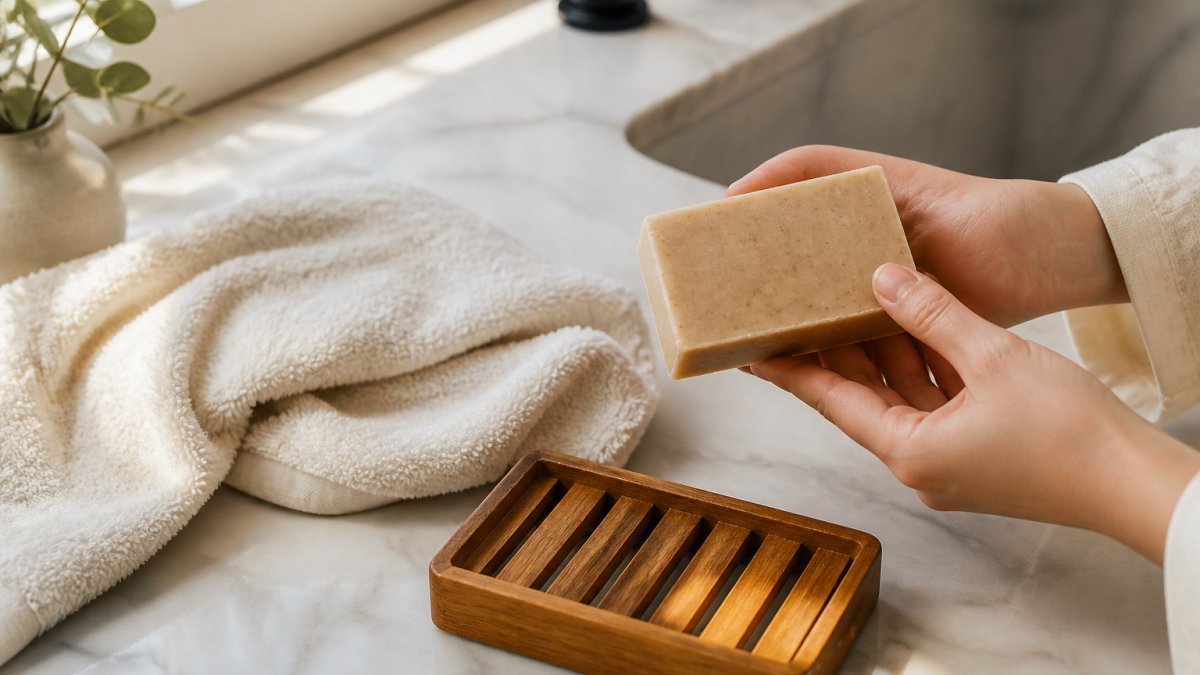
Matching the Bar to the Pattern
Eczema-prone and very dry skin. The skin barrier is leakier, so water escapes and irritants get in more easily. Look for short ingredient lists built on occlusive, barrier-supporting fats such as shea butter, cocoa butter, tallow, and colloidal oatmeal.
Acne-prone skin on the back and chest. The trigger is usually pore-clogging residue and friction, not the word "organic." Heavy butters and oils that feel great on dry legs can feel greasy and clogging on the back. A body wash or bar that rinses clean without a heavy film is often the better fit.
Fragrance-sensitive and reactive skin. Fragrance is one of the most common causes of contact dermatitis in body care, and essential oils are not automatically gentler, plant-derived fragrance compounds can trigger the same reaction.
Reading the Ingredient List for Reactivity
A short list is easier to audit. Scan for these categories:
- Fragrance and parfum: an umbrella term that can hide many compounds.
- Essential oils: listed by plant name, such as lavender oil or citrus peel oil; these are fragrance ingredients.
- Preservatives: necessary in water-based lotions and washes; not a red flag by themselves.
- Exfoliants: ground oatmeal, clays, and seeds; fine oatmeal is gentler than sharp seeds or shells.
Our Tallow & Goat Milk bar is built for the dry, reactive end of that range. It is unscented, free of added fragrance and essential oils, and made with tallow, olive oil, goat milk, coconut oil, and castor oil.

If you want light exfoliation without grit, the Old Fashioned Tallow & Oatmeal Artisan Soap pairs finely ground oatmeal with shea butter for a creamy, comforting lather.
Cost, Value, and How Long an Artisan Bar Lasts
Price per bar is the wrong number to compare. The useful number is cost per use, and that depends on bar weight, how fast the bar dissolves, and how you store it. A drugstore bar and a handcrafted cold-process bar can land in the same cost-per-use range even when the sticker prices look far apart.
Doing the Cost-per-Use Math
Start with the label weight. Most mass-market bath bars run roughly 3.5 to 4.5 ounces, while many handcrafted cold-process bars run 4 to 5 ounces.
A simple way to compare: divide the price by the number of showers you actually get. If a $12 handcrafted bar lasts six weeks of daily showers and a $6 multipack bar lasts three weeks, the cost per shower is close.
What Drives Shelf Life
Shelf life is a formulation and storage question, not an organic-versus-conventional question.
- Water content: Low-water bar soap is naturally hostile to mold and bacteria. High-water liquid washes and lotions need a preservative system to stay safe.
- Oils prone to oxidation: Oils high in polyunsaturated fats, such as some nut and seed oils, can go rancid faster than stable oils like olive, coconut, tallow, and shea. Rancidity shows up as a crayon-like or sharp smell and a change in color.
- Fragrance and essential oils: These can accelerate oxidation in some formulas. Unscented bars often keep longer.
- Storage: Water is the main enemy. A bar left in a puddle softens, dissolves faster, and can grow surface mold.
Most handcrafted bars are best used within about 12 months of purchase and kept dry before use. Store spares in a cool, dry place away from direct sunlight, and keep the in-use bar on a slatted or grooved dish so it drains fully between showers.
Performance Trade-offs Worth Knowing
Organic and handcrafted bars are not automatically better performers. Compare on these points instead of the label:
| Factor | Handcrafted cold-process bar | Mass-market bar or body wash |
|---|---|---|
| Lather | Moderate, creamy; depends on coconut and castor oil | Often boosted with synthetic surfactants for big foam |
| Feel after rinse | Can leave a light conditioning film from superfatting | Often designed to rinse clean and squeaky |
| Scent | Essential-oil or unscented | Fragrance or essential oil; label tells you which |
| Shelf life | Roughly 12 months if kept dry | Often 24 months or more with preservatives and packaging |
| Cost per use | Depends on weight, hardness, and storage | Depends on weight and how much water the formula carries |
- Weigh or note the bar size before you buy
- Store it on a draining dish, out of the shower stream
- Let it dry fully between uses
- Cut larger bars in half and keep one in reserve
- Note the purchase date and use within about a year
Conclusion
Choosing body care for sensitive or dry skin comes down to reading the formula, not the front label. If you want a bar with a short ingredient list, no added fragrance, and ingredients chosen to comfort rather than strip, explore the Minerva Rae collection. Our handcrafted bars are made in small batches with nourishing tallow, goat milk, shea, and oatmeal, and our unscented options are built for reactive skin.
Frequently Asked Questions
Is organic body care actually better for your skin?
Not automatically. Organic body care can be gentler because it often skips synthetic fragrance and harsh detergents, but the word organic on a label does not guarantee a product will suit your skin. What matters is the full formula: the oils, butters, surfactants, and preservatives in it. A well-made conventional bar can outperform a poorly formulated organic one. Judge by ingredient list and how your skin responds, not by the certification alone.
Can organic body care ingredients cause skin irritation?
Yes. Botanical extracts, essential oils, and fragrance compounds are common triggers for contact dermatitis even when they are plant-derived. Citrus oils, for example, are natural but can sting reactive skin. If you have sensitive skin, start with an unscented bar, do a patch test on your inner forearm for 24 hours, and introduce one new product at a time so you can trace any reaction to its source.
What should I look for on an organic body care label?
Read the full ingredient list, not the front of the package. Look for named plant oils and butters near the top, a recognizable preservative system, and clear fragrance disclosure. Check for a certification seal from a recognized body if the brand claims organic status. Avoid vague terms like 'chemical-free,' which no product can honestly claim. If a label lists only 'fragrance' with no further detail, assume it may contain sensitizers.
Is organic body lotion good for dry skin?
Organic body lotion benefits dry skin most when it contains occlusive and humectant ingredients such as shea butter, cocoa butter, squalane, or glycerin. Plant butters seal in water and support the skin barrier, which is what dry skin needs. A lotion alone may not be enough in winter; pairing a rich bar soap with a butter-based lotion applied to damp skin locks in more moisture than either product does on its own.
Do organic body care products work for sensitive skin?
Some do, and the ones that work best tend to be short-formula and unscented. Fewer ingredients means fewer chances of a reaction. Look for bars built on tallow, olive oil, or goat milk with no added fragrance or essential oils, and avoid anything with exfoliating acids or strong botanical actives if your skin reacts easily. Patch test first, and keep a simple routine so you can identify what helps.