

Table of Contents
- Why Winter Dries Out Your Skin (and What Actually Helps)
- Best Body Wash for Dry Skin: What to Look For
- How to Prevent Dry Skin in Winter: Daily Habits That Work
- Natural Remedies for Dry Skin: Oatmeal, Oils, and Tallow
- How Clothing and Fabric Make Winter Dry Skin Worse
- Budget Drugstore Picks vs. Medical-Grade Moisturizers
- Overnight Care: Humidifiers, Occlusives, and Sleep
- When to See a Dermatologist About Winter Dry Skin
- Frequently Asked Questions
Last Updated: September 29, 2026
Why Winter Dries Out Your Skin (and What Actually Helps)
Winter dry skin happens because cold outdoor air holds less moisture, and indoor heating pulls what's left out of your skin. The result is tightness, flaking, and itchiness that no amount of lotion seems to fix.
This guide from Minerva Rae breaks down how to treat winter dry skin on body from the shower outward. Below, we'll show you exactly what to change in your daily routine, starting today.
The fix isn't one miracle product. It's a handful of small changes working together.
What Transepidermal Water Loss Means for Your Routine
Transepidermal water loss is the process where water evaporates through your skin's outer layer, the epidermis. When your skin barrier function is strong, this loss stays low. When it's weakened, moisture escapes fast.
Think of your moisture barrier as a brick wall. Skin cells are the bricks. Lipids like ceramides are the mortar. Cold air and hot showers wear down that mortar.
So the goal isn't just adding moisture. It's slowing the escape.
Best Body Wash for Dry Skin: What to Look For
The best body wash for dry skin is a gentle, fragrance-free cleanser that cleans without stripping your skin barrier. Ingredients matter more than the label.
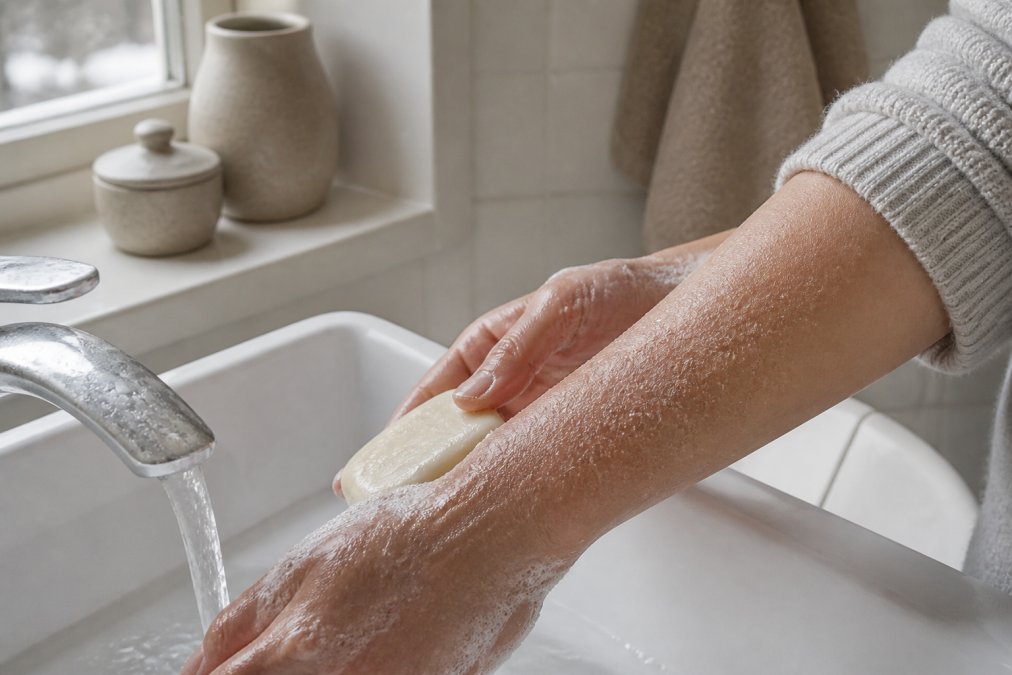
Look for:
- Humectants like glycerin and hyaluronic acid, which pull water into the skin
- Emollients that soften and smooth rough patches
- Occlusives like petroleum jelly or mineral oil that seal moisture in
- Ceramides for lipid replenishment
Avoid sulfates, heavy fragrance, and anything labeled "deep clean." Those strip oil your skin needs.
Ingredients That Cleanse Without Stripping
A good bar soap for sensitive skin does two things: it lifts dirt, and it leaves lipids behind. That's why we make our soaps with tallow, olive oil, and shea butter instead of harsh detergents.
How to Prevent Dry Skin in Winter: Daily Habits That Work
Preventing dry skin in winter comes down to a daily routine, not a single fix. The steps below take about two extra minutes.
- Shower in lukewarm water, not hot. Hot water strips oil fast.
- Keep showers under 10 minutes. Long soaks pull moisture out.
- Use a gentle cleanser on your body, and skip harsh scrubs.
- Pat dry instead of rubbing. Leave skin slightly damp.
- Moisturize within 3 minutes of toweling off.
- Reapply to hands and legs before bed.
Natural Remedies for Dry Skin: Oatmeal, Oils, and Tallow
Natural remedies for dry skin work best as support, not a replacement for a solid routine. The difference between a remedy that helps and one that backfires usually comes down to how you use it and what it's doing at the level of the skin barrier.
Colloidal Oatmeal: The Itch Calmer
Colloidal oatmeal is finely milled oat that stays suspended in water. It contains avenanthramides, which are compounds that appear to reduce the release of inflammatory signals in irritated skin, plus beta-glucans that form a thin film over the surface. That film is why an oatmeal bath feels soothing within minutes.
How to use it:
- Add about one cup of colloidal oatmeal to a lukewarm bath and soak for 10 to 15 minutes.
- Keep the water temperature below hot, heat undoes the calming effect.
- Pat dry and moisturize within three minutes while skin is still damp.
- Look for products labeled "colloidal oatmeal" rather than whole rolled oats, which won't disperse.
Plant Oils: Emollients With Limits
Oils soften rough patches and slow water loss, but they are not all equal and they are not humectants, they don't pull water into the skin.
- Olive oil is rich in oleic acid and feels heavy. It's a decent emollient, but some practitioners note that oleic acid can disrupt the barrier in people with eczema, so patch-test first.
- Coconut oil contains lauric acid and solidifies below room temperature. It absorbs quickly and works well on legs and arms, but can clog pores on the back and chest.
- Jojoba oil is technically a wax ester that closely resembles human sebum, so it absorbs without a heavy film.
- Sunflower and safflower oils are high in linoleic acid, which some evidence suggests supports barrier repair better than oleic-heavy oils.
Tallow: A Barrier-Matching Fat
Tallow is rendered beef fat, and its fatty acid profile, roughly half saturated, half monounsaturated, with some stearic and palmitic acid, is closer to human sebum than most plant oils. That similarity is why it absorbs without the greasy residue people expect from a fat. It functions primarily as an emollient and partial occlusive.
What to Skip
How to Layer Natural Remedies Into Your Routine
- Cleanse with a gentle, fragrance-free bar.
- Pat dry, leaving skin slightly damp.
- Apply a humectant first if you want added water-binding.
- Follow with an emollient oil or tallow to soften.
- Seal with an occlusive on the driest spots.
Our Cocoa Shea bar blends African Black Soap with shea and cocoa butters for deep cleaning plus real moisture. For a calmer, spa-like option, Bulgarian Lavender uses colloidal oats and Brazilian purple clay.


How Clothing and Fabric Make Winter Dry Skin Worse
What you wear can undo a good routine. This is the step most winter skin guides skip, and it's one of the easiest to fix once you understand why fabric matters.
Why Fabric Friction Triggers Itch
Dry skin has a compromised barrier, so the outermost layer of dead cells lifts and flakes instead of lying flat. When a rough fiber drags across that surface, it catches those edges and stimulates the nerve endings just beneath, which is why itchiness spikes in the evening after a day in the wrong sweater. Wool fibers have overlapping scales that act like tiny barbs.
Fiber Choices Ranked for Winter Skin
- Fine cotton and cotton-modal blends, smooth, breathable, low friction. Best base layer.
- Bamboo viscose and Tencel (lyocell), very smooth filaments, good moisture management, gentle on reactive skin.
- Merino and cashmere, fine micron counts make these far less irritating than standard wool, but still risky for eczema-prone skin.
- Standard wool and coarse acrylic, highest friction. Keep off bare skin.
- Fleece, soft to the touch but traps heat and sweat, which can sting cracked skin.
A practical rule: if a fabric feels prickly on your inner wrist, it will feel worse on your shins and forearms where skin is thinner and drier.
Laundry Habits That Matter More Than You Think
Residue from detergent and fabric softener sits in the fibers and transfers to your skin all day. A few changes help:
- Use a fragrance-free, dye-free detergent labeled for sensitive skin.
- Skip fabric softener and dryer sheets, they coat fibers with a waxy film that can irritate compromised skin and reduce towel absorbency.
- Add an extra rinse cycle if anyone in the home has eczema or very reactive skin.
- Wash new garments before wearing them to remove sizing agents and dye residue.
- Avoid over-drying, which makes fibers stiffer and rougher.
Layering Strategy
Fabric choice won't replace moisturizer, but it removes a daily source of irritation that quietly works against everything else in your routine.
Budget Drugstore Picks vs. Medical-Grade Moisturizers
You don't need a costly cream to treat winter dry skin. Drugstore staples like petroleum jelly and glycerin-based lotions work well for most people.
- Over-the-counter treatments haven't helped after two weeks
- Your skin cracks, bleeds, or stays inflamed
- A dermatologist recommends a specific formula
| Option | Best For | Cost Level | Key Ingredients |
|---|---|---|---|
| Drugstore cream | Mild daily dryness | Low | Glycerin, petrolatum |
| Medical-grade lotion | Stubborn or atopic skin | High | Urea |
| Barrier ointment | Cracking, severe dryness | Low | Petroleum jelly |
Overnight Care: Humidifiers, Occlusives, and Sleep
Night is when your skin repairs itself, so overnight care pays off. A humidifier adds moisture back to dry indoor air while you sleep.
When to See a Dermatologist About Winter Dry Skin
See a dermatologist if dryness doesn't improve after two to three weeks of consistent home care. Some cases need more than moisturizer.
Book an appointment if you notice:
- Deep cracks that bleed or hurt
- Skin that stays red, swollen, or warm
- Intense itchiness that disrupts sleep
- Signs of infection, like oozing or pus
Frequently Asked Questions
How do I get rid of dry skin in winter?
Switch to a fragrance-free, gentle cleanser and keep showers under 10 minutes with lukewarm water. Apply a thick moisturizer within three minutes of patting dry, while skin is still damp, to lock in hydration. Run a humidifier in your bedroom, wear soft breathable fabrics against your skin, and reapply moisturizer after washing your hands. Most people see improvement within one to two weeks of consistent care.
Why is my skin so much drier in winter?
Cold outdoor air holds less moisture, and indoor heating pulls even more humidity out of the air. This speeds up transepidermal water loss, the process where water evaporates through your epidermis. Your skin barrier, made of lipids like ceramides, works harder to hold moisture in. When that barrier weakens, you get itchiness, flaking, cracking, and inflammation. Hot showers and harsh soaps make all of it worse.
What vitamin deficiency can cause dry skin?
Diet alone rarely fixes winter dry skin, but it supports your skin barrier from the inside.
How often should I exfoliate dry skin in the winter?
Once a week is enough for most people, and some need only every 10 to 14 days. Over-exfoliating strips the moisture barrier and makes flaking worse. Choose a gentle physical exfoliant like finely ground oatmeal. Always follow with a rich moisturizer while skin is damp. If your skin stings or turns red, stop and give your barrier a week to recover.