

Table of Contents
- Why Your Skin Changes in Winter: The Barrier Science
- 6 Signs of a Damaged Skin Barrier You Shouldn't Ignore
- The Best Ingredients for Sensitive Skin in a Winter Formula
- Ingredients to Avoid When You Have Sensitive Skin
- How to Patch Test Skincare Products Before You Commit
- How to Choose a Winter Moisturizer: Texture and Routine
- Conclusion: Build Your Winter Routine with Confidence
- Frequently Asked Questions
Last Updated: September 6, 2026
The moment temperatures drop, sensitive skin often responds with tightness, flaking, and redness that summer formulas simply cannot address. Choosing a winter moisturizer for sensitive skin is not about picking the thickest cream on the shelf; it is about understanding how cold air and indoor heating accelerate transepidermal water loss, the process where moisture evaporates from the skin's surface. In this Minerva Rae guide, we break down the science of barrier repair and the specific ingredients that calm reactive complexions during the harshest months.
The core problem is that winter strips the lipid barrier, the protective outer layer that locks in hydration. When this barrier weakens, irritants penetrate more easily, triggering the dryness-induced itching and redness that plague so many people from November through March. Below, we will show you exactly how to evaluate formulations, which ingredients to prioritize, and how to patch test new products safely.
Why Your Skin Changes in Winter: The Barrier Science
Cold outdoor air holds little humidity, and indoor heating systems dry the air further, creating an environment that pulls moisture from the skin. Your skin barrier, composed of lipids like ceramides and cholesterol, becomes less fluid in low temperatures, developing microscopic cracks that allow water to escape. This is why the same moisturizer that felt adequate in July leaves your face feeling tight by noon in January.
But temperature is only half the story. The winter environment attacks your skin through three distinct mechanisms that most guides overlook:
Indoor heating and the humidity vacuum. Forced-air heating systems in homes and offices routinely drop relative humidity to 10-20% during winter months, compared to the 40-60% that dermatologists consider optimal for skin health (the NIH). This dry air creates a vapor pressure gradient that pulls water from the stratum corneum at a rate up to three times faster than in summer conditions.
Wind chill and the physical erosion effect. Wind does not just make cold air feel colder; it accelerates moisture loss by constantly sweeping away the thin layer of humidified air that naturally sits against your skin. This boundary layer acts as a buffer between your barrier and the environment. When wind removes it, evaporation rates spike. The combination of low temperatures and wind also causes the lipids between your skin cells to shift from a fluid, flexible state into a more rigid, crystalline arrangement. This phase transition creates microscopic fissures that are invisible to the naked eye but functionally significant, they allow irritants to penetrate while letting water escape.
The thermal shock of indoor-outdoor transitions. Moving between a 70°F interior and a 20°F exterior causes rapid vasoconstriction followed by sudden vasodilation. This repeated expansion and contraction of blood vessels stresses the capillary network and can trigger flare-ups in rosacea-prone individuals.
The skin microbiome also shifts with the seasons, and environmental stressors beyond temperature, such as wind and sudden temperature swings between outdoors and heated interiors, compound the damage. Dermatologists describe this as an increased irritation threshold, meaning your skin reacts to concentrations of active ingredients it once tolerated. A winter moisturizer for sensitive skin must therefore do double duty: replenish lost lipids while avoiding anything that could further inflame an already vulnerable barrier.
6 Signs of a Damaged Skin Barrier You Shouldn't Ignore
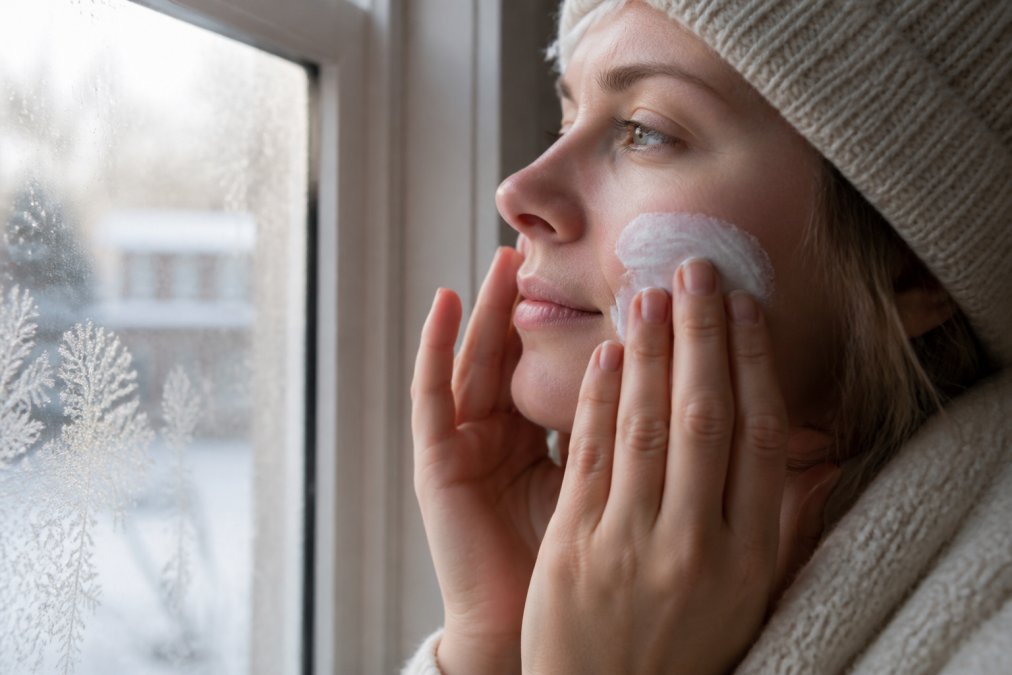
Recognizing a compromised barrier early prevents the cycle of irritation that leads to more aggressive products and worse damage. The six most common indicators are persistent tightness after cleansing, visible flaking or peeling, redness that does not fade within an hour, a stinging sensation when applying any product, increased breakouts from compromised protection, and a rough, dull texture despite regular moisturizing.
If you recognize three or more of these symptoms, your barrier needs repair before you introduce any new active ingredients. According to dermatological guidance on skin barrier function, focusing on gentle, fragrance-free formulations during this recovery period allows the lipid layer to rebuild without further insult. The goal is hydration retention, not exfoliation or treatment.
The Best Ingredients for Sensitive Skin in a Winter Formula
The most effective winter moisturizers combine three categories of ingredients that work synergistically: humectants to draw water into the skin, emollients to smooth the surface, and occlusives to create a moisture seal that prevents evaporation. This is the best ingredients for sensitive skin framework because it addresses both hydration and protection simultaneously.
Humectants: Hydration Retention
Humectants pull water from the environment and the deeper layers of the skin into the stratum corneum. Glycerin and hyaluronic acid are the gold standards here, both proven to bind water effectively without the irritation that some higher-molecular-weight alternatives can cause. Look for glycerin listed within the first five ingredients on the label, a reliable indicator of meaningful concentration.
The concentration question. Ingredient lists are arranged by weight, so position matters. Glycerin at 3-5% provides meaningful hydration; below 2%, it is largely cosmetic. Hyaluronic acid is effective at concentrations as low as 0.1-0.5%, but its molecular weight determines where it works. High-molecular-weight hyaluronic acid (above 1,000 kDa) sits on the skin's surface and pulls water from the air; low-molecular-weight versions (below 500 kDa) penetrate deeper but can trigger inflammation in sensitive skin. A winter formula for reactive complexions should favor glycerin as the primary humectant, with hyaluronic acid as a secondary supporting player.
The drugstore vs. luxury chemistry gap. The active humectant molecules in a $15 drugstore cream and a $90 department store option are often chemically identical. The price difference typically reflects the delivery system, not the active ingredient. Luxury formulations may use encapsulated or time-release technologies that spread the humectant's activity across several hours, but for sensitive skin, this added complexity introduces more potential irritants. Most dermatologists recommend starting with a simple, well-formulated drugstore option and upgrading only if you identify a specific performance gap.
Emollients and Occlusives: The Moisture Seal
Emollients like squalane and shea butter fill the gaps between skin cells, restoring smoothness and flexibility. Occlusives, including petrolatum, dimethicone, and plant-based butters, form a physical layer on top that locks in the humectants' work. For sensitive skin, the ideal formula layers humectants beneath occlusives, which is why the texture and application order matter as much as the ingredient list itself.
Ceramides: the barrier-specific repair molecule. Ceramides are the most abundant lipid in the stratum corneum, comprising roughly 50% of its composition. A winter formula should contain at least one of the nine ceramide types found in human skin, most commonly ceramide NP (formerly ceramide 3) or ceramide AP. The challenge is that ceramides are expensive to synthesize, so many budget products include them at concentrations too low to matter. Look for ceramides listed in the first half of the ingredient list, or pair your moisturizer with a dedicated ceramide serum if your budget allows.
Petrolatum vs. dimethicone: a practical trade-off. Petrolatum is an effective occlusive. It is also greasy, shiny, and can feel suffocating under makeup. Dimethicone provides a smooth, matte finish that layers well under cosmetics. For nighttime repair, petrolatum-based formulas win; for daytime wear, dimethicone-based options are more practical. Sensitive skin that reacts to botanical butters can often tolerate both petrolatum and dimethicone, as they are molecularly simple and rarely trigger allergic responses.
Ingredients to Avoid When You Have Sensitive Skin
While knowing what to look for is essential, recognizing what to avoid prevents the setbacks that keep sensitive skin in a cycle of irritation. Fragrance, both synthetic and natural essential oils, remains the most common trigger for contact dermatitis and should be avoided entirely in winter formulas when your barrier is already stressed.
Alcohol denat, which evaporates quickly and strips surface lipids, appears in many gel-based moisturizers and accelerates transepidermal water loss. Sulfates in cleansers perform a similar function, which is why a gentle, non-foaming cleanser paired with your moisturizer matters. The National Eczema Association's ingredient guidelines also flag certain preservatives and dyes as problematic for eczema-prone individuals, making it worth cross-referencing any new product against their acceptance criteria.
How to Patch Test Skincare Products Before You Commit
A patch test is the only reliable way to determine whether a new moisturizer will trigger your specific sensitivities before you apply it to your entire face. The process takes five days and requires minimal effort, but it prevents the discomfort and frustration of a full-face reaction.
- Apply a small amount of the product to a one-inch area on your inner forearm or behind your ear.
- Cover the area with a bandage and leave it undisturbed for 24 hours.
- Check for redness, itching, or bumps. If any appear, wash the area and discontinue use.
- If no reaction occurs, reapply to the same spot for three additional days.
- On day five, if the area remains clear, apply the product to a small patch on your jawline for two more days before using it on your full face.
This protocol is the how to patch test skincare products standard recommended by dermatologists, and it is especially important in winter when your irritation threshold is naturally lower. For those with a history of reactions, consider testing during a period when your skin is not already stressed by windburn or a flare-up.
How to Choose a Winter Moisturizer: Texture and Routine
Texture is not a cosmetic preference; it is a functional decision that determines how well a moisturizer performs on your skin type. Creams and balms, which contain a higher ratio of oils to water, are almost always the right choice for winter because they provide the occlusive layer that lotions lack. Lotions, with their higher water content, evaporate too quickly in dry indoor air to offer lasting protection.
For those with very dry or eczema-prone skin, a balm or ointment texture applied as the final step seals in every preceding layer. Those with combination skin can use a richer cream at night and a lighter gel-cream under makeup during the day. This is where how to choose a winter moisturizer for sensitive skin becomes a matter of matching texture to your specific needs and routine.
| Skin Type | Winter Texture | Application Timing | Key Ingredients to Seek |
|---|---|---|---|
| Very Dry | Rich cream or balm | Morning and night | Shea butter, ceramides, petrolatum |
| Combination | Cream at night, gel-cream by day | Night for repair, day for light wear | Glycerin, squalane, niacinamide |
| Oily but Dehydrated | Lightweight water cream | Twice daily | Hyaluronic acid, dimethicone |
Conclusion: Build Your Winter Routine with Confidence
The challenge of winter skincare is not finding a product that works; it is understanding your barrier's needs and choosing formulations that support it without introducing new irritants. Start with a gentle cleanser, apply your moisturizer to damp skin, and always patch test before committing to a new formula.
At Minerva Rae, we craft our handcrafted soaps with the same sensitivity in mind, using cold process methods and nourishing ingredients like tallow and goat milk to cleanse without stripping the barrier. Our Tallow & Goat Milk bar is unscented and free of added fragrance, making it a safe first step in a winter routine that prioritizes lipid replenishment over harsh cleansing. For a gentle exfoliating option, the Old Fashioned Tallow & Oatmeal bar offers soothing oatmeal in a creamy, traditional base.


Get started with Minerva Rae and pair your winter moisturizer with a cleanser that respects your skin's barrier, so your routine works as one cohesive system.
Frequently Asked Questions
What type of moisturizer is best for winter sensitive skin?
For winter, choose a cream or ointment rather than a lotion. Lotions have higher water content and evaporate quickly. Creams and ointments contain more oils and occlusives, which create a moisture seal to prevent transepidermal water loss. Look for a formula that lists ceramides, glycerin, or hyaluronic acid early in the ingredient list.
How can I tell if a moisturizer will cause a reaction before using it all over my face?
Perform a patch test. Apply a small amount to a discreet area, such as the inside of your forearm or behind your ear. Wait 24 to 48 hours and monitor for redness, itching, or flaking. If no reaction occurs, it is likely safe to apply to your face. This is a crucial step for those with sensitive skin.
Should I switch to a heavier cream during the winter months?
Yes, switching to a heavier formula is often necessary. Cold air and indoor heating reduce humidity, increasing moisture loss. A heavier cream with emollients and occlusives provides a stronger barrier against environmental stressors. If your current moisturizer leaves your skin feeling tight by midday, it is not providing enough hydration retention for winter.