

Table of Contents
- What Chemical-Free Skincare Actually Means
- Assess Your Current Skincare Products and Ingredients
- How to Read Skincare Ingredient Labels
- Patch Testing Skincare Products for Sensitive Skin
- Build a Natural Skincare Routine for Beginners
- Gradually Switching Skincare Products Without Irritation
- Ingredients to Prioritize and Avoid
- Frequently Asked Questions
Last Updated: October 20, 2026
What Chemical-Free Skincare Actually Means
Chemical-free skincare refers to products formulated without synthetic chemicals, artificial preservatives, or harsh additives. The term is misleading, everything in skincare is made of chemicals, including water, salt, and honey. What "chemical-free" really means is avoiding synthetic or harsh ingredients in favor of naturally derived or gentler formulations.
At Minerva Rae, transitioning to chemical-free skincare means simpler ingredient lists, fewer synthetic preservatives, and more plant-based or naturally sourced components. Clean beauty, natural skincare, organic beauty, and non-toxic skincare overlap significantly; the key difference is what each emphasizes:
- Clean beauty: focuses on avoiding controversial or potentially harmful ingredients
- Natural skincare: emphasizes plant-based and naturally derived ingredients
- Organic beauty: means ingredients are certified organic and grown without synthetic pesticides
- Non-toxic skincare: avoids ingredients linked to health concerns
The real benefit isn't that synthetic ingredients are universally bad, many are safe and effective. It's that natural or gentler alternatives often work just as well while reducing exposure to substances sensitive skin might react to.
Assess Your Current Skincare Products and Ingredients
Before making changes, understand what you're actually using. Most people have never looked closely at their product labels, you know your cleanser removes makeup, but not what's making that happen.
Gather all your skincare products in one place, cleanser, toner, serums, moisturizers, sunscreen, and treatments, and write down each product name and where you bought it.
Next, read each ingredient list. Ingredients are listed by concentration, so the first few make up the bulk, a product might contain one beneficial ingredient but be mostly water and fillers.
Ask yourself these questions about each product:
- Do I know what most of these ingredients are?
- Are there ingredients I've heard are problematic or that I want to avoid?
- Does this product actually make my skin feel better, or am I using it out of habit?
- How long have I been using this product?
This isn't about judging your routine, it's about creating a baseline for intentional changes instead of random switches.
How to Read Skincare Ingredient Labels
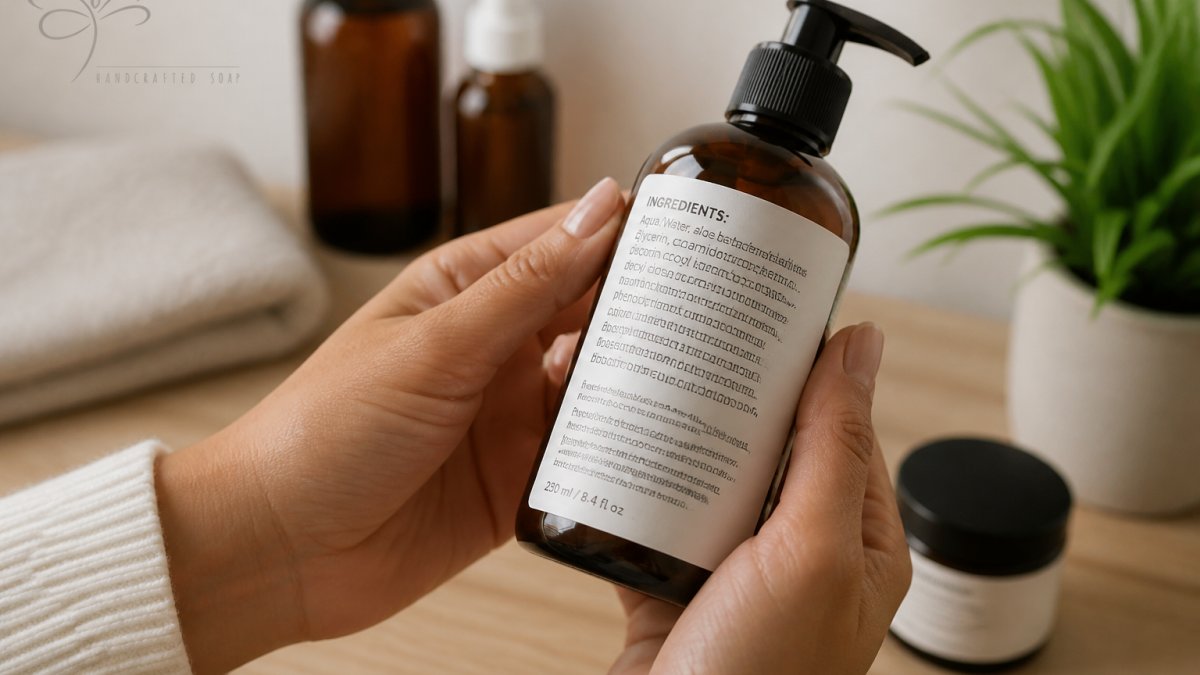
Reading an ingredient label is straightforward once you know what you're looking at.
The labeling rules you're reading under. In the United States, cosmetic ingredient lists follow the International Nomenclature of Cosmetic Ingredients (INCI) system, and the Food and Drug Administration (FDA) requires ingredients to be declared in descending order of concentration, down to 1%.
Decode the first five, then the rest. The first five ingredients are the formula's bulk. If water (often listed as aqua or water) is first, it's a water-based product, normal for cleansers, toners, and many serums.
Learn the functional categories, they overlap, and that's the point. A common mistake is treating "preservative," "active," and "humectant" as separate buckets. Many ingredients do more than one job:
- Humectants pull water toward the skin: glycerin, hyaluronic acid, honey, panthenol.
- Emollients soften and smooth: plant oils, shea butter, fatty alcohols (cetyl, stearyl), ceramides.
- Occlusives slow water loss: petrolatum, dimethicone, beeswax, some butters.
- Preservatives prevent microbial growth: phenoxyethanol, parabens, benzyl alcohol, and naturally derived options like certain organic acids.
- Actives are dose-dependent performers: niacinamide, salicylic acid, retinol, vitamin C derivatives.
- Fragrance appears as "fragrance" or "parfum" (a catch-all that can hide dozens of compounds) or as individual essential oils.
The dose-and-exposure lens. This is where most "chemical-free" advice goes wrong. An ingredient's presence says nothing about whether it's a problem, concentration, contact time, coverage, and barrier health all matter.
Ingredients worth a closer look, and why. These are the ones most often flagged, with the honest reason:
- Fragrance/parfum: the most common cause of cosmetic contact allergy; the American Academy of Dermatology recommends fragrance-free products for sensitive or reactive skin.
- Essential oils (lavender, citrus, peppermint, tea tree): natural, but concentrated and a recognized source of irritation and photosensitivity, "natural" and "non-irritating" are not synonyms.
- Parabens: effective preservatives with a long safety record at cosmetic concentrations; some people choose to avoid them, which is a preference, not a documented hazard at typical use levels.
- Sulfates (SLS, SLES): strong surfactants that can strip a compromised barrier; fine for many people, harsh for some.
- Phenoxyethanol: a widely used preservative generally regarded as safe at cosmetic limits; occasionally irritating to very reactive skin.
- Mineral oil and petrolatum: highly occlusive and well tolerated; the "clogs pores" claim is not supported for cosmetic grades, though some people prefer plant-derived occlusives.
Where to find the real list. Brand websites, the FDA's cosmetic ingredient resources, and the Environmental Working Group's Skin Deep database are starting points, treat any single database as one input, not a verdict.
Patch Testing Skincare Products for Sensitive Skin
Patch testing is non-negotiable with sensitive skin or a history of reactions, it prevents buying a product only to discover it irritates you.
Choose a small, easy-to-monitor area that isn't your face, the inside of your wrist or behind your ear. Apply a small amount and wait 24-48 hours, watching for redness, itching, burning, or any unusual reaction.
If no reaction occurs after two days, try it on your face, every other day for the first week, then gradually increase to daily use if tolerated.
Your skin barrier is sensitive to change: even gentle, natural products can trigger reactions if introduced too quickly or if your skin is already compromised. Patch testing lets your skin adjust without risking your entire face.
Common signs of a reaction include:
- Redness or flushing
- Itching or burning
- Tightness or dryness
- Small bumps or rash
- Increased sensitivity to other products
If you experience any of these, stop using the product immediately, wash with lukewarm water, apply a gentle moisturizer, and don't introduce another new product for at least a week.
Build a Natural Skincare Routine for Beginners
A simple routine is easier to maintain than a complicated one. Start with three essentials: cleanser, moisturizer, and sunscreen. Everything else is optional until you understand how your skin responds.
Step 1: Cleanse Use a gentle cleanser twice daily. For chemical-free skincare, look for simple ingredients like oils, plant extracts, or gentle surfactants, the goal is removing dirt and makeup without stripping your skin's natural oils.
Step 2: Moisturize Apply moisturizer while skin is still slightly damp to lock in hydration. For sensitive or dry skin, choose nourishing ingredients like shea butter, ceramides, or plant oils.
Step 3: Protect Sunscreen is non-negotiable, even on cloudy days, UV damage ages skin and triggers sensitivity. Mineral sunscreens with zinc oxide or titanium dioxide are often preferred for sensitive skin.
Once this feels comfortable, you can add a toner or serum, but many people find a good cleanser, moisturizer, and sunscreen are all they need.
| Step | Product Type | Purpose | Frequency |
|---|---|---|---|
| 1 | Cleanser | Remove dirt and makeup | 2x daily |
| 2 | Moisturizer | Hydrate and nourish | 2x daily |
| 3 | Sunscreen | Protect from UV damage | Daily (AM) |
Gradually Switching Skincare Products Without Irritation
The biggest mistake when transitioning to chemical-free skincare is switching everything at once, abrupt changes often trigger irritation, dryness, or breakouts. Here's a practical schedule and order.
Replace in this order, not all at once. Start with the product that touches your skin most briefly and rinses off, then work toward the ones that stay on:
- Cleanser (weeks 1-2). Lowest exposure, easiest to evaluate.
- Makeup remover or cleansing balm (weeks 3-4), if you use one.
- Toner or essence (weeks 5-6), if you use one.
- Moisturizer (weeks 7-8).
- Serum or treatment (weeks 9-10).
- Sunscreen (weeks 11-12), last, and only with a plan (see below).
That's roughly a 12-week schedule for a full routine. If your skin is reactive, stretch each step to three weeks.
Don't sacrifice sun protection to hit a "chemical-free" goal. This is the most common and most consequential mistake in a transition.
What to do with the products you're replacing. You don't have to throw them away:
- Use them up on less reactive areas (body, hands, feet) if they're not causing problems.
- Finish them before opening the replacement, so you're not paying for two products at once.
- Dispose of them responsibly, many municipalities run household hazardous waste or cosmetic take-back programs; check your local waste authority's guidance rather than pouring products down the drain.
A realistic budget. You don't need to replace everything in one trip. Spread the cost across the 12-week schedule by buying one replacement per pay period.
What a normal adjustment looks like, and what isn't. Mild dryness, a few temporary breakouts, or slight sensitivity in the first one to two weeks is common as your skin adapts.
Ingredients to Prioritize and Avoid
When building a chemical-free skincare routine, these ingredients have strong track records across most skin types:
Prioritize these ingredients:
- Glycerin: a humectant that draws moisture into skin
- Plant oils: argan, jojoba, rosehip, coconut
- Shea butter: deeply nourishing for dry skin
- Honey: gentle, soothing, antimicrobial
- Aloe vera: calming and hydrating
- Ceramides: restore skin barrier function
- Niacinamide: reduces inflammation and balances oil production
Avoid or minimize these:
- Parabens: synthetic preservatives linked to skin sensitivity
- Phthalates: chemicals that soften plastics and fragrances
- Sulfates: harsh cleansing agents that strip skin
- Synthetic fragrances: can trigger reactions and sensitivities
- Mineral oil: derived from petroleum, can clog pores
- Phenoxyethanol: synthetic preservative, controversial for sensitive skin
Not every synthetic ingredient is harmful, these are commonly associated with sensitivity or irritation.
For people with truly sensitive skin, consider unscented products. Fragrance, whether natural essential oils or synthetic compounds, is a common trigger. Minerva Rae's Tallow & Goat Milk soap is formulated without added fragrance, making it ideal for those seeking a gentle, unscented option that prioritizes skin comfort over scent.

Transitioning to chemical-free skincare doesn't require perfection or expensive products, just intention and patience. Understand your current routine, assess what your skin needs, and make gradual changes. When you're ready to explore handcrafted alternatives with carefully selected natural ingredients, Minerva Rae offers soaps formulated with nourishing tallow, plant-based oils, and gentle botanicals. Explore the Collection and discover how a simpler, more intentional routine can elevate your self-care.
Frequently Asked Questions
What does chemical-free skincare mean?
Chemical-free skincare refers to products formulated without synthetic chemicals like parabens, sulfates, phthalates, and artificial fragrances. The term emphasizes plant-based and naturally derived ingredients. However, all skincare contains chemicals, even water and salt are chemicals. What matters is choosing products with cleaner ingredient lists, minimal synthetic additives, and ingredients that work gently on sensitive skin. Reading labels helps you identify which products align with your skin health goals.
How do I switch to natural skincare without irritating my skin?
Start by patch testing any new product on a small area of skin for 24-48 hours before full application. Replace one product at a time, waiting 1-2 weeks between changes so you can identify any reactions. For sensitive skin, begin with gentle, unscented bars like Tallow & Goat Milk soap, which contains no added fragrance or essential oils. Avoid switching everything at once, as this makes it impossible to pinpoint irritants. If redness or itching occurs, stop using the product and return to your previous routine.
Should I replace my skincare products one at a time?
Yes, replacing products gradually is essential for sensitive skin. Switching everything simultaneously makes it difficult to identify which product is causing irritation. Replace your cleanser first, then wait 1-2 weeks before introducing a new moisturizer or treatment. This phased approach lets your skin adjust to each new product and helps you build confidence in your new routine. Keep a simple log of what you use and any reactions you notice.
What ingredients should I look for in a simpler skincare routine?
Look for nourishing base ingredients like tallow, coconut oil, shea butter, and olive oil that support your skin barrier. Plant-based extracts like oatmeal, honey, and turmeric are often included for their gentle properties. Avoid long ingredient lists with unrecognizable names, synthetic fragrances, and preservatives like parabens. For sensitive skin, unscented options are often best. Handcrafted soaps like Minerva Rae's Tallow & Goat Milk ($12) use simple, skin-loving ingredients with no added fragrance, making them ideal for beginners transitioning to cleaner skincare.