

Table of Contents
- Why Your Legs Itch: Causes of Dry, Irritated Skin
- Step 1: Rethink Your Shower Routine
- Step 2: Choose Natural Soap for Sensitive Skin
- Step 3: Moisturize Damp Skin Within Minutes
- Step 4: Calm the Itch With Targeted Treatments
- How to Prevent Dry Skin in Winter and Year-Round
- When to See a Doctor for Itchy Skin
- Conclusion
- Frequently Asked Questions
Last Updated: September 24, 2026
Why Your Legs Itch: Causes of Dry, Irritated Skin
The most common cause of dry itchy skin on the legs is a weakened skin barrier that lets moisture escape and irritants in. This condition, known as xeroderma, affects millions of people and worsens in cold, dry weather. When the lipid barrier breaks down, transepidermal water loss increases and pruritus follows. This guide from Minerva Rae breaks down a simple 7-step routine to relieve dry itchy skin on legs and keep it calm year-round.
Several factors drive this cycle:
- Cold, dry air pulls moisture from your skin
- Hot showers strip protective oils
- Harsh cleansers damage the lipid barrier
- Aging slows oil production and cell turnover
- Certain medications and health conditions affect skin hydration
Step 1: Rethink Your Shower Routine
Start by turning down the heat and shortening your time in the water. Hot water feels good, but it strips the protective oils your legs need. Keep showers to 5-10 minutes and use lukewarm water instead.
Temperature, Timing, and Gentle Cleansers
A few small changes make a big difference:
- Set your water to lukewarm, not hot
- Limit showers to under 10 minutes
- Use a gentle cleanser instead of harsh bar soap
- Skip daily full-body washing if your skin is very dry
The American Academy of Dermatology's bathing guidance recommends short, lukewarm showers for anyone with dry or sensitive skin.
Step 2: Choose Natural Soap for Sensitive Skin
Natural soap for sensitive skin should be fragrance-free and made with nourishing oils. Look for short ingredient lists and skip anything with synthetic dyes or heavy perfumes. Fragrance is one of the most common causes of skin sensitivity and shaving irritation.
Step 3: Moisturize Damp Skin Within Minutes
Apply moisturizer within 3 minutes of patting your legs dry. This locks in water before it evaporates. Damp skin absorbs product far better than dry skin, so timing matters more than the amount you use.
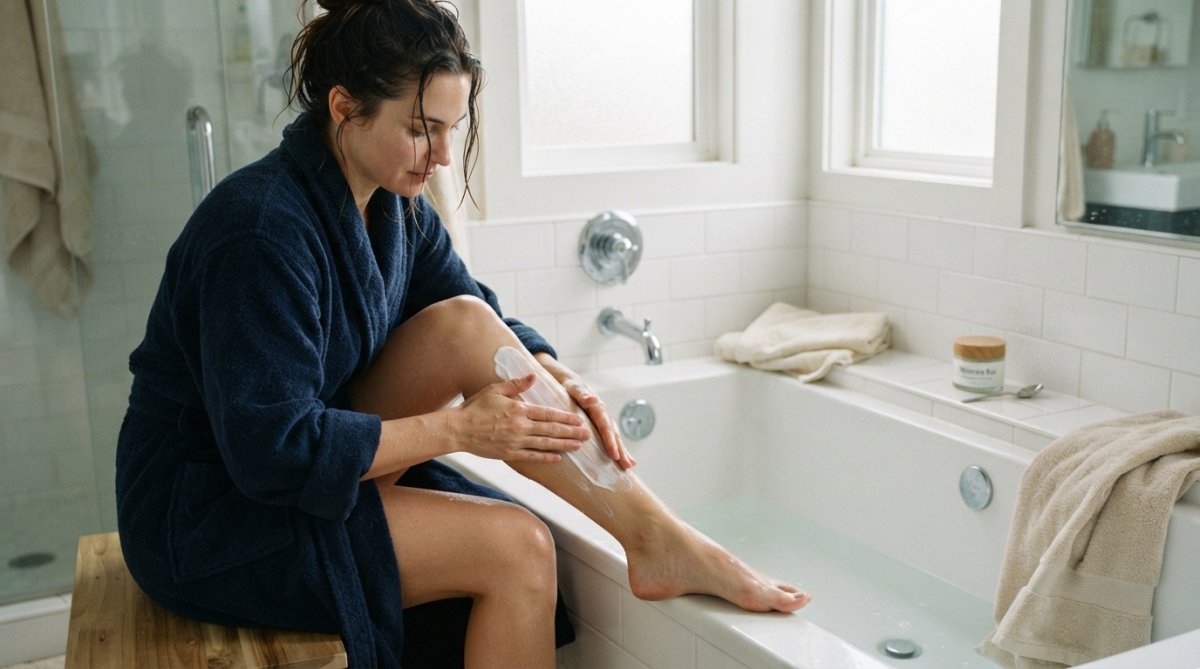
Emollients, Humectants, and Occlusives Explained
These three ingredient types work together to restore the skin barrier:
| Type | What It Does | Common Examples |
|---|---|---|
| Humectant | Pulls water into skin | Glycerin, hyaluronic acid |
| Emollient | Softens and smooths | Shea butter, oils |
| Occlusive | Seals moisture in | Petrolatum, dimethicone |
Step 4: Calm the Itch With Targeted Treatments
When moisturizer alone is not enough, targeted treatments can break the itch-scratch cycle. The key is matching the product to the problem: inflammation, histamine-driven itch, or a damaged barrier each call for a different approach.
Over-the-Counter Options and How They Work
- Hydrocortisone cream (1%) is a mild topical steroid that reduces inflammation. It is appropriate for short-term use on small, inflamed patches, typically no more than 7 days without checking with a clinician. Do not use it on broken skin, and do not apply it to large areas of the legs for extended periods.
- Oral antihistamines help most when itch is histamine-driven or disrupts sleep. A first-generation antihistamine taken at bedtime can reduce nighttime itch, though it causes drowsiness. A non-drowsy second-generation antihistamine is a better daytime option if you need one.
- Colloidal oatmeal (in baths, creams, or lotions) contains avenanthramides, compounds that help calm irritation and support the barrier. It is one of the few ingredients with a long track record for itchy, dry skin and is gentle enough for frequent use.
- Dexpanthenol (provitamin B5) supports skin healing and is often paired with moisturizers for irritated legs.
- Pramoxine is a topical anesthetic that numbs itch without steroids. It is useful for short-term relief when you want to avoid a steroid.
- Calamine lotion can soothe mild itch, but it is drying, so follow it with a moisturizer.
- Cool compresses, a damp cloth or a covered ice pack for 5-10 minutes, interrupt the itch signal and are safe to repeat as needed.
What to Avoid
- Skip exfoliation while skin is irritated. Scrubbing damaged skin worsens inflammation. Save gentle exfoliation for when your legs are calm, and never use it on cracked or raw areas.
- Avoid products with fragrance, essential oils, or alcohol on active flare-ups, even if they are marketed as soothing.
- Do not layer multiple steroid products without guidance.
- Do not use a topical steroid on suspected infections, it can mask or worsen them.
A Simple Sequence for a Bad Flare
- Take a lukewarm, short shower with a gentle cleanser.
- Pat dry and apply a thick, fragrance-free moisturizer within 3 minutes.
- Apply hydrocortisone 1% to the inflamed patches only, if needed.
- Use a cool compress or colloidal oatmeal product for residual itch.
- Take an antihistamine at bedtime if itch is disrupting sleep.
- Reassess after a week. If the flare is not improving, see a clinician.
How to Prevent Dry Skin in Winter and Year-Round
Prevention comes down to two jobs: keep water from leaving your skin, and keep irritants from reaching it. The habits that relieve dry skin are the same ones that stop it from returning, they just have to be consistent. This matters most for how to prevent dry skin in winter, when indoor heating can drop relative humidity into the 10-20% range and pull moisture out of your legs overnight.
Control the Air Around You
- Run a humidifier in the rooms where you sleep and spend the most time, and aim for roughly 30-50% relative humidity. Many humidifiers have a built-in hygrometer; if yours does not, a cheap standalone one removes the guesswork.
- Keep the thermostat lower and layer clothing instead of overheating the room. Hot, dry air accelerates transepidermal water loss.
- Close the bathroom door during long showers so steam stays in one room rather than drying out the rest of the house.
Audit Your Clothing and Laundry
Clothing and fabric irritants are one of the most overlooked triggers for itchy legs, and most articles skip them entirely. The friction of a seam against dry skin, or residue from detergent left in fabric, can keep a flare-up going even when your moisturizer is right.
- Choose soft, breathable fabrics, cotton, bamboo, and fine merino, for anything that touches your legs directly.
- Avoid wool, rough synthetics, and heavy seams against bare skin. If you wear leggings or tights, look for flat-lock or tagless construction.
- Switch to a fragrance-free, dye-free laundry detergent, and skip fabric softener and dryer sheets. Those products leave a waxy film that can trap irritants against the skin.
- Run an extra rinse cycle on loads that include leggings, pajama pants, and sheets.
- Wash new clothing before wearing it, sizing agents and dyes on unwashed fabric are a common cause of contact irritation.
Support the Barrier From the Inside
Dietary and internal hydration affect how well your skin barrier holds up, though no single food fixes dry skin. The practical levers are:
- Drink water steadily through the day rather than in one large amount. There is no universal ounce target, but pale-yellow urine is a reasonable everyday check.
- Include foods rich in healthy fats, fatty fish, olive oil, avocado, nuts, and seeds, which supply the lipids your barrier uses.
- Limit alcohol and high-caffeine intake in the evening, since both can increase overnight water loss.
- If you suspect a true deficiency (for example, low vitamin D or essential fatty acids), ask a clinician before supplementing.
Build the Daily Habits
- Moisturize twice daily, not just after showers. The post-shower application is the most important one, but a second layer before bed helps legs that itch at night.
- Keep showers lukewarm and under 10 minutes, and use a gentle, fragrance-free cleanser.
- Pat dry and apply moisturizer within 3 minutes while skin is still damp.
- Avoid scratching. If the itch is intense, use a cool compress or cover the area instead.
- Reapply a thick occlusive, petrolatum or a petrolatum-based cream, to any cracked or stubborn spots before bed.
When to See a Doctor for Itchy Skin
See a doctor if itching lasts more than two weeks, disrupts sleep, or comes with a rash, swelling, or open sores. Persistent itch can signal an underlying condition like dermatitis, eczema, or a thyroid issue. Knowing when to see a doctor for itchy skin helps you avoid making things worse.
Watch for these warning signs:
- Itch that does not improve with moisturizer
- Red, scaly, or weeping patches
- Itching that spreads to other body parts
- Signs of infection, like warmth or pus
Conclusion
Dry, itchy legs are frustrating, but the fix is often simpler than you think. A gentler shower, the right natural soap for sensitive skin, and fast moisturizing can calm most flare-ups within days. Minerva Rae handcrafts soaps made for sensitive skin, including the unscented Tallow & Goat Milk bar and the soothing Bulgarian Lavender bar with colloidal oats. Each bar is designed to cleanse without stripping and support an elevated daily routine.

Frequently Asked Questions
What can I put on my legs to stop them itching?
Start with a fragrance-free moisturizer applied to damp skin right after a lukewarm shower, which helps seal in hydration and supports the skin barrier. For active itching, an over-the-counter hydrocortisone cream can calm inflammation, while a colloidal oatmeal lotion soothes irritation. If itching keeps you awake or lasts more than two weeks, a doctor can check for conditions like dermatitis or xeroderma that need prescription treatment.
Can natural soap for sensitive skin help with dry, itchy legs?
Yes, if the bar is formulated without harsh detergents or added fragrance. A natural soap for sensitive skin, like an unscented tallow and goat milk bar, cleanses without stripping the lipid barrier that holds moisture in. Look for short ingredient lists with nourishing oils and butters, and always follow up with a moisturizer within three minutes of patting dry to lock in hydration and reduce transepidermal water loss.
How do I know if my itchy legs are caused by a medical condition?
See a doctor if the itch is severe, lasts longer than two weeks, or comes with a rash, swelling, or broken skin. Itching that spreads to other body areas, wakes you at night, or does not improve with moisturizing may point to dermatitis, a vitamin deficiency, or another underlying issue. A dermatologist can examine your skin and order tests to identify the cause and recommend prescription treatment if needed.
How can I prevent dry skin in winter when my legs get the worst?
Switch to lukewarm showers, run a humidifier in your bedroom, and moisturize within minutes of bathing. Choose a gentle, fragrance-free cleanser and avoid wool or rough fabrics against your legs. Layer a humectant like glycerin under an occlusive balm at night, and drink enough water throughout the day. These steps reduce water loss and keep the skin barrier strong when indoor heat and cold outdoor air strip moisture.