

Table of Contents
- Why Winter Changes How You Should Exfoliate Dry Skin
- Chemical vs. Physical Exfoliation: Which Is Safer for Dry Skin?
- How Often to Exfoliate in Winter (and When to Skip It)
- Best Gentle Exfoliators for Sensitive Skin
- Post-Exfoliation Moisturizing Routine That Rebuilds the Barrier
- Skin Type Adjustments and Barrier Repair Protocols
- Frequently Asked Questions
Last Updated: September 14, 2026
Why Winter Changes How You Should Exfoliate Dry Skin
Cold air holds less moisture, and heated indoor air holds even less, so the skin you exfoliate in January is not the skin you exfoliated in July. Understanding how to exfoliate dry winter skin without irritation starts with accepting that winter skin is structurally different: it is drier, thinner in feel, and slower to recover.
The American Academy of Dermatology notes that cold weather and low humidity strip the skin of its natural lipids, which is why so many people notice flaking and rough patches by midwinter. This guide from Minerva Rae walks through the full routine: which exfoliant to choose, how often to use it, and how to protect the barrier afterward so you never have to trade smoothness for comfort.
Humidity, Indoor Heating, and Transepidermal Water Loss
Transepidermal water loss is the process by which water evaporates through the epidermis, and it accelerates sharply when the air around you is dry. Outdoor humidity drops in winter, then indoor heating drops it further, so your skin loses moisture from both directions at once.
That matters because exfoliation removes dead skin cells from the surface. When the barrier is already compromised, the same exfoliant that felt gentle in summer can push a dry face or body into redness and inflammation. The fix is not to stop exfoliating, it is to change what you use and how often.
Chemical vs. Physical Exfoliation: Which Is Safer for Dry Skin?
Chemical exfoliants are generally the safer choice for dry winter skin, because they dissolve dead skin cells without the friction that causes micro-tears. Physical scrubs rely on abrasive particles, and on already-dry skin that friction can do more harm than the flakes you were trying to remove.
Here is how the main options compare:
| Method | How It Works | Winter Suitability | Watch Out For |
|---|---|---|---|
| Lactic acid | Alpha hydroxy acid that dissolves dead cells | Best for dry, sensitive skin | Overuse if left on too long |
| Glycolic acid | Smaller AHA molecule, faster penetration | Better for oily or resilient skin | Stinging on compromised barriers |
| Enzyme peel | Fruit enzymes digest surface cells | Very gentle, good for reactive skin | Results build slowly |
| Physical scrub | Abrasion lifts dead skin cells | Riskiest in cold weather | Micro-tears, redness, flaking |
Lactic acid earns its reputation as the winter standard because it is a larger alpha hydroxy acid molecule, so it acts more slowly and gently on the surface. If you prefer a physical approach, choose a finely milled option rather than a coarse salt or sugar scrub, and use a light hand.
American Academy of Dermatology guidance on exfoliation
How to Spot Over-Exfoliation Before It Worsens
The early signs are easy to dismiss. A common mistake is reading tightness as "clean" when it is actually the first stage of barrier damage.
Watch for these signals:
- Stinging when you apply products that never stung before
- Persistent redness that lasts more than an hour after washing
- Flaking that appears in new areas rather than clearing
- Skin that feels rough but also raw or tender to the touch
If two or more of these appear, stop exfoliating for at least a week and focus entirely on hydration and barrier support. Pushing through is how a minor irritation becomes a multi-week setback.
How Often to Exfoliate in Winter (and When to Skip It)
Once or twice a week is the right frequency for most people in winter, down from the two to three times a week that many people use in summer (the American Academy of Dermatology). If your skin is very dry or reactive, once every seven to ten days is often enough.
Skip exfoliation entirely when:
- You have any active irritation, windburn, or chapping
- You just shaved or waxed the same area
- You spent a long day outdoors in cold wind
- You are trying a new active ingredient for the first time
The logic is simple: exfoliation is a stress on the skin, and winter skin has less capacity to absorb that stress. Spacing sessions further apart gives the barrier time to rebuild between them.
Best Gentle Exfoliators for Sensitive Skin
For sensitive skin, the best gentle exfoliators are leave-on lactic acid serums at low concentrations, enzyme peels, and finely milled physical options used sparingly. Patch test any new product on your inner forearm for two nights before using it on your face or full body.
A practical way to think about it: the ideal winter exfoliant should feel like nothing is happening during application. If you feel tingling, burning, or grit, the product is too strong or your technique is too aggressive.
For body care, a textured washcloth or a natural fiber scrubber paired with a gentle bar can lift dead skin cells without the harshness of a dedicated scrub. Minerva Rae's Sisal Soap Saver Bag works this way: the naturally coarse sisal fibers provide invigorating exfoliation while you wash, and the bag uses every last sliver of soap rather than letting it dissolve down the drain.

Ingredients to Avoid in Cold Weather
Certain ingredients that feel fine in humid months become problematic when the air is dry:
- High-concentration glycolic acid peels, which penetrate quickly and can sting
- Coarse salt and sugar scrubs, which create micro-tears on dry skin
- Alcohol-based toners, which accelerate moisture loss
- Retinoids combined with exfoliation on the same night, a common cause of irritation
- Fragrance-heavy formulas if your skin is already reactive
If you use a prescription retinoid, alternate nights with your exfoliant rather than layering both. That single adjustment resolves a large share of winter irritation complaints.
Post-Exfoliation Moisturizing Routine That Rebuilds the Barrier
The ten minutes after exfoliation matter more than the exfoliation itself. Apply a humectant first, then an occlusive to seal it in, and do it while the skin is still slightly damp.
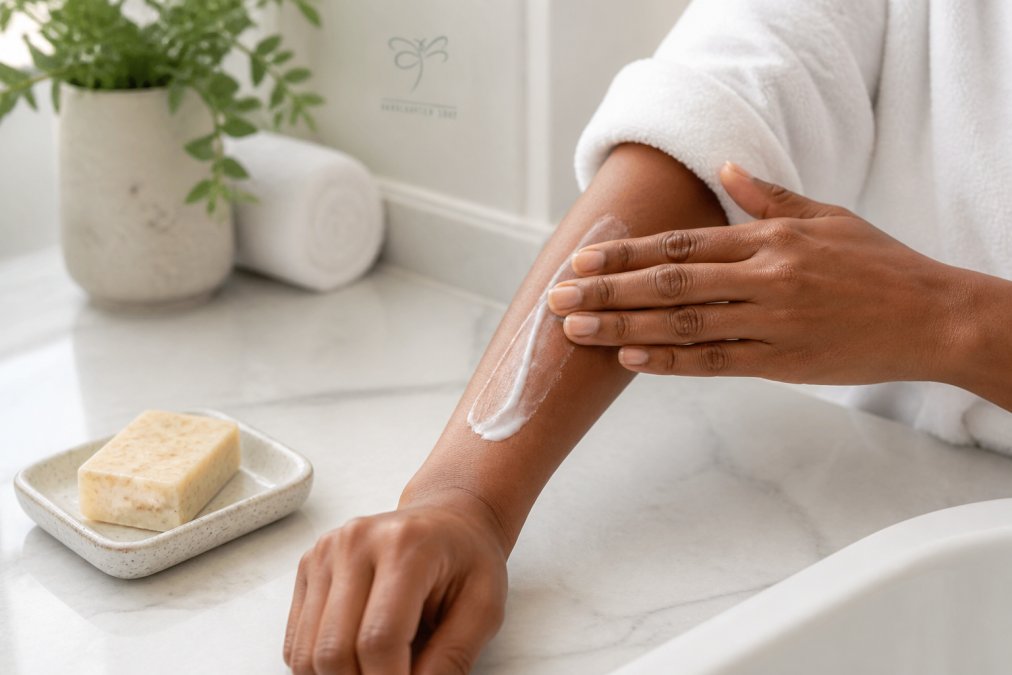
A workable sequence:
- Rinse with lukewarm water, never hot
- Pat dry and leave the skin slightly damp
- Apply a hyaluronic acid or glycerin serum
- Follow with a ceramide-rich moisturizer
- Seal with a thin layer of occlusive on the driest areas
Humectants draw water into the skin, ceramides replace lipids the barrier has lost, and occlusives slow transepidermal water loss overnight. Used together, they do more for winter dryness than any single product.
This is also where the soap you cleanse with matters. Minerva Rae's Tallow & Goat Milk bar is unscented and built for sensitive or dry skin, with tallow and goat milk that cleanse without stripping the barrier you just worked to repair. For light exfoliation during cleansing, the Old Fashioned Tallow & Oatmeal bar uses finely ground oatmeal to soften skin as it cleans.


Ingredient Layering Safety: What to Apply First
Order of application changes how well each product works. The general rule is thinnest to thickest, with actives before moisturizers.
| Step | Product Type | Why This Order |
|---|---|---|
| 1 | Exfoliant (if using) | Acts on clean, dry skin |
| 2 | Hydrating serum | Penetrates before heavier layers |
| 3 | Treatment serum | Absorbs while skin is damp |
| 4 | Moisturizer | Locks in everything beneath |
| 5 | Occlusive | Seals the barrier overnight |
Never layer a strong acid directly under a retinoid, and never apply exfoliant to skin that is still damp from a hot shower. Both increase penetration and irritation risk.
National Institutes of Health overview of skin barrier function
Skin Type Adjustments and Barrier Repair Protocols
The same routine will not suit every skin type, and winter is when those differences become obvious. Adjust your approach based on what your skin is actually doing, not what worked last season. The key variable is not how much oil your skin produces, it is how much water it retains and how intact the lipid barrier is.
Winter Adjustments by Skin Type
Naturally dry or dehydrated skin. Exfoliate once weekly with lactic acid, then layer a ceramide cream and an occlusive. Dry skin in winter often has a compromised lipid barrier before you ever touch an exfoliant, so treat exfoliation as the last step in a repair routine, not the first. If your skin flakes within 24 hours of exfoliating, you are exfoliating too often or too aggressively.
Oily but dehydrated skin. This is the most misdiagnosed winter skin type. Oil production does not stop in cold weather, but water retention drops, so skin feels simultaneously greasy and tight. Keep a gentle AHA once or twice weekly, and do not skip moisturizer because you feel oily, a gel-cream with glycerin and niacinamide works well here. Over-cleansing to control oil is the fastest way to make this skin type worse.
Sensitive or reactive skin. Use enzyme peels only, patch test everything on your inner forearm for two nights before facial use, and extend the gap between sessions to ten days or more. Avoid glycolic acid entirely in winter. Fragrance-free and essential-oil-free formulas are non-negotiable for this group.
Combination skin. Exfoliate only the congested areas, typically the T-zone, and leave the dry zones alone. Applying acid to your cheeks because your forehead is congested is a common cause of winter irritation on otherwise resilient skin.
Acne-prone skin. Winter is not the time to escalate actives. If you use benzoyl peroxide or salicylic acid, alternate them with your exfoliant rather than layering, and add a ceramide moisturizer even if you have never needed one before. Most winter acne flares are barrier damage masquerading as breakouts.
Ingredient Layering Safety: What to Pause and When
This is the piece most winter exfoliation guides skip. When you introduce a new exfoliant, you are adding a stressor to a routine that may already include other actives. The rule is simple: introduce one new active at a time, and pause the strongest existing active for the first two weeks.
| Active You Use | What to Do When Adding Winter Exfoliation |
|---|---|
| Prescription retinoid (tretinoin, adapalene) | Alternate nights, never layer with an acid on the same evening |
| Over-the-counter retinol | Pause for two weeks, then alternate nights |
| Vitamin C serum | Apply in the morning only; never layer directly under an acid |
| Benzoyl peroxide | Alternate days with exfoliant; do not combine |
| Salicylic acid (BHA) | Do not stack with an AHA on the same night |
| Niacinamide | Safe to layer; helps support the barrier |
| Hyaluronic acid | Safe to layer; apply to damp skin before moisturizer |
Never layer a strong acid directly under a retinoid, and never apply exfoliant to skin that is still damp from a hot shower. Both increase penetration and irritation risk. If you are unsure whether two products conflict, apply them on alternating nights for the first month.
Barrier Repair Is Its Own Protocol
Barrier repair is not an afterthought, it is a distinct routine with its own rules. When the barrier is damaged, strip your routine back to three steps: gentle cleanse, hydrating serum, ceramide moisturizer. Add a humidifier to the room where you sleep, keep showers lukewarm, and give it a week or two before reintroducing any exfoliant.
For a richer reset, Minerva Rae's Cocoa Shea bar pairs African Black Soap with a butter-heavy base, delivering deep cleansing alongside the moisture dry winter skin needs.
Frequently Asked Questions
Should you exfoliate if you have really dry skin?
Yes, but gently and less often. Dry skin accumulates dead skin cells that block moisturizer absorption, so light exfoliation helps. Use a lactic acid or enzyme-based exfoliant once a week, or a soft physical method like a sisal bag used lightly. Skip exfoliation entirely if your skin is cracked, bleeding, or stinging. Follow with a ceramide-rich moisturizer while skin is still damp to reduce transepidermal water loss.
How often should you exfoliate in the winter?
Most people with dry or sensitive skin should exfoliate once a week in winter, sometimes every 10 days. Oily skin may tolerate twice weekly. Watch for flaking that turns into redness or stinging, which signals over-exfoliation. If your skin feels tight after cleansing or burns when you apply moisturizer, pause for a week and focus on barrier repair with ceramides and occlusives before resuming.
Why isn't dead skin coming off when I exfoliate?
If exfoliating isn't lifting flaking skin, the cause is usually a compromised skin barrier, not stubborn dead cells. When the epidermis is dehydrated, cells shed unevenly and cling in patches. Piling on more scrubs or acids makes it worse. Scale back to once every 10 days, add a humidifier, and layer a humectant like hyaluronic acid under an occlusive moisturizer for two weeks before exfoliating again.
What ingredients should I avoid when exfoliating dry winter skin?
Skip high-percentage glycolic acid, coarse sugar or salt scrubs, walnut shell powders, and alcohol-based toners during cold months. These strip the skin barrier and cause micro-tears, redness, and inflammation. Instead, choose lactic acid, which is gentler and hydrating, or enzyme peels. Always patch test new exfoliants on your inner arm for 24 hours. Never layer a chemical exfoliant with retinol on the same night.