

Table of Contents
- Why Winter Air Dries Out Your Skin
- Signs of Dehydrated Skin vs Dry Skin
- Does Drinking Water Help Dry Winter Skin?
- How to Repair Skin Barrier in Winter
- Best Moisturizer for Winter Skin: What to Look For
- Everyday Habits That Support Hydrated Skin
- Frequently Asked Questions
Last Updated: September 30, 2026
Why Winter Air Dries Out Your Skin
Cold air holds far less moisture than warm air. When you heat that cold outdoor air inside, its already-low humidity drops even further, and your skin pays the price.
This is why dry winter skin shows up so reliably every year. Indoor heating systems pull moisture out of the air all day. Your skin, which is about 60% water, loses that moisture to the dry environment around it.
The result? Tightness, flaking, and a dull complexion that no amount of lotion seems to fix.
At Minerva Rae, we hear from customers every winter who want to know if drinking more water will solve it. The honest answer is more nuanced than most guides admit.
Below, we break down what actually helps dry winter skin, and what doesn't.
Signs of Dehydrated Skin vs Dry Skin
Dehydrated skin lacks water. Dry skin lacks oil. That single distinction changes everything about how you treat it.
Dehydrated skin is a water-deficiency issue. It can affect anyone, even people with oily skin. Signs include:
- A dull, tired-looking complexion
- Fine lines that appear worse than usual
- Skin that feels tight after cleansing
- Dark circles and shadows under the eyes
Dry skin is an oil-deficiency issue, often genetic or tied to aging. Signs include:
- Rough, flaky, or patchy skin
- Visible scaling or cracking
- Redness and irritation
- Skin that feels itchy and uncomfortable
Many people have both at once in winter. That's why a single fix rarely works.
The Oil Test: How to Tell the Difference at Home
Wash your face, wait 30 minutes without applying anything, then press a blotting paper against your cheek.
- No oil on the paper, skin feels tight: dehydrated
- No oil, skin feels rough and flaky: dry
- Some oil, but skin still feels tight: both
This simple test tells you which problem you're actually solving. Skip it, and you may spend the season moisturizing skin that needed water instead.
Does Drinking Water Help Dry Winter Skin?
Drinking water helps your overall health, but it does not directly hydrate your skin's surface. Your body prioritizes vital organs first, so extra water rarely reaches the outer layers where dryness shows.
Here's the part most guides get wrong. Your skin's outer layer, the stratum corneum, doesn't pull moisture from the bloodstream. It holds water in place using a lipid barrier made of ceramides, fatty acids, and cholesterol.
When that barrier is damaged by cold, wind, or hot showers, water escapes. This process is called transepidermal water loss. No amount of drinking water stops it.
What Hydration Can and Cannot Do for Your Skin Barrier
Internal hydration supports cellular health throughout your body, including your skin. If you're chronically dehydrated, your skin will look worse. That's real.
But for someone already drinking normal amounts of water, adding more won't fix dry winter skin. The American Academy of Dermatology's guidance on dry skin points to barrier repair and moisturizing, not water intake, as the core treatment.
What actually helps:
- Humectants like glycerin and hyaluronic acid pull water into the skin
- Emollients like shea butter and tallow soften and smooth
- Occlusives like beeswax seal moisture in
Water does the first job poorly from the inside. Topical application does it well.
How to Repair Skin Barrier in Winter
Repairing your skin barrier in winter comes down to three moves: stop stripping it, add lipids back, and lock in moisture.
Here's how to repair skin barrier in winter, step by step:
- Lower your shower temperature. Hot water strips natural oils fast.
- Shorten showers to 5-10 minutes. Long exposure breaks down the lipid barrier.
- Switch to a gentle, fragrance-free cleanser. Harsh surfactants remove protective oils.
- Apply moisturizer within 3 minutes of patting dry. This traps water still on the skin.
- Choose barrier-supporting ingredients. Look for shea butter, ceramides, and tallow.
- Reapply during the day. Hands and face need it most.
- Add a humidifier to your bedroom. Indoor heating drops humidity fast.
Most people see improvement within one to two weeks of consistent care.
Best Moisturizer for Winter Skin: What to Look For
The best moisturizer for winter skin combines humectants, emollients, and occlusives in one formula. Skip anything with heavy fragrance or drying alcohol.
Look for these ingredients on the label:
- Shea butter for deep moisture and skin resilience
- Tallow for a lipid profile close to your own skin
- Oatmeal for soothing irritation and gentle exfoliation
- Glycerin to draw water into the skin
- Ceramides to rebuild the barrier
What to avoid:
- Denatured alcohol, which dries skin further
- Synthetic fragrance, a common irritant for sensitive skin
- Sulfates, which strip oils
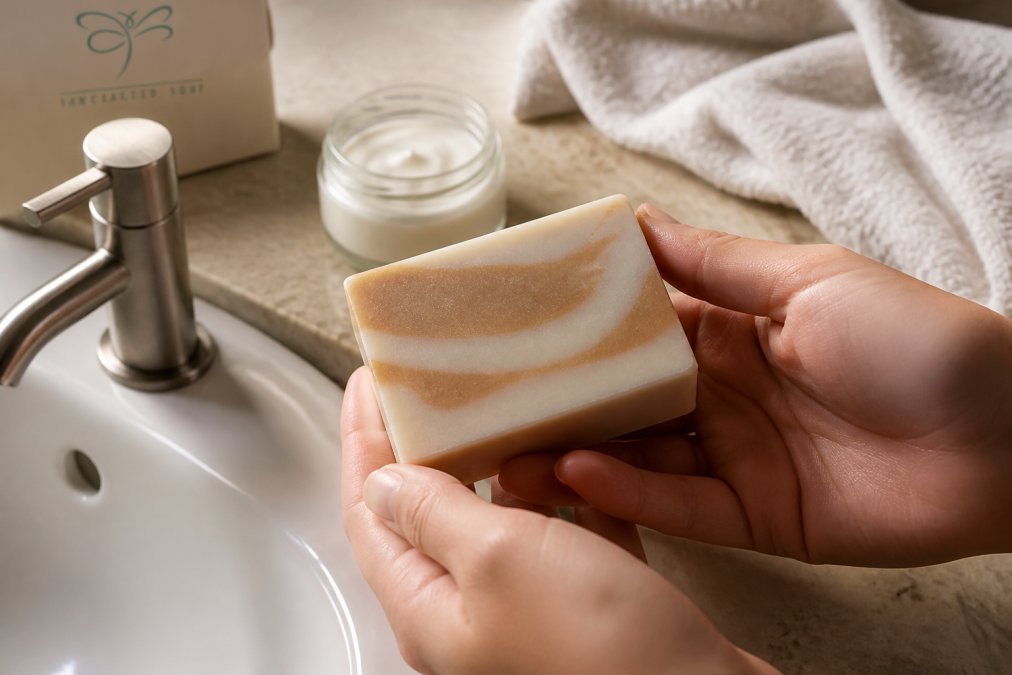
For sensitive or dry skin, unscented formulas are the safer bet. A bar like Minerva Rae's Tallow & Goat Milk soap pairs nourishing tallow with soothing goat milk, and it cleanses without stripping. Pair it with a rich moisturizer and you have a complete winter routine.
How Shower Habits Affect Your Skin Barrier
Shower habits matter more than most people realize. Water above 100°F strips sebum from your skin, and sebum is a key part of your lipid barrier.
The fix is simple. Keep water lukewarm, limit showers to under 10 minutes, and pat dry instead of rubbing. Then moisturize immediately.
If your skin still feels tight after a shower, your water is too hot or your cleanser is too harsh.
Everyday Habits That Support Hydrated Skin
Small daily habits add up. None of them replace a good moisturizer, but together they protect your skin all season. The habit most guides under-explain is the one that matters most in winter: managing the air around you.
Why Indoor Heating Is the Real Winter Skin Problem
Cold outdoor air holds very little moisture. When your furnace or heat pump warms that air to room temperature, relative humidity drops, often into the 10-20% range indoors, which is drier than most deserts. At that level, the air acts like a sponge and pulls water out of anything with a moisture gradient, including your stratum corneum.
This is the mechanism behind transepidermal water loss accelerating in winter.
What actually moves the needle:
- Target 30-50% indoor relative humidity. That's the range most building and indoor-air guidance points to for comfort and to limit microbial growth. Below 30% and skin, sinuses, and wood furniture all dry out. Above 50% and you invite mold and dust mites.
- Use a hygrometer. A cheap digital humidity gauge tells you whether your home is actually dry or whether you're guessing. Most people are surprised by how low it drops overnight.
- Size the humidifier to the room. A small desktop unit won't move the needle in an open-plan living area. Cool-mist and warm-mist both work; the difference is comfort and safety around kids and pets, not humidity output.
- Run it where you sleep. You spend 7-8 hours in the bedroom with your barrier exposed and no moisturizer being reapplied. That's the highest-leverage window.
- Close bedroom doors. Humidifying one room is far more effective than trying to humidify a whole house.
- Clean the humidifier weekly. Standing water grows biofilm fast. A dirty humidifier can aerosolize irritants that make skin and lungs worse, not better.
The Rest of the Daily Routine
- Drink water normally, not excessively
- Wear gloves outdoors to protect hands
- Eat nutrient-dense foods rich in healthy fats
- Avoid alcohol-based toners and astringents
- Use lukewarm water for face washing
- Apply lip balm before heading outside
- Keep car heat directed at your feet, not your face
For a complete winter routine, start with a gentle, unscented bar like Minerva Rae's Old Fashioned Tallow & Oatmeal. The finely ground oatmeal offers light exfoliation while shea butter and tallow soften skin. It's a small upgrade that makes a real difference.

Frequently Asked Questions
How do I hydrate extremely dry skin during the winter months?
Drink water consistently throughout the day, but pair it with topical barrier care. Winter dryness usually comes from a compromised lipid barrier and low indoor humidity, not just low water intake. Apply a rich moisturizer within three minutes of showering to lock in moisture, run a humidifier to keep indoor humidity between 30 and 50 percent, and switch to a gentle, fragrance-free cleanser. A handcrafted bar like Minerva Rae's Tallow & Goat Milk soap cleanses without stripping, so your moisturizer has a better chance of working.
What is the difference between dehydrated skin and dry skin?
Dry skin lacks oil, while dehydrated skin lacks water. Dry skin feels rough, flaky, and tight year-round because sebum production is low. Dehydrated skin can feel oily and still be water-deficient, showing dullness, fine lines, and sensitivity. The two often overlap in winter. A simple test: if your skin feels tight after cleansing but gets shiny by afternoon, you are likely dehydrated rather than dry. Each condition needs a different fix, which is why one moisturizer does not solve everything.
Does drinking more water actually repair a damaged skin barrier?
Water intake supports cellular health, but it does not rebuild the lipid barrier on its own. The barrier is made of ceramides, cholesterol, and fatty acids that hold water in. Once those lipids are depleted by cold air, indoor heating, or hot showers, you need topical ingredients like shea butter, cocoa butter, and olive oil to restore them. Drinking water helps your body function, yet barrier repair happens on the surface. Use both: hydrate internally and apply occlusive, butter-rich products externally.
What is the best drink for dry skin?
Plain water remains the most effective option because it hydrates without added sugar or diuretics. Herbal teas and water-rich foods like cucumber and watermelon also contribute to fluid intake. Avoid relying on coffee, alcohol, or sugary sodas, which can increase water loss. That said, no drink replaces a moisturizer. Pair steady water intake with a humectant-and-butter routine, and your skin will hold moisture far better than with beverages alone.