

Table of Contents
- Why Cold Process Soap Safety Matters
- Understanding Lye and Its Role in Soap Making
- Essential Soap Making Safety Equipment You Need
- How to Handle Lye for Soap Making Without Risk
- Safe Containers for Lye Solution and Ingredients
- Setting Up a Safe Workspace for Cold Process Soap
- Cold Process Soap Making Safety Checklist
- Emergency Response: Lye Exposure and First Aid
- Frequently Asked Questions
Last Updated: October 8, 2026
Why Cold Process Soap Safety Matters
Cold process soap making transforms simple ingredients into luxurious bars through chemical reaction, but the process demands respect for safety protocols.
The stakes are real. Lye burns skin instantly. It damages eyes permanently. Inhaled fumes irritate lungs. Yet thousands of beginners start soap making each year without understanding these hazards. The good news: with proper equipment, workspace setup, and handling procedures, cold process soap making is entirely safe and manageable.
This guide covers everything a beginner needs to know about cold process soap safety, from understanding lye to emergency response. We'll walk through the specific equipment you need, how to set up your workspace, and the exact steps to handle lye without risk.
Understanding Lye and Its Role in Soap Making
Lye, sodium hydroxide in chemical terms, is a caustic alkali that reacts with oils and fats through a process called saponification. This chemical reaction transforms liquid oils into solid soap. Without lye, cold process soap doesn't exist.
Sodium hydroxide is highly alkaline and corrosive. It dissolves in water with an exothermic reaction, meaning it releases heat. A lye solution can reach temperatures above 200°F within minutes.
Understanding lye's behavior is the foundation of safe soap making. When lye dissolves in water, it doesn't simply mix, it reacts violently. The solution becomes dangerously hot and concentrated. Respect this process, and you'll work safely.
The role of lye in soap making is non-negotiable. Every cold process bar requires it. But lye doesn't remain in finished soap. Once saponification completes and the soap cures, the lye transforms entirely into soap molecules.
Essential Soap Making Safety Equipment You Need
Before mixing a single batch, gather every piece of protective gear. This isn't optional. This is your defense against lye exposure.
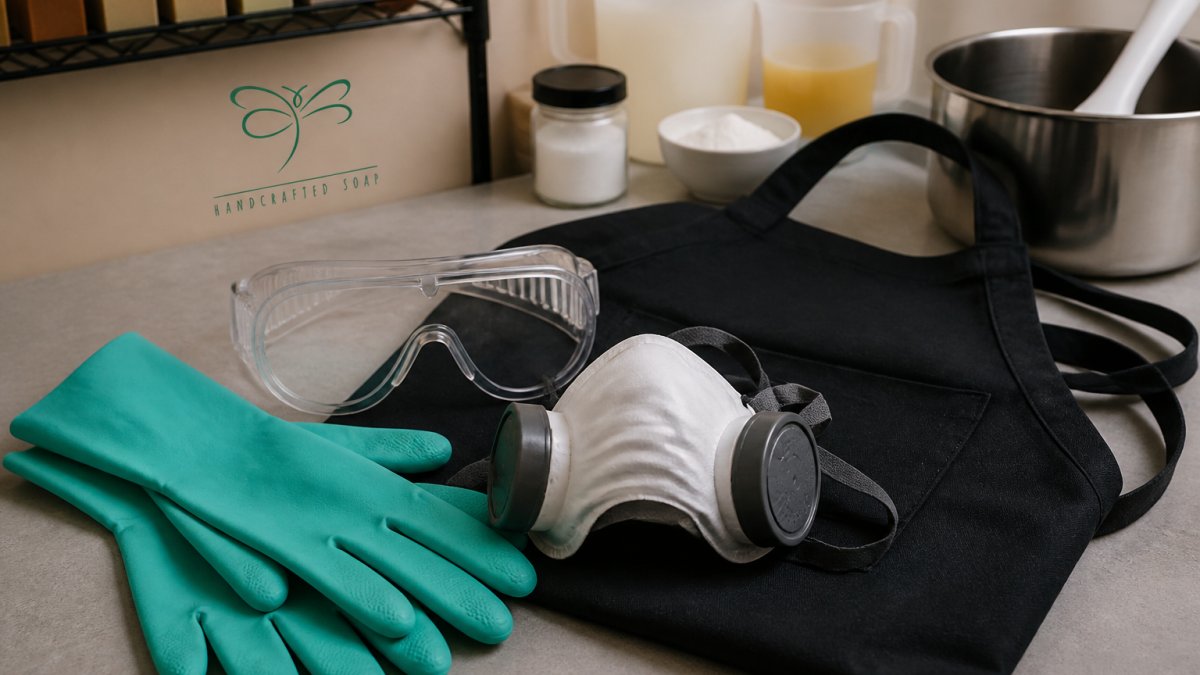
Gloves and hand protection are your first barrier. Chemical-resistant nitrile gloves work well, but latex or rubber gloves are also acceptable. Cotton gloves alone are insufficient, lye soaks through fabric.
Eye protection is non-negotiable. Safety goggles with side shields protect against splashes and aerosol particles. Regular glasses don't work, lye can splash around the sides.
Respiratory protection prevents inhalation of lye fumes and sodium hydroxide dust. A simple dust mask is insufficient. Use a respirator with activated charcoal filters rated for alkaline compounds.
Protective clothing covers skin. A waterproof apron protects your torso. Long sleeves and long pants are standard practice. Closed-toe shoes with thick soles protect your feet.
How to Handle Lye for Soap Making Without Risk
Lye handling is where most safety failures occur. Beginners often rush this step or skip precautions they think are unnecessary. Every accident starts with "I'll just do this quickly without full gear."
Measuring and Mixing Lye Solution Correctly
Accuracy in measurement determines whether your soap turns out right, and whether you stay safe. Use a digital scale accurate to 0.1 ounces. Measure lye by weight, never by volume.
Mix lye solution in a well-ventilated area, never in a confined kitchen. Pour water into a heat-resistant container first, then add lye slowly to the water.
Stir slowly and continuously as you add lye. The solution heats rapidly, expect it to reach 180-200°F within a minute or two. Keep stirring until all lye crystals dissolve completely. The solution should be clear with no white particles visible.
Let the lye solution cool to around 90-100°F before mixing with oils. This cooling period is essential. Hot lye solution can cause severe burns if it contacts skin, and it accelerates the saponification reaction unpredictably.
Ventilation and Fume Management
Lye fumes rise immediately when you add lye to water. These fumes irritate eyes, nose, and lungs. Proper ventilation removes them before you inhale them.
Open windows and doors to create cross-ventilation. Position a fan to pull air away from where you're working and toward an open window or door. Never work in a closed kitchen or bathroom.
Work near a range hood if available, though a range hood alone isn't sufficient for lye work. Combine it with open windows and a fan for maximum protection. If you don't have good ventilation options, consider working outdoors on a calm day.
Keep your face away from the mixing container. Don't lean over it or breathe directly above it. The fumes rise from the surface, staying back and to the side keeps your breathing zone clear.
Safe Containers for Lye Solution and Ingredients
Container choice matters more than beginners realize. Wrong containers fail catastrophically.
Use only stainless steel, glass, or heat-resistant plastic containers for mixing lye solution. Aluminum reacts with lye and degrades. Cast iron reacts similarly. Ceramic containers sometimes have glazes that lye attacks.
For measuring and storing individual oils, use glass or stainless steel containers. Label everything clearly. A mislabeled container can lead to mixing the wrong ingredient with lye, a serious mistake.
Store lye in its original container or in a clearly labeled, sealed glass or plastic container kept away from children and pets. Store it in a cool, dry place away from moisture.
Store all soap-making ingredients separately from food and cooking supplies. Even though finished soap is safe, raw ingredients are not. A clear separation prevents accidental contamination or mixing of soap ingredients with food.
Sultry Black Jasmine Artisan Soap →
Setting Up a Safe Workspace for Cold Process Soap
Your workspace determines whether you can work safely and comfortably throughout the entire process.
Designate a specific area for soap making, ideally not your kitchen. A garage, basement, or dedicated workspace works well.
Ensure excellent ventilation before you start. Open windows, position fans, and create air movement.
Organize your workspace before you start. Arrange all ingredients, equipment, and safety gear within arm's reach. Have water, vinegar, and paper towels immediately accessible.
Keep a phone nearby. If an accident happens, you need to call for help immediately. Post the poison control number (1-800-222-1222) where you can see it.
Ensure adequate lighting. You need to see what you're doing clearly. Poor lighting leads to mistakes. Bright, even lighting prevents accidents.
Set up a designated cleanup area away from where you're mixing. This prevents cross-contamination.
Cold Process Soap Making Safety Checklist
Use this checklist every single time you make cold process soap. Consistency builds safe habits.
| Safety Element | Check Before Starting | Check During Process |
|---|---|---|
| All protective gear donned (gloves, goggles, respirator, apron) | ✓ | ✓ |
| Ventilation system running and effective | ✓ | ✓ |
| All ingredients measured accurately and labeled | ✓ | , |
| Water in container before lye addition | ✓ | , |
| Lye solution cooling to 90-100°F before mixing with oils | , | ✓ |
| Thermometer reading accurate | ✓ | ✓ |
| Stick blender in good working condition | ✓ | , |
| Emergency supplies accessible (water, vinegar, phone) | ✓ | ✓ |
| Workspace clear of children and pets | ✓ | ✓ |
| Cleanup materials ready | ✓ | , |
Before you start: Review this checklist. Check off each item. Don't proceed until everything is ready.
During the process: Glance at the checklist periodically. Verify ventilation is still running. Confirm protective gear is still in place.
After you're done: Review the checklist one final time. This confirms you maintained safety throughout.
Emergency Response: Lye Exposure and First Aid
Despite perfect precautions, accidents happen. Knowing how to respond makes the difference between a minor incident and a serious injury.
Lye on skin: Remove contaminated clothing immediately. Rinse the affected area with large amounts of water for at least 15 minutes.
Lye in eyes: Rinse immediately with water for at least 15 minutes, holding eyelids open. Don't rub.
Lye inhalation: Leave the area immediately and get fresh air. If symptoms persist (coughing, difficulty breathing, chest pain), seek medical attention.
Lye ingestion: Do not induce vomiting. Drink water slowly if conscious. Call poison control immediately at 1-800-222-1222 (Contact us). Seek emergency medical care.
Post the poison control number visibly in your workspace. Program it into your phone. Know where your nearest emergency room is before you start.
After any exposure incident, stop soap making and don't resume until you've identified what went wrong.
Cold process soap making rewards patience and respect for the process. The soaps created at Minerva Rae demonstrate what's possible when safety and skill combine, handcrafted bars like our Sultry Black Jasmine Artisan Soap and Evergreen Forest Artisan Soap are made with meticulous attention to safety protocols that protect both the maker and the final product. Start with this guide's fundamentals, follow the checklist every time, and you'll create beautiful, safe soap for years to come. Explore the Collection to see what's possible when cold process soap safety is done right.


Frequently Asked Questions
What safety gear do you need to make cold process soap?
Essential protective equipment includes chemical-resistant nitrile or rubber gloves (not latex), safety goggles or a full-face shield, a respirator or mask rated for chemical fumes, a long-sleeved apron or protective clothing, and closed-toe shoes. Gloves must be rated for sodium hydroxide; standard kitchen gloves won't protect against lye. Eye protection is non-negotiable since lye splashes cause severe burns. A respirator prevents inhalation of caustic fumes during mixing.
How do beginners handle lye for soap making safely?
Always add lye to water, never water to lye, this prevents violent reactions and splashing. Wear full protective gear before opening lye containers. Mix in a well-ventilated area or outdoors. Use a glass rod or stick blender to stir slowly and carefully. Keep lye away from skin, eyes, and face. Work with small batches until you gain confidence. Never rush the process or multitask while handling lye. Store lye in a clearly labeled, sealed container away from children and pets.
What should you do if lye gets on your skin or in your eyes?
For skin contact, immediately rinse with large amounts of cool water for at least 15 minutes. Remove contaminated clothing. Do not use vinegar or acids, water is the correct first response. Seek medical attention if burning persists or a large area is affected. For eye contact, rinse continuously with water for at least 15 minutes and call emergency services immediately. Do not rub your eyes. Eye exposure requires professional medical evaluation even if pain subsides. Keep a first-aid kit and know the location of your nearest emergency room before you start.
Can you make cold process soap indoors?
Yes, but only with proper ventilation. Use a dedicated, well-ventilated space like a kitchen with windows, a range hood, or a room with multiple openings. A garage with open doors or an outdoor setup is safer for beginners. Indoor spaces must allow fumes to escape and prevent lye vapor from accumulating. Never make soap in a closed bedroom, bathroom without exhaust, or small enclosed room. If working indoors, open windows and run ventilation fans during and after mixing lye solution.
How long should cold process soap cure before use?
Cold process soap requires 4 to 6 weeks of curing time. During this period, the saponification process completes, and excess water evaporates, making the bar harder and longer-lasting. Do not use soap before curing is complete, the bars may still contain unreacted lye or excess sodium hydroxide, which can irritate skin. Properly cured bars last longer and produce a better lather than uncured soap.
What containers are safe for mixing lye solution?
Use glass, stainless steel, or food-grade plastic containers rated for lye or caustic solutions. Never use aluminum, which reacts with sodium hydroxide. Avoid ceramic or pottery that may have glazes containing materials that react with lye. Containers must have secure lids for storage. Glass is the safest choice because you can see the contents and it does not degrade. Label all containers clearly with 'Lye' and the date. Use dedicated containers for soap making only, do not reuse them for food or other purposes.
How should you store lye and soap-making supplies safely?
Store lye in a cool, dry place in a clearly labeled, sealed container away from moisture, which causes it to clump or generate heat. Keep lye out of reach of children and pets in a locked cabinet if possible. Store oils separately in cool conditions to prevent rancidity. Keep finished soap bars on a draining soap dish between uses to extend their life, bars like Minerva Rae's Sultry Black Jasmine last longer when allowed to dry completely. Store all soap-making equipment separately from household items and label everything clearly.
What is the difference between cold process and melt-and-pour soap?
Cold process soap requires mixing lye with oils, creating a chemical reaction called saponification. It demands careful safety precautions because raw lye is caustic and requires 4 to 6 weeks of curing before the soap is safe to use. Melt-and-pour uses pre-made soap bases that are melted, colored, and poured into molds, no lye handling is required, and the soap is ready to use immediately. Cold process offers more creative control and customization, while melt-and-pour is safer for beginners but offers less flexibility in ingredient selection.