

Table of Contents
- Best Carrier Oils for Moisturizing Soap Bars
- Olive Oil and Its Mild, Conditioning Qualities
- Coconut Oil and Its Cleansing Power and Lather
- Castor Oil and Its Contribution to Lather
- Shea Butter and Avocado Oil for Deep Conditioning
- Best Oils for Soap Making and How They Work Together
- Carrier Oil Substitutions for Soap and Balanced Recipes
- Cold Process Soap Oil Ratios for Dry and Sensitive Skin
- Frequently Asked Questions
Last Updated: October 10, 2026
Best Carrier Oils for Moisturizing Soap Bars
The best carrier oils for moisturizing soap bars deliver deep hydration without leaving skin tight or stripped. Your oil selection determines how your bar feels, its longevity, whether it conditions or irritates sensitive skin, and whether it rinses clean.
Moisturizing soap requires a deliberate blend: olive oil for conditioning, coconut oil for lather, castor oil for bubble thickness, and shea butter for moisture. Each plays a role, and the percentages matter.
This guide breaks down the carrier oils that deliver real moisturizing performance, which oils work best for dry and sensitive skin, how to balance a recipe, and why some substitutions work while others fail.
Quick Comparison of Top Moisturizing Oils
| Oil / Butter | Moisturizing Strength | Lather Quality | Bar Hardness | Best For |
|---|---|---|---|---|
| Olive Oil | High conditioning | Creamy, mild | Soft | Sensitive, dry skin |
| Coconut Oil | Moderate | Bubbly, abundant | Hard | All skin types |
| Castor Oil | Conditioning | Thick, stable | Soft | Lather boost |
| Shea Butter | Deep moisture | Creamy | Medium | Dry, irritated skin |
| Avocado Oil | Rich conditioning | Mild, creamy | Soft | Mature, dry skin |
Olive Oil and Its Mild, Conditioning Qualities
Olive oil is the foundation of moisturizing soap and one of the gentlest carrier oils for sensitive and dry skin. Cold-pressed extra virgin varieties contain oleic acid and squalene, compounds that mimic the skin's natural lipid barrier and allow deep penetration without heaviness.
In soap formulation, olive oil typically represents 30-50% of the oil blend. Higher percentages create softer, creamier bars but dissolve faster, which is why balancing with harder oils like coconut is essential. Minerva Rae's Gardenia Artisan Soap and Bulgarian Lavender combine olive oil with coconut and castor oils to condition without sacrificing longevity.

Olive oil produces a mild, creamy lather that feels luxurious without aggression, offering a gentle cleanse that doesn't strip the skin's natural oils.
A soap made with 60% or higher olive oil softens quickly in a shower environment.
Coconut Oil and Its Cleansing Power and Lather
Coconut oil is the lather workhorse of soap making, creating abundant, fluffy bubbles. It produces lauric acid, which is highly saponifiable and creates a naturally hard bar with excellent cleansing power.
Most well-balanced recipes include 25-35% coconut oil, delivering strong lather without excessive drying.
Coconut oil's cleansing power is its weakness for dry skin: lauric acid removes oil effectively, leaving delicate skin feeling tight. Balance it with conditioning oils like olive, avocado, or castor.
Minerva Rae uses coconut oil strategically at about 30% of the blend, paired with olive and castor oils to ensure luxurious lather without stripping.
Castor Oil and Its Contribution to Lather
Castor oil is the secret ingredient that separates good lather from exceptional lather. It contains ricinoleic acid, which creates thick, stable micro-bubbles. Most soap makers use it for this lather-boosting effect.
When included at the right proportion, castor oil creates a creamy, stable foam that lasts throughout the wash, producing a sensory experience that feels indulgent.
Castor oil also conditions skin with emollient properties that soften without greasiness.
Minerva Rae's Honeybee Artisan Soap pairs castor oil with olive and coconut oils to create dense, bubbly lather that feels luxurious while remaining creamy and forgiving on sensitive skin.

Shea Butter and Avocado Oil for Deep Conditioning
Shea butter and avocado oil represent the premium tier of moisturizing ingredients. Both are butters or oils with exceptional conditioning properties, and both are more expensive than olive or coconut oil. But for dry, mature, or irritated skin, they're worth the investment.
Shea butter is packed with essential fatty acids, vitamins A, D, and E, and compounds that mimic the skin's natural lipid barrier. Use it to add deep moisture without excessive softness, while contributing to creamy lather and bar longevity.
Avocado oil brings similar conditioning benefits with a different fatty acid profile, rich in oleic and linoleic acids. Use it in soap formulation for mild, creamy lather.
Shea butter is firmer and contributes to bar hardness; avocado oil is liquid and softens the bar. Choose shea for dry winter skin, avocado for year-round or warm climates.
Minerva Rae's Cocoa Shea Artisan Soap combines shea butter with cocoa butter, olive oil, and castor oil to create a butter-rich base designed for deep conditioning without stripping.

Best Oils for Soap Making and How They Work Together
The best carrier oils for moisturizing soap bars work in concert, each bringing a specific property that balances the others. A well-formulated bar balances conflicting goals: hardness versus softness, lather versus conditioning, cleansing versus moisturizing.
Olive oil conditions but softens the bar. Coconut oil creates lather and hardness but can dry skin. Castor oil thickens bubbles and conditions but softens the bar. Shea butter and avocado oil add deep moisture but increase cost and soften the bar. Success lies in balancing these trade-offs.
A classic moisturizing recipe produces a hard bar with abundant creamy lather that conditions without stripping. Adjust based on climate and skin type: colder climates and dry skin benefit from higher shea or avocado; warm climates and oily skin can tolerate higher coconut oil.
In cold-process soap making, oils combine, heat, mix with lye water, and stir until trace. Once saponified, they become one unified bar, but the formulation determines the final soap's properties.
Carrier Oil Substitutions for Soap and Balanced Recipes
Not all carrier oils are created equal in soap making. Some have high oleic acid content (conditioning), others are high in linoleic acid (lighter feel), and each has unique properties that change how soap behaves.
Canola oil substitutes for olive oil but produces slightly less creamy lather. Grapeseed oil is lighter. Sunflower and safflower oils are high in linoleic acid and produce softer bars.
Cocoa butter and shea butter are not interchangeable. Cocoa butter is harder and contributes more to longevity; shea butter is softer and more deeply conditioning. Cocoa butter produces a waxy feel and whiter bar; shea butter creates creamier lather and golden tone.
Tallow, rendered beef fat, is an underrated moisturizing ingredient high in oleic acid that creates creamy lather and exceptionally hard bars. Minerva Rae's Gardenia Artisan Soap features grass-fed beef tallow paired with olive oil and shea butter for deep conditioning.
For a balanced, moisturizing recipe that works for most skin types, this formula produces a bar with excellent lather, deep conditioning, and longevity. Adjust based on your target skin type and available ingredients.
Cold Process Soap Oil Ratios for Dry and Sensitive Skin
Cold-process soap making gives you complete control over your oil ratios, which is why it's the preferred method for creating truly moisturizing bars. The longer cure time, 4-6 weeks minimum, often 8-12 weeks, allows the lye to fully saponify all the oils and excess oils to remain in the finished bar, creating a naturally moisturizing product.
For dry and sensitive skin, this formulation reduces coconut oil's drying effect and increases conditioning butters. The bar will be slightly softer. Lather remains abundant and creamy but gentler on compromised skin.
For sensitive skin with eczema or severe dryness, tallow is naturally high in oleic acid and creates a bar that's both hard and deeply conditioning, producing creamy, stable lather without stripping. Minerva Rae's Tallow & Goat Milk soap exemplifies this approach.
The key to success with cold-process soap for dry skin is patience. A properly cured bar with a balanced oil ratio will leave skin feeling soft, hydrated, and balanced.
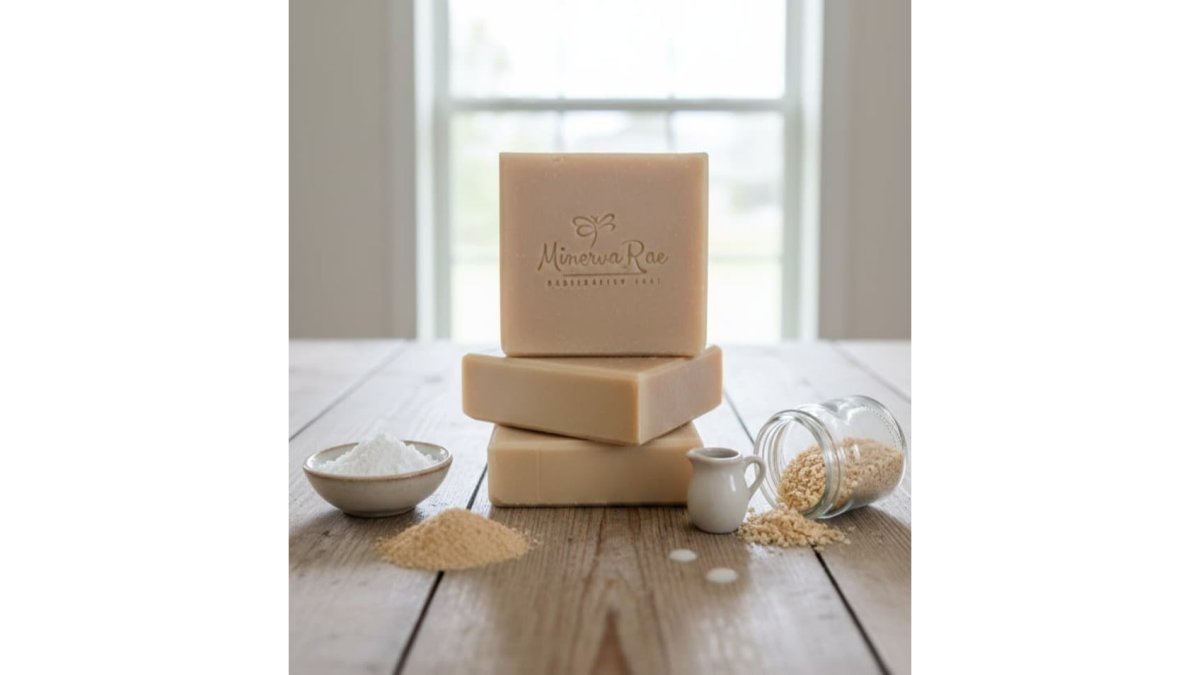
Choosing the best carrier oils for moisturizing soap bars is about understanding what each oil contributes and how they balance each other. Olive oil brings conditioning depth without harsh cleansing. Coconut oil creates the lather people expect. Castor oil thickens bubbles and conditions. Shea butter and avocado oil deliver deep moisture for dry skin. When combined in the right ratios and cured properly, these oils create bars that cleanse gently, lather luxuriously, and leave skin feeling soft and hydrated.
At Minerva Rae, our handcrafted soaps are formulated with this balance in mind. Whether you're making soap at home or looking for a bar that truly moisturizes, the foundation is the same: intentional oil selection, balanced ratios, and proper cold-process curing. The result is a bar that's not just beautiful to look at, but genuinely nourishing for your skin.
Frequently Asked Questions
Which carrier oils retain their moisturizing properties after saponification in soap?
Olive oil, shea butter, and castor oil retain significant conditioning properties after saponification because their fatty acids create emollients that soften skin. Coconut oil contributes cleansing strength rather than moisture. The key is using the right oil percentages in your recipe. For example, Minerva Rae's Cocoa Shea bar combines shea butter, cocoa butter, and olive oil to ensure moisture survives the saponification process and delivers conditioning to your finished bar.
What is the most moisturizing carrier oil for soap bars?
Shea butter and avocado oil are the most moisturizing carrier oils for finished soap bars because they're rich in oleic acid and vitamins that closely mimic skin's natural lipid barrier. Olive oil provides mild conditioning and is often used as a base. Castor oil boosts lather while adding some slip. The most effective moisturizing bars use a blend rather than a single oil. Minerva Rae's Gardenia Artisan Soap pairs grass-fed tallow, shea butter, and olive oil to create deep, lasting moisture without stripping the skin.
How do you balance oils for a hard, long-lasting soap bar that still moisturizes?
Balance your recipe to create a bar that lasts longer while remaining gentle on dry skin.
What are the best oils for soap making if I have sensitive or dry skin?
For sensitive or dry skin, prioritize olive oil (mild and conditioning), shea butter (deeply nourishing), and castor oil (adds slip without irritation). Minerva Rae's Tallow & Goat Milk bar uses tallow, olive oil, and castor oil specifically formulated for sensitive skin, delivering a smooth, luxurious lather that cleanses without stripping.
Can carrier oils be substituted in soap recipes without changing the final bar's feel?
Some substitutions work better than others. Olive oil and sweet almond oil are roughly interchangeable for conditioning properties. Avocado oil can replace some shea butter. However, substituting coconut oil with olive oil will soften your bar and reduce lather. Castor oil has no true substitute for its lather-boosting properties.
Discover how these principles translate into finished bars. Explore the Collection and experience the difference that balanced carrier oils and thoughtful formulation make in your daily skincare ritual. From the deep conditioning of our Cocoa Shea Artisan Soap to the gentle luxury of our Tallow & Goat Milk bar, each soap is crafted to deliver the moisturizing performance that dry and sensitive skin deserves.