

Table of Contents
- Why Natural Soap Cures for So Long
- Understanding Saponification and Why It Matters
- Cold Process Soap Cure Time: What the Timeline Really Means
- How to Cure Handmade Soap: The Right Way
- How to Tell When Soap Is Cured and Ready to Use
- Recipe Variables and Climate Conditions That Change Cure Time
- Safety vs. Full Cure: What You Need to Know
- Troubleshooting Slow or Unusually Soft Soap
- Frequently Asked Questions
Last Updated: October 16, 2026
Why Natural Soap Cures for So Long
When you first unmold a cold-process soap bar, it feels soft and wet. The lye hasn't fully reacted with the oils yet, and water still saturates the bar. This is why natural soap cure takes weeks, sometimes months, to complete. The curing process isn't optional.
At Minerva Rae, we craft handmade soaps using cold-process methods, which means every bar we create goes through a careful curing period. Understanding why this time matters helps you appreciate what goes into each bar and why patience is part of the craft.
The short answer: natural soap cure allows water to evaporate, the saponification process to finish completely, and the bar to harden into its final form. But there's much more happening beneath the surface.
Understanding Saponification and Why It Matters
Saponification is the chemical reaction between oils, fats, and lye that transforms them into soap (pubmed.ncbi.nlm.nih.gov). When you mix sodium hydroxide (lye) with oils and fats, a chain reaction begins.
During the first 24-48 hours after pouring, saponification moves quickly. The bar heats up from the chemical energy released. This is why soap gets warm, sometimes hot, in the mold.
This is the critical reason why natural soap cure matters. Saponification must complete throughout the entire bar, not just on the surface. If you use soap before this happens, you risk skin irritation from residual lye.
The curing process also allows the bar to stabilize chemically. Soap molecules settle and align. The bar becomes denser and harder. This transformation is invisible, but it's essential for both safety and quality.
Cold Process Soap Cure Time: What the Timeline Really Means
Most cold-process soap needs a minimum of 4-6 weeks to cure before use. Many soapmakers recommend 8-12 weeks for optimal results.
This timeline isn't arbitrary. Here's what happens during each phase:
Weeks 1-2: The bar hardens visibly. Water evaporates from the surface. The bar shrinks slightly as moisture leaves. Saponification continues throughout the interior. The bar may still feel soft to the touch.
Weeks 3-6: The bar becomes noticeably harder. Most of the excess water has evaporated. Saponification is nearly complete. The bar is safer to use, though still improving.
Weeks 7-12: The bar reaches its peak hardness for most recipes. Lather becomes creamier and more luxurious. The bar's longevity improves, it lasts longer in the shower.
Beyond 12 weeks: Some bars continue to improve. Lather may become even more stable. The bar's skin feel becomes silkier. Longevity extends further.
The exact timeline depends on the recipe, humidity, airflow, and temperature. A bar made with hard oils like coconut and palm cures faster than one with soft oils like olive.
How to Cure Handmade Soap: The Right Way
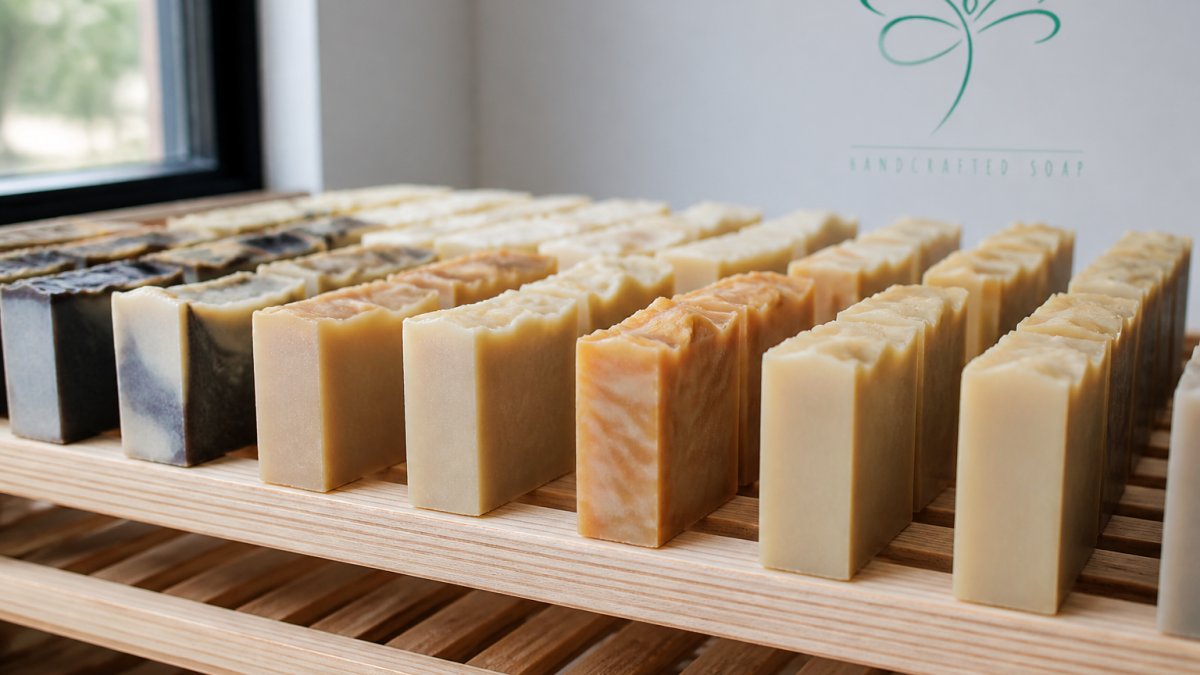
Proper curing setup makes a real difference in how well your soap develops. The goal is consistent airflow, moderate temperature, and protection from dust and direct sunlight.
Choose the right location:
- A shelf or rack in a cool, dry room works best
- Avoid bathrooms where humidity spikes during showers
- Keep soap away from direct sunlight, which can fade colors
- A bedroom closet, pantry, or spare room is ideal
- Temperature should stay between 65-75°F if possible
Arrange bars properly:
- Space bars at least one inch apart on all sides
- Don't stack bars during curing, this traps moisture
- Use a wooden rack or shelf that allows air to flow underneath
- Avoid plastic, which traps humidity
- Turn bars occasionally (weekly) to ensure even air exposure
Monitor airflow:
- Good airflow is essential for even curing. A ceiling fan on low speed helps without creating drafts that dry one side too fast.
- Open windows occasionally if weather permits
- Avoid sealed containers or closed boxes
- Ensure air can reach the bottom of each bar
Track progress:
- Weigh a few bars at the start of curing. Soap loses about 10-15% of its weight as water evaporates.
- When weight stabilizes, curing is nearly complete
- Bars should feel hard and dense, not soft or spongy
- The bar should smell clean and pleasant, not caustic
This simple setup ensures your soap cures evenly and develops its best qualities.
How to Tell When Soap Is Cured and Ready to Use
A fully cured bar feels noticeably different from a fresh one. You can assess cure progress without fancy tools.
The hardness test: Press your thumbnail gently into the bar. Fresh soap leaves a visible indent. A curing bar resists more.
The weight test: Soap loses water as it cures. Weigh bars on day one, then weekly. When weight stops dropping, curing is complete.
The smell test: Fresh soap often smells faintly of lye or has a sharp scent.
The feel test: Rub the bar gently between your hands. Fresh soap feels slightly slick or waxy. Cured soap feels smoother and more refined.
Visual clues: Fresh bars sometimes look slightly translucent or glossy. Cured bars appear more opaque and uniform in color.
Evergreen Forest Artisan Soap →
Most bars are safe to use after 4-6 weeks.
Recipe Variables and Climate Conditions That Change Cure Time
Not all soap recipes cure at the same speed. The oils and fats you use dramatically affect the timeline.
Oils that speed up curing:
- Coconut oil produces a hard bar quickly
- Palm oil contributes hardness
- Castor oil adds mildness but slows cure slightly
- Tallow (animal fat) cures relatively fast
Oils that slow down curing:
- Olive oil is soft and cures slowly
- Avocado oil adds creaminess but extends cure time
- Nut oils like almond or walnut cure slowly
- High percentages of soft oils mean longer curing
A bar made with 50% coconut oil, 30% palm, and 20% olive cures faster than one made with 80% olive oil. The first might be ready in 4-6 weeks. The second might need 10-12 weeks.
Climate factors that matter:
- Humidity slows evaporation. A humid climate extends cure time by 2-4 weeks.
- Dry climates speed curing. Desert or arid regions may see curing complete in 4-6 weeks.
- Temperature affects the rate. Cooler rooms (60-65°F) slow curing. Warmer rooms (70-75°F) speed it.
- Airflow is crucial. Still air means slow curing. Good ventilation cuts weeks off the timeline.
- Seasonal changes affect curing. Winter humidity and cooler temps slow things down. Summer heat and low humidity speed them up.
If you live in a humid climate or use a high percentage of soft oils, plan for 10-12 weeks minimum. If you're in a dry climate with a hard-oil recipe, 6-8 weeks may be sufficient.
Safety vs. Full Cure: What You Need to Know
This distinction matters, especially if you're making soap to give as gifts or sell.
Safety readiness (4-6 weeks): After 4-6 weeks of proper curing, most soap is safe to use. Saponification has completed. Residual lye has neutralized. The pH has stabilized.
Full cure readiness (8-12+ weeks): This is when the bar reaches its potential. Lather becomes creamy and luxurious. The bar lasts significantly longer in the shower. Mildness is at its peak.
The difference is real. A bar at 6 weeks is safe but still developing. A bar at 12 weeks is a finished product.
If you're making soap for yourself, the safety threshold is often enough. If you're giving bars as gifts or selling them, full cure is worth the wait. Customers notice the difference.
This is why Minerva Rae takes curing seriously. Bars like our Honeybee Artisan Soap are fully cured before they reach you, delivering the creamy lather, mildness, and longevity that make the difference between a bar that's okay and one that's exceptional.

Troubleshooting Slow or Unusually Soft Soap
Sometimes a bar cures slower than expected or remains softer than it should. Understanding why helps you adjust.
Soft bars after 8+ weeks:
- Cause: High percentage of soft oils (olive, avocado, nut oils)
- Fix: Accept that this recipe produces a softer bar. It's still fully functional and can be wonderful for sensitive skin. Use a wooden soap dish with drainage to extend bar life.
- Prevention: For future batches, increase hard oils (coconut, palm) or add castor oil for hardness without sacrificing mildness.
Slow evaporation:
- Cause: High humidity or poor airflow
- Fix: Move bars to a drier location. Increase air circulation with a fan. Space bars further apart.
- Prevention: Choose a curing location with lower humidity and consistent airflow.
Soft spots or uneven curing:
- Cause: Bars touching during cure or stacked too close
- Fix: Rearrange bars with more space. Ensure air reaches all sides.
- Prevention: Never stack bars. Maintain at least one inch of space on all sides.
Bars that feel sticky or greasy:
- Cause: Incomplete saponification or excess oils
- Fix: Continue curing. Some bars need extra time. If the bar still feels greasy after 12 weeks, the recipe may have had too much oil for the lye amount.
- Prevention: Verify your lye calculations before pouring. Use a soap calculator to ensure proper ratios.
Bars that develop white spots:
- Cause: Soda ash (harmless sodium carbonate)
- Fix: This is cosmetic only. The bar is fully functional. Some soapmakers embrace it as part of the handmade character. Others dust it off with a dry cloth.
- Prevention: Reduce condensation in the mold by insulating less, or increase airflow during cure.
Most troubleshooting comes down to recipe adjustment or environmental control. The good news: even imperfect bars usually cure eventually. Time solves most problems.
The reason natural soap cures for so long comes down to chemistry and physics working together. Water must evaporate. Saponification must complete throughout the bar. The soap molecules must settle and align. This transformation takes weeks, not days.
When you choose handcrafted soap from Minerva Rae, you're choosing bars that have been given proper time to develop. Our cold-process soaps like Evergreen Forest Artisan Soap and Sultry Black Jasmine are fully cured before they arrive, delivering the luxurious lather, mildness, and longevity that make every wash feel like a refined ritual.


Frequently Asked Questions
Why does natural soap need to cure for so long?
Natural soap, especially cold-process soap, cures to allow water to evaporate from the bars, which hardens them and improves their performance. During curing, the saponification process also completes fully, ensuring any residual lye is neutralized. This extended curing period, typically 4 to 6 weeks, also increases mildness to the skin and enhances lather quality and bar longevity. Bars that cure longer last significantly longer in the shower than soap used immediately after unmolding.
How long does cold process soap need to cure?
Most cold-process soap requires 4 to 6 weeks of curing time for optimal hardness, mildness, and lather. However, the exact timeline depends on your recipe's oil composition, water content, and local humidity and airflow conditions. Soaps made with harder oils like coconut and palm cure faster, while those with higher percentages of soft oils may need the full 6 weeks. Some makers extend curing for enhanced results, such as with Minerva Rae's Tallow & Goat Milk bar, which is crafted for sensitive or dry skin.
How can you tell when handmade soap is ready to use?
A fully cured bar feels noticeably harder and denser than when first unmolded. Weigh the bar at unmolding and again after 4 weeks; a significant weight loss indicates sufficient water evaporation. The bar should also feel dry to the touch with no soft spots, and should not compress when gently squeezed. You can also perform a zap test by touching the bar briefly to your lip; a fully cured bar produces no tingly sensation, confirming no residual lye remains.
What happens if you use soap before it is fully cured?
Soap used too early dissolves much faster in the shower because excess water remains in the bar. It may also feel softer and mushier, reducing its longevity and value. Additionally, while most saponification completes quickly, using soap before full cure, especially before 3 to 4 weeks, carries a small risk of residual lye, which can irritate sensitive skin. Fully cured soap is milder, creates a richer lather, and lasts significantly longer, making the wait worthwhile for both performance and skin comfort.