

Table of Contents
- Why Natural Soap Works Differently for Oily and Acne-Prone Skin
- Cold Process Soap for Acne: How the Method Matters
- Best Natural Ingredients for Oily Skin
- How to Choose Soap for Acne-Prone Skin
- Natural Soap vs. Synthetic Detergents: What Your Skin Barrier Needs
- Building Your Routine: Cleansing, Exfoliation, and Hydration
- Common Mistakes When Switching to Natural Soap
- Conclusion
- Frequently Asked Questions
Last Updated: September 19, 2026
Why Natural Soap Works Differently for Oily and Acne-Prone Skin
Natural soap oily skin acne addresses a fundamental problem that commercial detergents often ignore: they strip the skin barrier, triggering excess sebum production as a defensive response.
Handcrafted natural soap cleanses gently while preserving the skin's protective lipid barrier. Cold process soap preserves glycerin and natural moisturizing compounds that commercial manufacturers strip away, allowing your skin to stay clean without triggering excess oil production.
Oily skin is a symptom of imbalance, not a defect. Harsh acne washes provide temporary improvement, then the cycle repeats. Natural soap for oily skin and acne breaks that cycle by addressing the root cause, barrier damage, instead of just the symptom.
Cold Process Soap for Acne: How the Method Matters
Cold process soap production directly affects what ends up on your skin. Oils and lye react at lower temperatures over several weeks, preserving heat-sensitive compounds like essential oils, plant extracts, and natural glycerin.
Industrial manufacturers use heat to speed production, then strip out glycerin and add synthetic moisturizers back in, leaving a product that cleans but doesn't nourish.
Minerva Rae's cold process bars retain natural glycerin, which supports the skin barrier and reduces inflammation. The slow curing process allows beneficial ingredients like tea tree oil and charcoal to integrate fully rather than being damaged by heat.

Best Natural Ingredients for Oily Skin
Activated Charcoal and Kaolin Clay
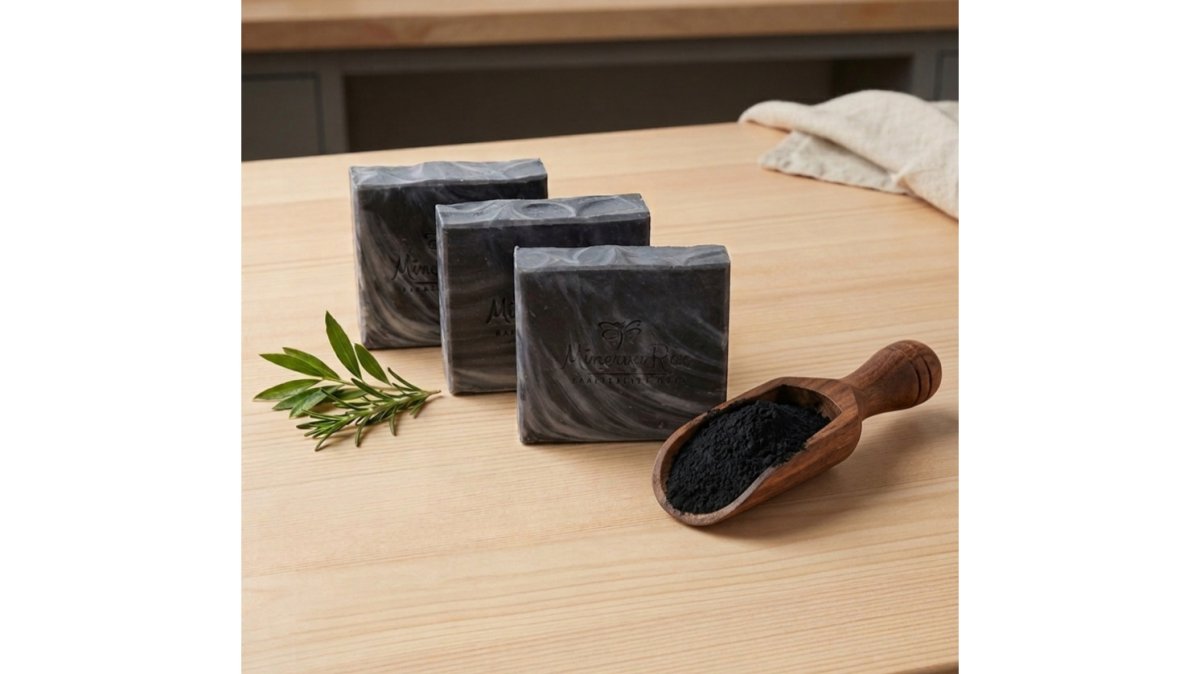
Activated charcoal draws impurities from pores through adsorption, binding to oils and bacteria. Kaolin clay absorbs excess sebum while providing gentle exfoliation.
Balance is key: the right amount of charcoal and kaolin, combined with nourishing oils, clarifies without triggering defensive sebum response or compromising the skin barrier.
American Academy of Dermatology guidance on acne-prone skin care emphasizes that gentle cleansing is more effective than harsh scrubbing. Charcoal soap provides that gentleness while still being effective.
Minerva Rae's Charcoal & Tea Tree soap combines activated charcoal with kaolin clay, plus silk fibers for a soft lather. The formula includes nourishing oils, olive, coconut, shea butter, and castor oil, so your skin gets clarified without being stripped.
Tea Tree and Essential Oils
Tea tree essential oil has natural antiseptic properties that address acne bacteria without creating resistance. Rosemary essential oil amplifies clarifying action and adds anti-inflammatory benefits.
Essential oils are volatile and evaporate rather than sitting on skin, providing aroma without heavy fragrance residue that clogs pores.
Natural soap for oily skin and acne should feature tea tree at therapeutic levels. Minerva Rae uses 100% natural essential oils so tea tree and rosemary contribute to skin health, not just aroma.
Plant-Based Oils That Regulate Sebum
Certain plant oils actually help regulate sebum production, contrary to the assumption that oily skin needs zero oil.
Coconut oil has antimicrobial properties; castor oil reduces inflammation and supports the barrier.
Plant-based oils penetrate and absorb, while mineral oil sits on the surface and clogs pores. Natural soap for oily skin and acne with the right plant oils helps your skin achieve balance.
How to Choose Soap for Acne-Prone Skin
Avoid synthetic fragrances or dyes, common irritants that serve no purpose beyond aesthetics. If a soap smells artificial or looks unnaturally bright, it's designed for mass appeal, not skin health.
Check the ingredient list for non-comedogenic oils. The best formulations balance clarifying ingredients with nourishment.
Look for soaps formulated for oily or combination skin. Minerva Rae's Charcoal & Tea Tree targets oily and blemish-prone skin, while Garden Mint offers a lighter clarifying option.

Natural Soap vs. Synthetic Detergents: What Your Skin Barrier Needs
The skin barrier is a lipid layer that protects against bacteria, environmental damage, and water loss. But the mechanism by which different cleansers affect this barrier hinges on a factor most skincare articles ignore: pH.
True natural soap has a pH of 8-10 (alkaline), while synthetic detergents (syndets) are pH-buffered to 5.5-7. For acne-prone skin, the neutral pH of syndets is a liability.
Acne-prone skin often has a disrupted acid mantle. Syndets maintain a neutral environment where Cutibacterium acnes thrives. They also contain sulfates and synthetic surfactants that aggressively break down lipids, disrupting the skin microbiome and compromising the barrier.
True natural soap creates a gentler surfactant that lifts oils away rather than dissolving the barrier. The temporary pH elevation triggers the skin's natural buffering response, restoring the acidic mantle within 30 minutes. This repeated mild challenge strengthens barrier function over time.
According to peer-reviewed dermatological research on skin pH and acne, maintaining an acidic skin surface (pH 4.5-5.5) reduces bacterial colonization and inflammation. Natural soap, by gently elevating pH and then allowing the skin to self-correct, supports this process. Syndets, by maintaining neutral pH, remove this adaptive stimulus.
Your skin stabilizes faster with natural soap because the barrier genuinely heals. Excess oil production decreases within 2-3 weeks as your acid mantle restores. With syndets, temporary improvement is followed by a return to breakouts as the barrier remains compromised.
When choosing natural soap oily skin acne, verify that it's true soap (saponified oils) rather than a syndet bar labeled "natural." Check the ingredient list: if you see sodium lauryl sulfate, sodium laureth sulfate, or other synthetic surfactants, it's a syndet regardless of marketing language. True soap will list saponified oils (e.g., "saponified coconut oil") as the primary cleansing agent.
Building Your Routine: Cleansing, Exfoliation, and Hydration
A complete routine for oily, acne-prone skin has three foundational components, but the order and timing matter critically if you're using other acne treatments alongside natural soap.
Cleansing happens twice daily. Use your natural soap for oily skin and acne in the morning and evening. Massage it gently for 30-60 seconds; you don't need to scrub. The soap's ingredients do the work. If you're using active acne treatments (retinoids, benzoyl peroxide, salicylic acid), cleanse first with natural soap, then apply those treatments to completely dry skin.
Exfoliation should happen 2-3 times per week, not daily. Many soaps include gentle exfoliants like oat particles or tea leaves. Minerva Rae's Charcoal Swirl includes colloidal oats for light exfoliation without harshness. The goal is to remove dead skin cells that can trap bacteria in pores, not to abrade your skin.

Hydration is non-negotiable, even for oily skin. After cleansing, apply a lightweight, non-comedogenic moisturizer. This prevents your skin from overcompensating with excess sebum. If you're using retinoids or benzoyl peroxide, hydration becomes even more critical, these treatments can cause dryness and irritation if the barrier isn't supported. Apply moisturizer to damp skin immediately after cleansing for better absorption.
Ingredient interactions to avoid:
Transition timeline:
| Routine Step | Frequency | Duration | Purpose | Interaction Notes |
|---|---|---|---|---|
| Cleanse with natural soap | 2x daily | 30-60 seconds | Remove surface impurities and bacteria | Apply active treatments to completely dry skin afterward |
| Exfoliate gently (physical) | 2-3x weekly | 1-2 minutes | Remove dead skin and prevent pore congestion | Do not combine with chemical exfoliants on the same day |
| Apply active treatments (if using) | As prescribed | Varies | Target acne bacteria and cell turnover | Space 12 hours from conflicting ingredients; consult dermatologist if on systemic medications |
| Hydrate with lightweight moisturizer | 2x daily | After cleansing | Support barrier function and prevent sebum overproduction | Apply to damp skin for optimal absorption |
| Apply sunscreen (morning only) | 1x daily | After moisturizer | Protect from UV damage and photosensitivity | Essential if using retinoids or citrus-oil soaps |
Common Mistakes When Switching to Natural Soap
Mistake 1: Expecting immediate results.
Mistake 2: Using too much product.
Mistake 3: Not adjusting the rest of your routine.
Mistake 4: Assuming all "natural" soaps are the same. Look for charcoal, clay, and tea tree if acne is your concern.
Mistake 5: Ignoring ingredient interactions. If you're using retinoids or other active treatments, certain essential oils can cause photosensitivity.
Conclusion
Natural soap for oily skin and acne addresses the root cause of breakouts, a compromised skin barrier, rather than just treating the symptom. By preserving your skin's lipid barrier and introducing non-comedogenic, clarifying ingredients, handcrafted soap creates the conditions for your skin to rebalance itself.
At Minerva Rae, we create cold process soaps specifically formulated for oily and acne-prone skin.
Frequently Asked Questions
What soap is best for acne and oily skin?
Natural soaps formulated with activated charcoal, kaolin clay, and tea tree essential oil are most effective for acne-prone and oily skin. These ingredients draw out impurities, absorb excess oil, and provide antibacterial benefits without stripping the skin barrier. Cold process soaps preserve skin-nourishing ingredients better than synthetic detergents, making them gentler while still deeply cleansing. Look for bars that include plant-based oils and butters to maintain hydration alongside clarification.
How does cold process soap for acne differ from regular commercial soap?
Cold process soap is made at lower temperatures, which preserves natural glycerin and beneficial oils that commercial soaps often remove. This method produces a gentler, more moisturizing bar that doesn't over-dry acne-prone skin. Cold process bars also allow for precise ingredient selection, so you can avoid irritants and choose specific actives like tea tree and charcoal that target breakouts and pore congestion.
Can natural soap really help with oily skin, or will it make it worse?
Natural soap can balance oily skin when formulated correctly. The key is choosing bars with oil-absorbing ingredients like activated charcoal and kaolin clay, paired with plant-based oils that regulate sebum without clogging pores.
What natural ingredients should I avoid if I have acne-prone skin?
Skip synthetic fragrances and dyes, which irritate acne-prone skin. Always patch-test new formulas, as essential oil sensitivity varies by individual.