

Table of Contents
- Lux Naturals vs Artisan Soap Brands: Quick Comparison
- What Sets Artisan Soap Brands Apart from Mass-Market Options
- Benefits of Cold Process Soap and Handcrafted Methods
- Artisan Soap vs Commercial Soap: Ingredients and Performance
- Little Flower Soap Alternatives for Gifts and Special Events
- Price, Durability, and Real-World Value
- Which Type of Soap Should You Choose?
Last Updated: August 30, 2026
Lux Naturals vs Artisan Soap Brands: Quick Comparison
The difference between a drugstore bar and handcrafted artisan soap goes far deeper than packaging or price. Lux naturals vs artisan soap brands comes down to three core differences: how they're made, what goes into them, and what they deliver for your skin. Commercial soaps prioritize efficiency and shelf stability. Artisan soap brands prioritize skin health and sensory experience.
Most drugstore soaps aren't actually soap, they're detergents, synthetic cleaning agents that strip your skin's natural oils. Artisan soaps, made using cold process or traditional methods, retain glycerin and use gentler ingredients that cleanse without compromising your skin barrier. If you have sensitive or dry skin, this difference is significant.
What Sets Artisan Soap Brands Apart from Mass-Market Options
True artisan soap brands operate on a fundamentally different philosophy than commercial manufacturers. Mass-market soaps are engineered for profit margins and shelf life. Artisan brands are engineered for skin health.
The most obvious difference is the ingredient list. Commercial soaps rely on synthetic surfactants like sodium lauryl sulfate that create lather quickly but strip your skin's natural lipid barrier. Artisan soap brands use plant-based oils and butters: coconut oil, olive oil, shea butter, and castor oil. These ingredients don't just clean, they condition.
A deeper difference most people miss is glycerin retention. Commercial manufacturers extract glycerin, a natural byproduct of saponification, and sell it separately. Artisan soap makers leave the glycerin in the bar, which is why artisan soaps feel creamier and leave your skin softer.
Small batch production also means ingredient sourcing matters. Artisan makers can choose ethically sourced oils, cruelty-free colorants, and botanical extracts. This flexibility allows for innovation: soaps colored with Brazilian purple clay, scented with Bulgarian lavender essential oil, enriched with Tussah silk for a velvety lather.

Benefits of Cold Process Soap and Handcrafted Methods
Cold process soap-making is the traditional method that explains why artisan soaps perform so differently from commercial bars. In cold process, oils and lye are mixed at room temperature, then allowed to cure for 4-6 weeks (peer-reviewed research). During this time, saponification, the chemical reaction that transforms oils into soap, happens slowly and completely. This preserves the beneficial properties of the oils. The glycerin stays in the bar. The natural emollients remain intact.
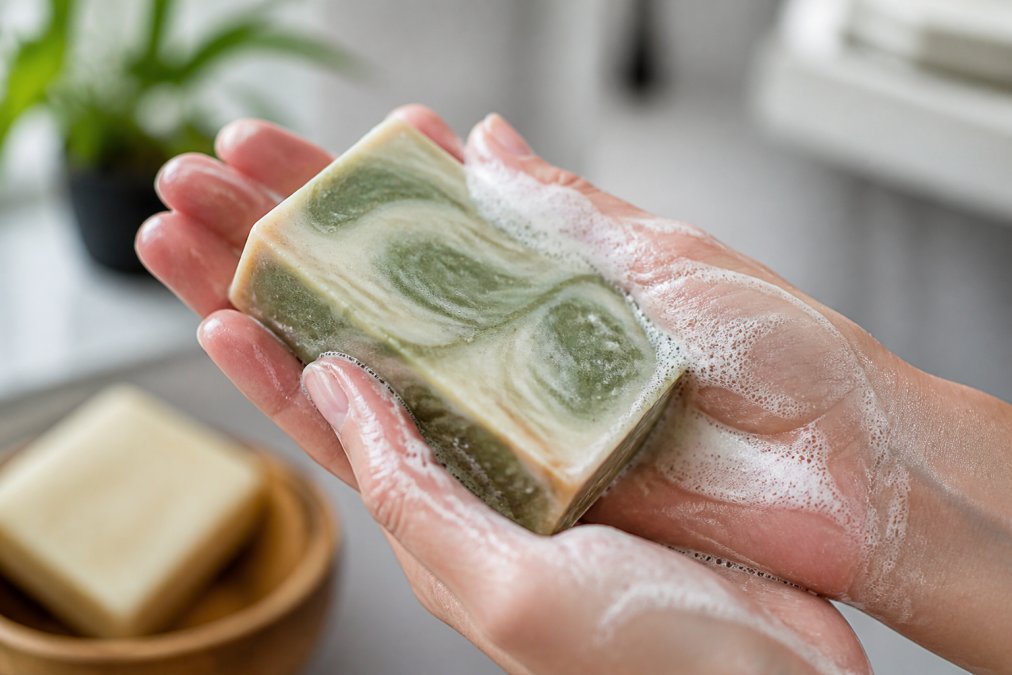
Commercial manufacturers use hot process methods or synthetic detergent bases that bypass saponification entirely. These methods are faster, a bar can be ready for sale in days instead of weeks, but speed comes at a cost. High heat damages beneficial compounds in the oils, and the rushed timeline means less time for chemistry to fully develop.
Cold process also allows for artistic expression. Swirls, layers, and color combinations become possible because the soap stays workable for hours after mixing. The curing time is essential: during those 4-6 weeks, excess water evaporates, making the bar harder and longer-lasting. A properly cured artisan soap will last 2-3 times longer than a commercial bar of similar size (peer-reviewed research).
Artisan Soap vs Commercial Soap: Ingredients and Performance
The ingredient difference shows up immediately on the label and again when you use the product.
Commercial soaps contain sodium lauryl sulfate and sodium laureth sulfate, which create lather instantly but strip your skin (the FDA). Parabens preserve the product for years. Phthalates are hidden in "fragrance" to make synthetic scents last longer. None are designed with skin health in mind.
Artisan soap brands use oils and butters: coconut oil provides lather and cleansing, olive oil adds moisture, shea butter and castor oil condition and soothe. Scenting uses essential oils, Bulgarian lavender, Sicilian bergamot, wild geranium, that deliver complexity and therapeutic properties. Colorants include Brazilian purple clay, activated charcoal, and plant-based pigments that add functional benefits. Activated charcoal draws out impurities. Colloidal oats provide gentle exfoliation.
For sensitive skin, the most important difference is what's not in artisan soaps: no sulfates, no parabens, no phthalates, no synthetic preservatives. This simplicity is exactly what people with eczema, psoriasis, or reactive skin need.
| Aspect | Commercial Soap | Artisan Soap |
|---|---|---|
| Primary Cleanser | Synthetic surfactants (SLS/SLES) | Plant-based oils and butters |
| Glycerin | Removed and sold separately | Retained in the bar |
| Curing Time | Days (hot process) | 4-6 weeks (cold process) |
| Scent | Synthetic fragrance oils | Essential oils or complex blends |
| Colorants | Synthetic dyes | Natural clays and pigments |
| Shelf Life | 2-3 years | 1-2 years (fresher product) |
| Best For | Budget-conscious, oily skin | Sensitive, dry, or reactive skin |
| Cost Per Wash | Lower upfront | Lower long-term (bars last longer) |
Little Flower Soap Alternatives for Gifts and Special Events
If you're looking for artisan soap alternatives with the same quality but different aesthetic, the gift-giving and event market offers many options. What makes a soap work as a gift is presentation and personalization. Many artisan makers now offer custom orders for weddings, corporate events, or special occasions.

Minerva Rae's Cluster Soap collection, for example, is hand-assembled and made to order, with varieties like Vine-Ripened Grapes, Garden Roses, Summer Strawberries, and Sun-Drenched Citrus. Each cluster is finished with rustic twine or ribbon and designed to look like freshly harvested fruit and botanical blooms. These work as both functional soap and decorative centerpiece.
Artisan alternatives typically range from $10-$15 per bar for standard collections, with custom orders running higher. Minerva Rae's standard handcrafted soaps are $12.00 per bar, while the Cluster Soap collection starts at $25.00. This reflects the labor, ingredient quality, and customization involved.
Price, Durability, and Real-World Value
A properly cured artisan soap bar lasts significantly longer than a commercial bar. A 4.5-ounce artisan bar will outlast a 3.5-ounce commercial bar by roughly 2.5:1. You're using less product per wash because the bar lasts longer and creates a richer lather.
If an artisan bar costs $12 and lasts three times longer than a $2 commercial bar, your cost per wash is actually lower. Durability also depends on storage: commercial bars stored in a wet shower caddy dissolve faster. Artisan bars, with their denser composition, hold up better to moisture. Use a soap dish that drains well for even longer life.
For event planners and gift-givers, the value proposition is different. A custom Cluster Soap collection at $25 per unit for a wedding is a meaningful investment, but it's also a memorable keepsake that guests will actually use and remember.
Which Type of Soap Should You Choose?
Choose commercial soap if: You have oily skin that benefits from stronger cleansing, you're on a tight budget, or you don't have skin sensitivities.
Choose artisan soap if: You have sensitive, dry, or reactive skin. You want a product that conditions while it cleanses. You care about ingredient sourcing and ethical production. You're willing to invest in quality and durability. You want something beautiful enough to display or gift.
Many people who switch to artisan soap never go back. Your skin feels softer. The bar lasts longer. The experience feels intentional and indulgent.
If you're hesitant about the price, start with a single bar. Try Minerva Rae's Tallow & Goat Milk soap if you have sensitive or dry skin, it's unscented, made specifically for reactivity, and priced at $12.00. Or explore the Bulgarian Lavender, which combines cold process craftsmanship with calming essential oil and skin-conditioning ingredients like shea butter and Tussah silk.

For gifts and events, Minerva Rae's Cluster Soap collection offers hand-assembled, made-to-order customization at $25.00 per cluster. The choice between lux naturals vs artisan soap brands isn't about the brands, it's about what you're willing to invest in your skin and your daily rituals. For anyone with sensitive skin or a commitment to intentional self-care, that difference is worth the investment.
Frequently Asked Questions
What is the main difference between artisan soap brands and Lux Naturals?
Artisan soap brands typically use cold process or handcrafted methods that preserve glycerin and natural oils, creating bars with higher moisturizing properties. Lux Naturals and similar mass-market brands often use commercial production methods that strip glycerin during manufacturing, then add it back synthetically. Artisan soaps like those from Minerva Rae ($12-$25 per bar) focus on small-batch quality and ingredient integrity, while commercial brands prioritize consistency and shelf stability. The difference shows in lather quality, skin feel, and longevity.
Are handmade artisan soaps really better for sensitive skin than commercial luxury brands?
Yes, for most sensitive skin types. Artisan soaps made through cold process saponification retain the natural glycerin produced during the reaction, which acts as a humectant and strengthens the skin barrier. Commercial soaps often contain synthetic surfactants, parabens, and phthalates that can trigger irritation. Artisan bars formulated without fragrance oils, like Minerva Rae's Tallow & Goat Milk ($12), eliminate common irritants entirely. However, individual sensitivity varies; always test on a small area first, especially if you've had reactions to 'natural' soaps before.
How long does an artisan soap bar actually last compared to drugstore soap?
Artisan soaps typically last 2-3 times longer than mass-market bars. A 4.5 oz handcrafted bar (the standard size for Minerva Rae soaps) can provide 40-60 washes with proper storage, while a standard drugstore bar of the same weight often lasts only 15-25 washes. This durability comes from denser formulations, higher oil content, and less water absorption. The cost-per-wash for artisan soap often compares favorably to commercial alternatives when you account for longevity, even at higher upfront prices.
What ingredients should I look for in a high-quality artisan soap?
Look for soaps made with plant-based oils like olive oil, coconut oil, and shea butter, plus natural butters that support skin barrier function. Cold process soaps should list glycerin retention and often include additives like colloidal oats, Tussah silk, or essential oils for texture and benefit. Avoid synthetic surfactants, parabens, phthalates, and sulfates. Minerva Rae's formulations showcase quality standards: their Bulgarian Lavender includes shea butter, colloidal oats, and Tussah silk ($12), while their Tallow & Goat Milk uses simple, skin-nourishing ingredients without added fragrance. Check ingredient lists carefully, artisan brands are transparent about what goes into each bar.
If you've been frustrated by soaps that leave your skin dry or irritated, Minerva Rae's handcrafted collection offers an alternative built specifically for skin health. Our cold process soaps retain glycerin and use conditioning ingredients like shea butter, coconut oil, and goat milk to cleanse without stripping. Explore the Collection and discover why artisan soap makes a real difference.
This article was written using GrandRanker