

Table of Contents
- The Golden Rule: Thinnest to Thickest Consistency
- How to Layer Skincare: A Step-by-Step Routine
- Benefits of Humectants vs Occlusives
- How Long to Wait Between Skincare Steps
- Common Skincare Layering Mistakes
- AM vs. PM: How Your Layering Order Changes
- Where Handcrafted Soap Fits Into a Hydration Routine
- Conclusion
- Frequently Asked Questions
Last Updated: October 1, 2026
The Golden Rule: Thinnest to Thickest Consistency
The single rule that governs all layering skincare is this: apply products from the thinnest consistency to the thickest. Water-light formulas go first, rich creams go last. Break this order and heavier products block lighter ones from ever reaching your skin.
Think of it as a filtration system. A watery toner applied over a heavy balm simply sits on top and evaporates. A serum pressed under a rich moisturizer, by contrast, gets carried downward and locked in place.
The logic comes down to viscosity and penetration. Thin formulas are designed to sink quickly and deliver active ingredients; thick formulas are designed to sit on the surface and hold moisture in. Reversing that sequence wastes the expensive products in your routine and leaves your skin barrier under-supported.
Here's the general sequence most dermatologist-recommended routines follow:
- Cleanser (water-based, thinnest)
- Toner or mist
- Serum (water-based)
- Treatment or facial oil (oil-based)
- Moisturizer
- Eye cream (or apply before moisturizer, depending on texture)
That ordering is why a lightweight humectant serum always precedes a heavy occlusive cream. It's also why layering skincare rewards patience more than product count.
How to Layer Skincare: A Step-by-Step Routine
Below is a complete hydration-focused routine you can run tonight. Total time: about four minutes of active application, plus short wait time between steps. The order never changes; what changes is the texture and the amount you use at each stage.
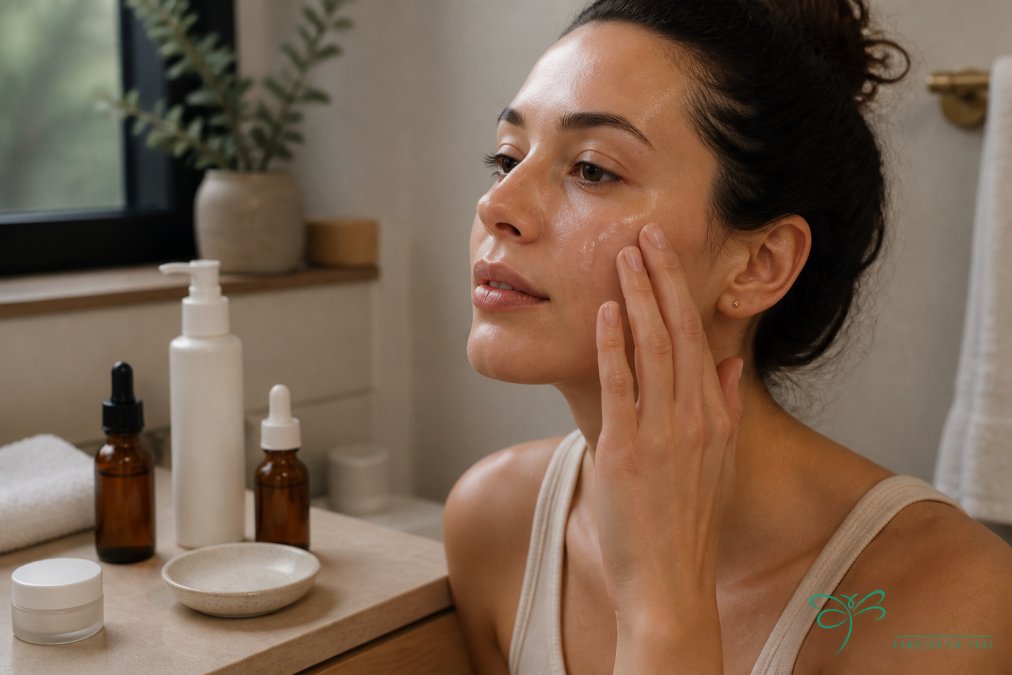
Step 1: Cleanse and Prep Your Skin
Start with a gentle cleanser that removes the day without stripping. Harsh surfactants, the sulfate-heavy foaming kind, leave the skin barrier compromised, and a compromised barrier loses water faster, which is the opposite of what you want before layering.
Use lukewarm water, not hot. Hot water dissolves the lipids that hold your barrier together, and you'll spend the rest of the routine trying to replace them.
Step 2: Apply Toner or Mist on Damp Skin
Toner and facial mists are the hydration primer most people skip. A humectant-rich toner pulls water into the upper layers of skin, and applying it to damp skin improves absorption rate for everything that follows.
Step 3: Press Serums Into Damp Skin
Serum is where hydration gets serious. Hyaluronic acid and glycerin are classic humectants: they bind water and hold it near the surface. The trick is applying them while skin is still damp, then sealing them before that water can escape through transepidermal water loss.
Step 4: Treat, Then Seal With Moisturizer
If you use a treatment (retinol, an exfoliating acid, a vitamin C serum), it goes after your hydrating serum and before moisturizer. One active per routine is the safest default; stacking multiple actives in the same layer is the fastest way to a stinging, red, barrier-damaged face.
Step 5: Finish With SPF in the Morning
Sunscreen is the last step of any morning routine, always. It goes over moisturizer, never under it, and it needs its own full application, roughly a nickel-sized amount for the face and neck. Skipping SPF undoes more hydration progress than any serum can replace, because UV exposure degrades the barrier and accelerates water loss.
Benefits of Humectants vs Occlusives
Humectants attract and bind water; occlusives prevent that water from evaporating. You need both, and understanding the difference is what separates a routine that hydrates from one that only feels wet for ten minutes.
| Ingredient Type | What It Does | Examples | Best For |
|---|---|---|---|
| Humectants | Pull water into skin | Hyaluronic acid, glycerin | Dehydrated, dull skin |
| Emollients | Soften and smooth | Shea butter, cocoa butter | Rough, flaky texture |
| Occlusives | Block water loss | Waxes, heavy butters | Very dry skin, winter |
How Long to Wait Between Skincare Steps
This is the question every layering guide answers differently, and the conflicting advice is why so many people give up on a routine. Some sources say wait ten minutes between every step. Others say don't wait at all. Neither is right for every product.
Here's a practical timing guide:
| Step | Wait Time | Why |
|---|---|---|
| Cleanser to toner | 10-20 seconds | Skin should stay damp |
| Toner to serum | 20-30 seconds | Toner still tacky |
| Serum to moisturizer | 30-60 seconds | Serum mostly absorbed |
| Moisturizer to SPF (AM) | 60 seconds | Avoid dilution |
| Active to next layer | 1-2 minutes | Reduces irritation risk |
The Real Reason Products Pill
If a product starts to pill, rolling into little balls under your fingers, the cause is almost never the wait time. It's a texture clash. The most common culprits are:
- Silicone-heavy formulas over water-based ones. Dimethicone and similar silicones form a film; a water-based serum applied on top can't penetrate it and beads up instead.
- Too much product. A thick layer of anything pills more than a thin one. Two thin layers beat one heavy one.
- Rubbing instead of pressing. Friction is what rolls the film into balls. Press products in with your palms and the same products often behave fine.
- Gel over cream. Gels are water-based and creams are usually oil-based; reversing the order traps the gel on the surface.
A Note on Damp Skin vs. Dry Skin
The damp-skin rule applies to humectants, not to everything. Hyaluronic acid and glycerin need water to grab onto, so applying them to damp skin is genuinely better. But occlusives and sunscreen work fine on dry skin, and applying them to a wet face can dilute them and reduce their film-forming ability. So the sequence is: damp for humectants, dry-ish for sealants and SPF.
Common Skincare Layering Mistakes
The most frequent common skincare layering mistakes are all about order and timing, not product quality. Fix these and most hydration problems resolve on their own.
- Applying serum to dry skin. Humectants need water to work. Damp skin is non-negotiable.
- Reversing the order. Thick before thin means the thin product never absorbs.
- Skipping moisturizer in humid weather. Humidity doesn't replace a sealant.
- Overloading actives. Too many at once irritates the skin barrier and increases water loss.
- Rubbing instead of pressing. Friction disrupts skin texture and causes pilling.
AM vs. PM: How Your Layering Order Changes
Morning and evening routines share the same thinnest-to-thickest logic, but the goals differ. AM is about protection; PM is about repair.
Where Handcrafted Soap Fits Into a Hydration Routine
Cleansing is step one for a reason, and the bar you use sets the ceiling for everything after it. A stripping cleanser undoes a good serum before it has a chance to work.
Conclusion
Getting hydration right comes down to sequence and patience, not the number of bottles on your shelf. Thin before thick, damp skin before serum, and always a sealant at the end.
Frequently Asked Questions
What is the correct order for layering skincare products?
Start with the thinnest, most watery product and finish with the thickest. A standard order is cleanser, toner or mist, serum, eye cream, and moisturizer, with SPF last in the morning. Each layer should be lighter in texture than the one before it, so a watery hyaluronic acid serum goes under a rich cream, never over it. Get the order right and your layers absorb instead of sitting on top of each other.
How long should you wait between applying skincare layers?
Most steps need 30 to 60 seconds, just enough for the product to stop feeling wet. Toner to serum can be almost immediate, especially if you apply serum to damp skin. Give heavier creams and sunscreen about a minute before makeup. The exception is prescription actives such as tretinoin or adapalene, which usually need several minutes to settle. If a product pills or rolls up, you waited too little or applied too much.
What are the most common skincare layering mistakes?
Applying serum to dry skin is the biggest one, since humectants need water to pull into the skin. Others include using too many active ingredients at once, skipping moisturizer because a serum feels hydrating, and layering products in the wrong order. Mixing vitamin C with retinoids in the same step can also cause irritation. Keep each routine to three or four steps and let each layer settle before adding the next.
What is the difference between humectants and occlusives?
Humectants such as hyaluronic acid and glycerin draw water into the upper layers of skin, which is why they work best on damp skin. Occlusives such as shea butter and cocoa butter sit on the surface and slow transepidermal water loss, keeping that moisture from escaping. You need both for lasting hydration: humectants add water, occlusives hold it in. A routine that only uses one leaves skin either tight or greasy.
Building a hydration routine that actually holds moisture starts with the cleanser you reach for first. Minerva Rae crafts handcrafted soaps using cold process and melt and pour methods, with intentionally curated ingredients and personalized options for gifts and events. Explore the collection and find the bar that fits your skin.